Science and research
Model organisms and fish famous in science. 38 fish on EveryFish so far.
Fish are important in science. Some species are model organisms, small, fast-breeding fish that are studied in depth in laboratories to understand biology in general, from how embryos grow to how genes cause disease. Others are famous for what they reveal about evolution, such as the coelacanth, the blind cave fish and the cichlids of the African lakes. Fish also help scientists monitor the health of rivers and seas.
Zebrafish and medaka
The zebrafish, a small striped danio of South Asian streams, became a major model organism from the 1970s and 1980s. Its embryos are see-through and grow outside the mother, so scientists can watch organs and nerves form under the microscope. It is used to study development, heart and nerve disease, cancer and the effects of drugs and pollutants. The Japanese medaka is another model, and in 1994 medaka became the first vertebrates to mate and produce young in orbit, on a Space Shuttle flight.
Fish that explain evolution
The three-spined stickleback has repeatedly lost its bony armour after moving from the sea into lakes, letting scientists trace the genes involved. Sighted and blind forms of the Mexican tetra show how eyes are lost in caves. The turquoise killifish, which lives only a few months, is used to study ageing. The coelacanth and lungfish shed light on how fish first moved onto land, and the spotted gar's genome helps link fish genes to human ones.
Famous science and research fish

Still to be written: Japanese rice fish, Nothobranchius furzeri, Guppy.
Further reading
 🇺🇸 United States and 4 moreSea lamprey
A jawless, parasitic fish native to the Northern Hemisphere that attacks other fish.Ancient · Rivers and lakes · 1758
 🇺🇸 United States and 1 moreAtlantic sturgeon
A large anadromous fish native to the western Atlantic Ocean and its river systems.Ancient · Rivers and lakes
 🇺🇸 United States and 1 moreShortnose sturgeon
A small, endangered North American sturgeon with a short snout.Ancient · Rivers and lakes · 1818
 🇺🇸 United StatesPallid sturgeon
An endangered North American sturgeon species native to the Missouri and Mississippi river basins.Ancient · Rivers and lakes · 1905
 🇲🇽 Mexico and 2 moreTropical gar
A small freshwater predator from Central America known for its armored scales and air-breathing ability.Ancient · Rivers and lakes
 WorldLamprey
Jawless fish with a sucking mouth found in temperate waters worldwide.Ancient · Rivers and lakes
 WorldMegalodon
Extinct giant mackerel shark from the Miocene to Pliocene epochs.Shark · Coasts and shelves · 1843
 🇺🇸 United StatesCladoselache
Extinct Late Devonian shark-like fish known for well-preserved fossils and streamlined body.Shark · Coasts and shelves
 🇺🇸 United States and 3 moreStethacanthus
Extinct Devonian-Carboniferous shark with a distinctive anvil-shaped dorsal fin.Shark · Coasts and shelves · 1874
 🇳🇬 NigeriaGymnarchus
African electric fish with a long dorsal fin used for swimming and sensing prey.Ancient · Rivers and lakes · 1829
 WorldHaplochromis
A large ray-finned fish genus from East Africa known for rapid evolution and aquarium popularity.Cichlid · Rivers and lakes · 1888
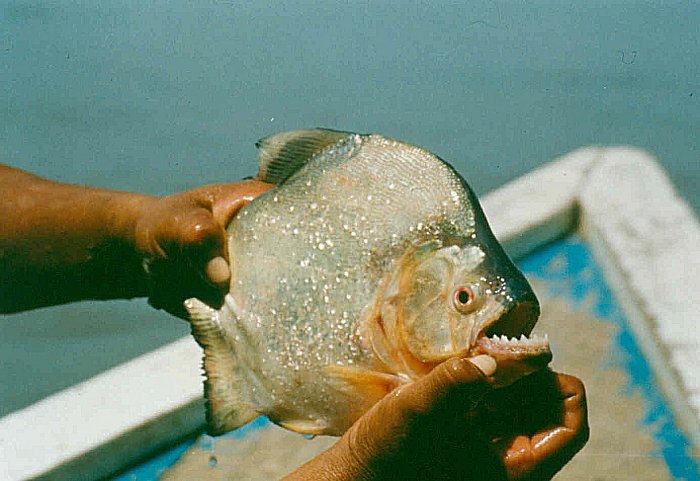 🇸🇷 Suriname and 2 moreRedeye piranha
A large freshwater fish from South America with a rhombus-shaped body and red eyes.Other · Rivers and lakes · 1766
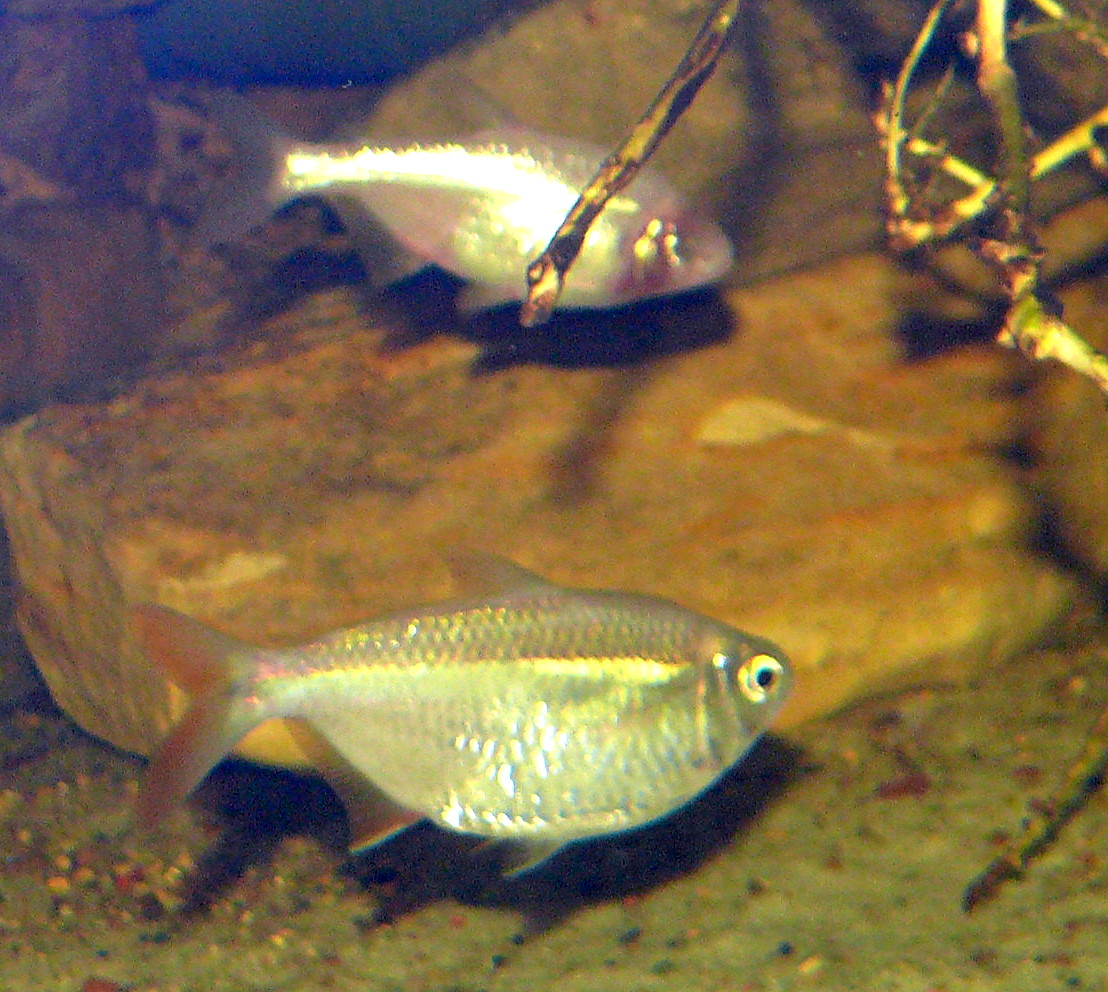 🇺🇸 United States and 1 moreMexican tetra
A freshwater characin with surface and blind cave forms, studied for evolutionary biology.Other · Rivers and lakes
 🇺🇸 United StatesDelta smelt
A tiny, endangered fish native to California's Sacramento-San Joaquin River Delta.Other · Rivers and lakes · 1963
 🇿🇦 South Africa and 1 moreCoelacanth
Ancient lobe-finned fish thought extinct until rediscovered in the twentieth century.Ancient · Coasts and shelves · 1839
 🇺🇸 United StatesAmerican paddlefish
Ancient freshwater fish with a sensory snout and filter-feeding habits.Ancient · Rivers and lakes · 1792
 🇨🇺 CubaCuban gar
Large tropical freshwater predator native to western Cuba.Other · Rivers and lakes
 🇺🇸 United States and 2 morePupfish
Small killifish known for surviving in extreme isolated waters.Livebearer · Rivers and lakes
 🇮🇳 India and 4 moreZebrafish
Small striped fish from South Asia kept in aquariums and labsCarp · Rivers and lakes
 🇿🇦 South Africa and 4 moreWest Indian Ocean coelacanth
Rare deep-sea fish with blue scales and limb-like fins.Ancient · Deep sea · 1938
 🇮🇩 IndonesiaIndonesian coelacanth
A rare brown deep-sea fish found in Indonesian waters.Ancient · Open ocean · 1999
 WorldThree-spined stickleback
Small northern fish known for rapid evolution and complex breeding.Other · Rivers and lakes
 WorldNinespine stickleback
Small freshwater fish with variable spines found across the Northern Hemisphere.Other · Rivers and lakes
🇵🇪 Peru and 1 moreTiticaca orestias
Largest killifish of Lake Titicaca, likely extinct.Livebearer · Rivers and lakes
 🇸🇳 Senegal and 3 moreSenegal bichir
Ancient African fish that breathes air and walks on landAncient · Rivers and lakes
 🇧🇷 Brazil and 4 moreHoplias aimara
A large freshwater predator from South America known for its size and mercury accumulation.Other · Rivers and lakes · 1846
 🇧🇷 Brazil and 1 moreElectric eel
Neotropical freshwater fish capable of generating powerful electric shocks for hunting and defence.Eel · Rivers and lakes · 1766
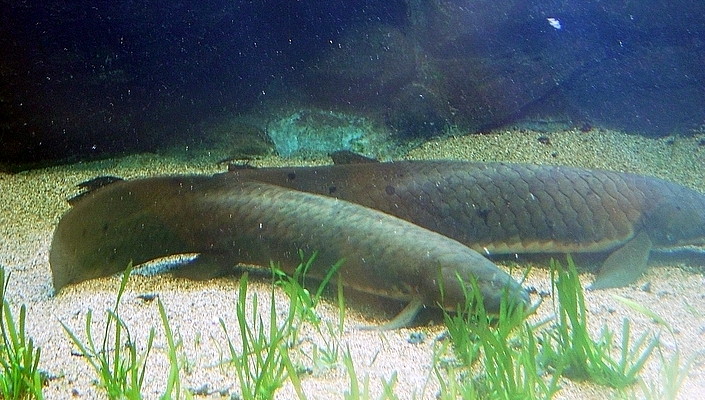 🇦🇺 AustraliaAustralian lungfish
Ancient air-breathing fish endemic to Queensland rivers, known for its longevity and living fossil status.Ancient · Rivers and lakes · 1871
 WorldBasking shark
The second-largest living fish, a slow-moving filter feeder found in temperate oceans worldwide.Shark · Coasts and shelves · 1765
 🇷🇺 Russia and 1 moreRuffe
A small, aggressive freshwater fish native to Eurasia that has become a major invasive pest in North America.Perch-like · Rivers and lakes · 1758
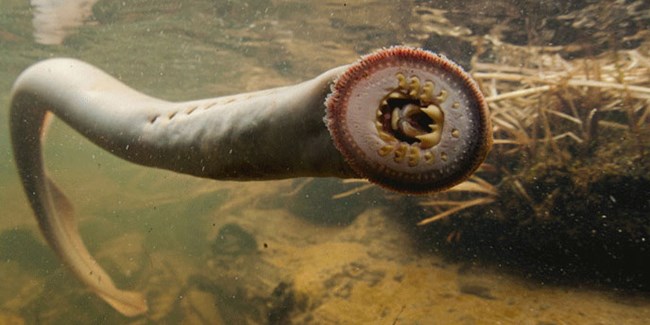 🇺🇸 United States and 1 morePacific lamprey
An anadromous parasitic jawless fish found along the Pacific Rim.Ancient · Rivers and lakes · 1872
 WorldDeepsea lizardfish
A deep-ocean predator with a flattened head and large eyes found in tropical seas worldwide.Other · Deep sea · 1878
 WorldGlasshead barreleye
Deep-sea fish with mirror-based eyesOther · Open ocean
 WorldBarreleye
Deep-sea fish with tubular eyes and a light-producing anusOther · Open ocean
 WorldHagfish
Eel-shaped jawless marine animals known for producing vast amounts of slime.Eel · Open ocean
 🇲🇽 Mexico and 3 moreXiphophorus
A genus of small livebearing fish native to Mexico and Central America, known for aquarium use and genetic research.Livebearer · Rivers and lakes
 WorldKillifish
Small egg-laying fish known for hardiness and short lifespansLivebearer · Rivers and lakes
 WorldHumpback anglerfish
Deep-sea black seadevil with a glowing lureOther · Open ocean · 1863
 WorldPelican eel
A deep-sea eel with a massive hinged jaw and ultra-black skin found in all oceans.Eel · Deep sea
Photo credits on this page
The small pictures above come from Wikimedia Commons under free licences. Some are cropped to fit.
- Sea lamprey: Fernando Losada Rodríguez, CC BY-SA 4.0, source
- Lungfish: Unknown author, CC BY-SA 2.5, source
- Atlantic sturgeon: Jiaqian AirplaneFan, CC BY 3.0, source
- Shortnose sturgeon: Unknown author, Public domain, source
- Pallid sturgeon: USFWS Fish and Aquatic Conservation, Public domain, source
- Tropical gar: AlejandroLinaresGarcia, CC BY-SA 3.0, source
- Bichir: 5snake5, CC0, source
- Lamprey: Tiit Hunt, CC BY-SA 3.0, source
- Megalodon: Géry PARENT, CC BY-SA 4.0, source
- Cladoselache: James St. John, CC BY 2.0, source
- Stethacanthus: Dmitry Bogdanov, CC BY-SA 3.0, source
- Gymnarchus: Wiki-Harfus ; modified by Wildfeuer, CC BY-SA 3.0, source
- Haplochromis: User:Haplochromis, CC BY-SA 3.0, source
- Redeye piranha: Torox, CC BY-SA 3.0, source
- Mexican tetra: User:Haplochromis, CC BY-SA 3.0, source
- Delta smelt: Peterson, B. Moose / U.S. Fish and Wildlife Service, Public domain, source
- Coelacanth: Alberto Fernandez Fernandez, CC BY-SA 3.0, source
- American paddlefish: Timothy Knepp, Public domain, source
- Cuban gar: Poleta33, CC BY-SA 3.0, source
- Pupfish: P.V. Loiselle, CC BY-SA 3.0, source
- Zebrafish: Roundish, CC0, source
- Indonesian coelacanth: Unknown author, CC BY-SA 2.5, source
- West Indian Ocean coelacanth: sybarite48, CC BY 2.0, source
- Three-spined stickleback: Gilles San Martin, CC BY-SA 2.0, source
- Ninespine stickleback: Piet Spaans, Public domain, source
- Hoplias aimara: Lars Simonsen, CC BY-SA 3.0, source
- Electric eel: Steven G. Johnson, CC BY-SA 3.0, source
- Basking shark: Greg Skomal / NOAA Fisheries Service, Public domain, source
- Ruffe: Tiit Hunt, CC BY-SA 3.0, source
- Spotted gar: Brian.gratwicke on English Wikipedia, CC BY 2.5, source
- Pacific lamprey: Dave Herasimtschuk, US Fish & Wildlife Service, Public domain, source
- Deepsea lizardfish: Bideault, Public domain, source
- Glasshead barreleye: Adrian Flynn, CC BY 1.0, source
- Barreleye: S. Johnsen (Duke Uni.) for courtesy of photos, J. Hlidberg for courtes, CC BY 4.0, source
- Hagfish: Ocean Observatories Initiative, Public domain, source
- Xiphophorus: Marrabbio2, CC BY-SA 3.0, source
- Killifish: TinoStrauss, CC BY-SA 3.0, source
- Humpback anglerfish: Emőke Dénes, CC BY-SA 4.0, source
- Pelican eel: Unknown author, Public domain, source