Science and research
Model organisms and fish famous in science. 52 fish on EveryFish so far.
Fish are important in science. Some species are model organisms, small, fast-breeding fish that are studied in depth in laboratories to understand biology in general, from how embryos grow to how genes cause disease. Others are famous for what they reveal about evolution, such as the coelacanth, the blind cave fish and the cichlids of the African lakes. Fish also help scientists monitor the health of rivers and seas.
Zebrafish and medaka
The zebrafish, a small striped danio of South Asian streams, became a major model organism from the 1970s and 1980s. Its embryos are see-through and grow outside the mother, so scientists can watch organs and nerves form under the microscope. It is used to study development, heart and nerve disease, cancer and the effects of drugs and pollutants. The Japanese medaka is another model, and in 1994 medaka became the first vertebrates to mate and produce young in orbit, on a Space Shuttle flight.
Fish that explain evolution
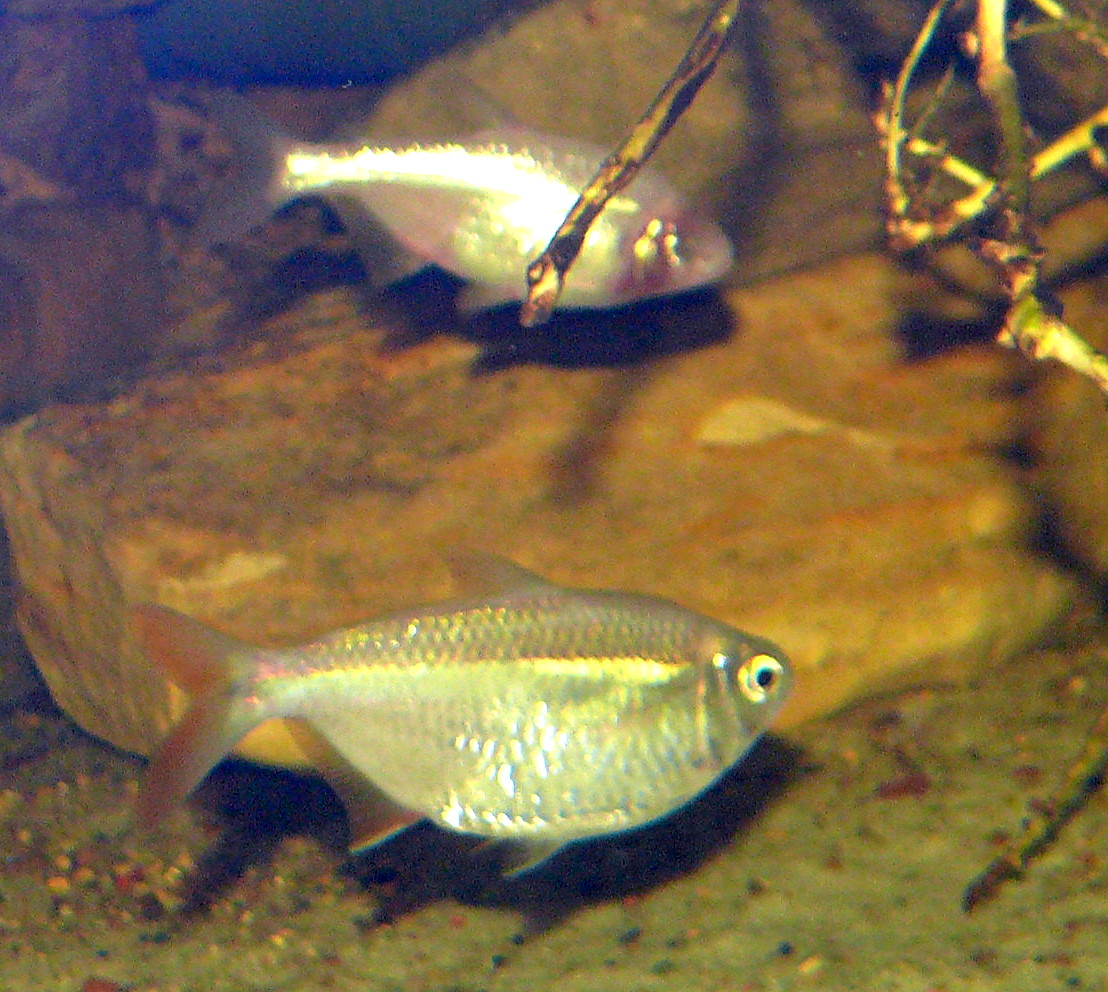
The three-spined stickleback has repeatedly lost its bony armour after moving from the sea into lakes, letting scientists trace the genes involved. Sighted and blind forms of the Mexican tetra show how eyes are lost in caves. The turquoise killifish, which lives only a few months, is used to study ageing. The coelacanth and lungfish shed light on how fish first moved onto land, and the spotted gar's genome helps link fish genes to human ones.
Famous science and research fish




Still to be written: Nothobranchius furzeri, Guppy.
Further reading
 WorldCommon fangtooth
A small, black deep-sea fish with large fangs found worldwide.Other · Open ocean · 1833
 WorldStoplight loosejaw
Deep-sea dragonfish that hunts with invisible red light.Shark · Deep sea · 1848
 🇺🇸 United States and 3 moreStethacanthus
Extinct Devonian-Carboniferous shark with a distinctive anvil-shaped dorsal fin.Shark · Coasts and shelves · 1874
 🇿🇦 South Africa and 1 moreCoelacanth
Ancient lobe-finned fish thought extinct until rediscovered in the twentieth century.Ancient · Coasts and shelves · 1839
 🇿🇦 South Africa and 4 moreWest Indian Ocean coelacanth
Rare deep-sea fish with blue scales and limb-like fins.Ancient · Deep sea · 1938
 🇮🇩 IndonesiaIndonesian coelacanth
A rare brown deep-sea fish found in Indonesian waters.Ancient · Open ocean · 1999
 WorldDeepsea lizardfish
A deep-ocean predator with a flattened head and large eyes found in tropical seas worldwide.Other · Deep sea · 1878
 WorldGlasshead barreleye
Deep-sea fish with mirror-based eyesOther · Open ocean
 WorldBarreleye
Deep-sea fish with tubular eyes and a light-producing anusOther · Open ocean
 WorldHumpback anglerfish
Deep-sea black seadevil with a glowing lureOther · Open ocean · 1863
 WorldPelican eel
A deep-sea eel with a massive hinged jaw and ultra-black skin found in all oceans.Eel · Deep sea
 WorldSloane's viperfish
Deep-sea dragonfish with huge teeth and light organsOther · Open ocean · 1801
 WorldSlender snipe eel
A deep-sea eel with a bird-like beak and extreme length.Eel · Open ocean
 WorldBlack swallower
Deep-sea fish that eats prey larger than itselfOther · Open ocean
 WorldPacific blackdragon
Deep-sea fish with light-absorbing skin and a glowing chin lure.Other · Open ocean
🇨🇦 Canada and 1 moreAtlantic hagfish
A jawless marine scavenger known for its slime and lack of true eyes.Ancient · Deep sea · 1758
 WorldTripod fish
Deep-sea fish that stands on elongated finsOther · Open ocean
Photo credits on this page
The small pictures above come from Wikimedia Commons under free licences. Some are cropped to fit.
- Common fangtooth: Brian Suda, CC BY-SA 2.0, source
- Stoplight loosejaw: Rafael Bañón, CC BY 3.0, source
- Stethacanthus: Dmitry Bogdanov, CC BY-SA 3.0, source
- Mexican tetra: User:Haplochromis, CC BY-SA 3.0, source
- Coelacanth: Alberto Fernandez Fernandez, CC BY-SA 3.0, source
- Zebrafish: Roundish, CC0, source
- Indonesian coelacanth: Unknown author, CC BY-SA 2.5, source
- West Indian Ocean coelacanth: sybarite48, CC BY 2.0, source
- Three-spined stickleback: Gilles San Martin, CC BY-SA 2.0, source
- Spotted gar: Brian.gratwicke on English Wikipedia, CC BY 2.5, source
- Deepsea lizardfish: Bideault, Public domain, source
- Glasshead barreleye: Adrian Flynn, CC BY 1.0, source
- Barreleye: S. Johnsen (Duke Uni.) for courtesy of photos, J. Hlidberg for courtes, CC BY 4.0, source
- Humpback anglerfish: Emőke Dénes, CC BY-SA 4.0, source
- Pelican eel: Unknown author, Public domain, source
- Sloane's viperfish: Gervais et Boulart, Public domain, source
- Slender snipe eel: Unknown author, Public domain, source
- Black swallower: Unknown author, Public domain, source
- Pacific blackdragon: Unknown author, Public domain, source
- Tripod fish: null, CC BY 4.0, source
- Japanese rice fish: NOZO, CC BY 3.0, source