
Indonesian coelacanth
A rare brown deep-sea fish found in Indonesian waters.
The Indonesian coelacanth is a lobe-finned fish discovered in 1997 off Sulawesi. It lives in deep ocean caves and offers clues to early vertebrate evolution. Listed as vulnerable, it faces threats from bycatch and habitat damage despite legal protection.
- Brown skin distinguishes it from the blue African coelacanth.
- Gestation period may last three years, longest among vertebrates.
- Lives in deep ocean caves between 100 and 700 meters.
- Protected by Indonesian law and CITES Appendix I listing.
- Fewer than ten specimens recorded since 1998 discovery.
What it is
This species is a lobe-finned fish with a brownish-grey skin tone, distinct from the blue hue of its African relative. It features white mottling and golden flecks on its dorsal surface. The head is large, making up nearly thirty percent of its body length. Its fins are lobed and move in a pattern that suggests an evolutionary link to land animals. Hollow fin rays and an oil-filled notochord replace a traditional vertebral spine. Adults grow up to 1.4 meters long and can weigh over fifty kilograms.
Where it lives
Populations exist in the waters of North Sulawesi, Papua, Southwest Papua, and North Maluku. Specific sightings occur near Talise Island, Gangga Island, and Manado Bay. The fish also inhabits areas off the southern coast of Biak Island. It prefers steep rocky slopes, underwater grottos, and cliffs at depths between 100 and 700 meters. Water temperatures in these zones range from roughly 12 to 20 degrees Celsius. Geological barriers likely restrict its distribution to these specific Indonesian territories.
How it lives
The fish is nocturnal and hunts at night using ambush tactics. It often swims with its head up to save energy in the cold, dark depths. Its diet includes deep-sea fish, rays, and cephalopods. Specialized teeth help it slice and hold prey. The species has visual adaptations for blue light and an organ that detects electrical signals. It maintains a slow metabolic rate to survive in an environment where food is scarce. Juveniles share similar habitats with adults, suggesting limited breeding dispersal.
Breeding and life cycle
Reproduction is ovoviviparous, meaning eggs hatch inside the mother. No pregnant females have been captured, so details remain theoretical. Gestation may last three years, the longest known for any vertebrate. Each cycle produces few offspring, typically between five and twenty-five. Juveniles emerge at about 30 centimeters in length. Mating is believed to be monogamous. The population is small, with fewer than ten specimens officially documented since discovery.
Fish and people
Locals call it raja laut or king of the sea. It holds significant cultural value as a symbol of marine conservation in Indonesia. The species is inedible, yet foreign buyers sometimes seek it for museums or aquariums. It was granted protected status under national law in 1999 and listed in CITES Appendix I to ban international trade. Despite this, accidental capture in deep-sea gillnets remains a problem. Conservation efforts include marine protected areas like Bunaken National Park.
Status and threats
The International Union for Conservation of Nature lists it as vulnerable. Threats include bycatch in shark nets, pollution, and habitat siltation. Coastal development increases sedimentation, damaging the complex deep-sea structures the fish needs. Climate change effects are not yet fully understood. Legal protections prohibit targeted fishing, but enforcement challenges persist. The small population size and limited geographic range make it highly susceptible to local extinction events.

Questions people ask about Indonesian coelacanth
How does it differ from the African coelacanth?
The Indonesian species has brownish-grey skin instead of blue. It also possesses longer pectoral fins and shorter pelvic fins. Genetic analysis shows a divergence of thirty to forty million years between the two populations.
Is it safe to eat Indonesian coelacanth?
The flesh is considered inedible. There are no fisheries targeting this species for food. However, illegal attempts to sell specimens to collectors or museums have occurred despite international trade bans.
Where can you find this fish in the wild?
It inhabits deep waters off North Sulawesi, Papua, and North Maluku. Specific locations include Manado Bay and Biak Island. They live in rocky caves and slopes at depths exceeding one hundred meters.
Good reading and sources
- Indonesian coelacanth on WikipediaEncyclopedia
- More photos on Wikimedia CommonsPhotos
- Wikidata recordOpen data
The facts on this page come from the Wikipedia article "Indonesian coelacanth", written by its contributors and used under the CC BY-SA 4.0 licence, and from its Wikidata record (CC0). EveryFish rewrote the text in its own words, with AI assistance, and compares every page with the article to make sure no passage is copied. It may be reused under the same CC BY-SA 4.0 licence with a link back.
It may contain mistakes, and figures change over time. Nothing here is investment or buying advice. If something is wrong, tell us. Last refreshed 2026-11-15.
Like Indonesian coelacanth
All ancient fish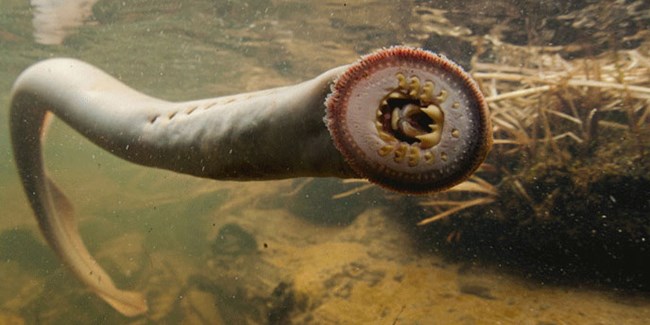 🇺🇸 United States and 1 morePacific lamprey
An anadromous parasitic jawless fish found along the Pacific Rim.Ancient · Rivers and lakes · 1872
 🇿🇦 South Africa and 1 moreCoelacanth
Ancient lobe-finned fish thought extinct until rediscovered in the twentieth century.Ancient · Coasts and shelves · 1839
 🇿🇦 South Africa and 4 moreWest Indian Ocean coelacanth
Rare deep-sea fish with blue scales and limb-like fins.Ancient · Deep sea · 1938
 🇺🇸 United States and 1 moreShortnose sturgeon
A small, endangered North American sturgeon with a short snout.Ancient · Rivers and lakes · 1818