
Coelacanth
Ancient lobe-finned fish thought extinct until rediscovered in the twentieth century.
Coelacanths are ancient lobe-finned fish that were believed to have vanished sixty-six million years ago. The discovery of living specimens in the West Indian Ocean and Indonesia overturned this assumption, revealing a lineage closely related to tetrapods.
- First living specimen found in South Africa in 1938.
- Second species discovered in Indonesia in 1997.
- Possess a rostral organ for detecting electrical signals.
- Retain an oil-filled notochord throughout life.
- More closely related to humans than to most fish.
What it is
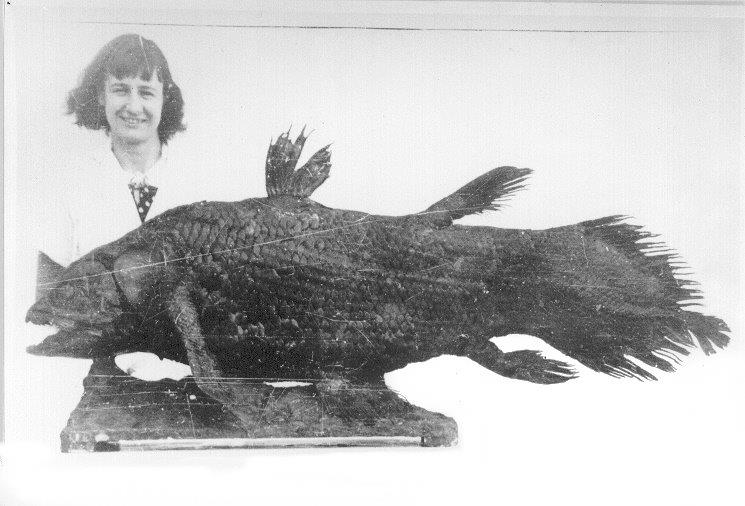
Coelacanths belong to the class Actinistia, an ancient group of lobe-finned fish. They possess eight fins, including two dorsal, two pectoral, two pelvic, one anal, and one caudal fin. Their tails feature a unique three-lobed structure with a secondary tail extending past the primary one. These fish retain an oil-filled notochord, a hollow tube replaced by vertebrae in most other vertebrates. Their scales are circular and overlapping, lacking the hard coating found in many other fish. A distinctive rostral organ sits at the front of their head, serving as an electroreceptor.
Where it lives
Fossil evidence shows these fish once inhabited waters globally, appearing on every continent except Antarctica. Today, only two living species remain. The West Indian Ocean coelacanth lives off the coasts of South Africa, Kenya, Tanzania, Mozambique, Madagascar, and the Comoros. The Indonesian coelacanth inhabits the seas around northern Central Sulawesi and extends eastward to Papua. Both species prefer deep reef environments and volcanic slopes.
How it lives
Living coelacanths hunt at night, drifting near motionlessness before striking prey. They feed on cuttlefish, squid, snipe eels, small sharks, and other fish. To locate prey, they may swim backwards, upside down, or head-down. They use ocean currents to drift and rely on their paired fins for stabilization rather than propulsion. Their rostral organ detects electrical signals from nearby prey just before an attack. Fossil species showed diverse swimming styles, with some being fast cruisers and others slow undulators.
Fish and people
Marjorie Courtenay-Latimer discovered the first living specimen in South Africa in 1938. She sent drawings to ichthyologist J. L. B. Smith, who confirmed its significance. The second species was identified in Indonesia in 1997 by Mark V. Erdmann and Arnaz Mehta at a local fish market. These fish are studied for their evolutionary link to tetrapods. They are considered vulnerable due to fishing pressures and habitat changes.
Status and threats
The International Union for Conservation of Nature lists coelacanths as vulnerable. Fishing activities pose a threat to their populations. Habitat degradation in deep reef areas also impacts their survival. Conservation efforts focus on protecting their specific marine environments. Research continues to understand their genetic diversity and population structures.


Questions people ask about Coelacanth
Why are coelacanths called living fossils?
They were thought extinct for sixty-six million years until living specimens were found. This makes them examples of Lazarus taxa, reappearing after disappearing from the fossil record. Their body plan has remained relatively stable over millions of years.
How do coelacanths hunt their prey?
They are nocturnal drift-hunters that often remain nearly motionless. They use up- or down-welling currents to move. They can swim backwards or upside down to locate prey using their electroreceptive rostral organ before striking.
What is special about their tail structure?
Their tail is trilobate, meaning it has three lobes. A secondary tail extends past the primary tail, separating the upper and lower halves. This structure allows for sudden acceleration despite generally slow swimming speeds.
Where do living coelacanths live today?
Two species exist. One lives in the West Indian Ocean off Africa, including the Comoros and South Africa. The other inhabits the seas of eastern Indonesia, particularly around Sulawesi and Papua.
Are coelacanths dangerous to humans?
There is no information in the sources indicating they are dangerous to humans. They are opportunistic feeders on smaller marine animals like squid and small sharks. They are not described as venomous or aggressive toward people.
Good reading and sources
- Fish’s DNA May Explain How Fins Turned to Feet (Published 2013)The New York Times, Article
- 'Living fossil' coelacanth genome sequencedBBC, Article
- A Living Fish of Mesozoic TypeNature, Article
The facts on this page come from the Wikipedia article "Coelacanth", written by its contributors and used under the CC BY-SA 4.0 licence, and from its Wikidata record (CC0). EveryFish rewrote the text in its own words, with AI assistance, and compares every page with the article to make sure no passage is copied. It may be reused under the same CC BY-SA 4.0 licence with a link back.
It may contain mistakes, and figures change over time. Nothing here is investment or buying advice. If something is wrong, tell us. Last refreshed 2026-11-15.
Like Coelacanth
All ancient fish 🇺🇸 United States and 1 moreShortnose sturgeon
A small, endangered North American sturgeon with a short snout.Ancient · Rivers and lakes · 1818
 🇮🇩 IndonesiaIndonesian coelacanth
A rare brown deep-sea fish found in Indonesian waters.Ancient · Open ocean · 1999
 🇺🇸 United States and 1 moreAtlantic sturgeon
A large anadromous fish native to the western Atlantic Ocean and its river systems.Ancient · Rivers and lakes
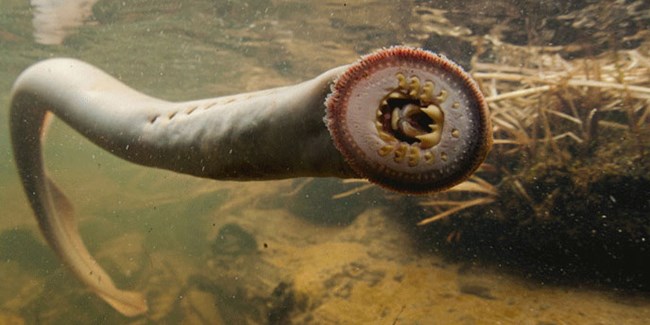 🇺🇸 United States and 1 morePacific lamprey
An anadromous parasitic jawless fish found along the Pacific Rim.Ancient · Rivers and lakes · 1872