
Shortnose sturgeon
A small, endangered North American sturgeon with a short snout.
The shortnose sturgeon is an ancient fish found along the East Coast of North America. It faces threats from habitat loss and overfishing, leading to its protected status under US law.
- Smallest sturgeon species on the North American East Coast.
- Lives up to 70 years, with slow sexual maturity.
- Protected under the US Endangered Species Act since 1967.
- Spawns in freshwater gravel beds, migrating from saltwater.
- Population in Delaware River shows signs of recovery.
What it is
The shortnose sturgeon is a small member of the sturgeon family, distinguished by its relatively short and round head compared to the Atlantic sturgeon. It has a cylindrical body covered in five rows of bony plates called scutes. The fish is dark brown or olive on top, with a cartilaginous skeleton that includes bones only in the skull and jaw. Its mouth is a protractile tube used for sucking food from the river bottom, aided by sensory barbels. Adults typically reach lengths between three and four feet, making them the smallest sturgeon species on the eastern seaboard of North America.
Where it lives
This species inhabits rivers and coastal waters along the East Coast of North America. Its historical range extended from the Saint John River in New Brunswick down to the Indian River in Florida. Today, populations are fragmented across forty-one bays and rivers, with a significant gap separating northern and southern groups. Notable populations exist in the Delaware River, where numbers have recovered, while the species is extinct in Washington, D.C., and possibly Rhode Island and Virginia. Southern populations persist in rivers such as the Altamaha and Savannah.
How it lives
Shortnose sturgeons are anadromous, meaning they migrate upstream to spawn but spend most of their lives in rivers and estuaries. They feed on bottom-dwelling organisms like amphipods, bivalves, and worms using their specialized mouths. Males mature sexually between two and fourteen years, while females take six to seventeen years. Females often stop feeding months before spawning to produce eggs. Predators include grey seals for adults and yellow perch for young fish. The species is considered a living fossil due to its ancient lineage dating back to the Cretaceous period.
Breeding and life cycle
Spawning occurs in moving freshwater over gravel or rubble bottoms, triggered by water temperatures between 6.5 and 15 degrees Celsius. Timing varies by latitude, occurring as early as January in South Carolina and as late as May in Canada. Eggs hatch after thirteen days into tiny larvae with large yolk sacs. These juveniles drift downstream in freshwater for their first year before moving to brackish water. Females lay between forty thousand and two hundred thousand eggs every three to five years, providing no parental care after spawning.
Fish and people
Native Americans and early settlers harvested this fish for meat and eggs, with commercial fishing peaking in the nineteenth century. Overexploitation led to severe population declines, prompting protection under the Endangered Species Act in 1967. The fish is now studied extensively for conservation biology and habitat restoration. While once a food source, it is no longer commercially fished due to its endangered status. Conservation efforts focus on removing dams and improving water quality to support recovery programs.
Status and threats
The shortnose sturgeon is listed as vulnerable by the IUCN and endangered under US law. Threats include habitat degradation from industrialization, pollution with endocrine-disrupting chemicals, and physical barriers like dams that block migration. Ship strikes, dredging, and bycatch in other fisheries also harm populations. Climate change may exacerbate these issues by altering water temperatures and algal blooms. Conservation plans aim to restore genetic diversity and remove obstacles to fish passage to ensure long-term survival.


Questions people ask about Shortnose sturgeon
How can you tell a shortnose sturgeon from an Atlantic sturgeon?
The shortnose sturgeon has a significantly shorter and rounder snout compared to the Atlantic sturgeon. It is also smaller in overall size, reaching about four feet maximum, whereas Atlantic sturgeons grow much larger. Historically, they were both caught as common sturgeon, but visual inspection of the head shape distinguishes them.
Where do shortnose sturgeons live?
They inhabit rivers, estuaries, and coastal waters along the East Coast of North America. Their range stretches from New Brunswick in Canada to Florida in the United States. They prefer freshwater for spawning but spend most of their adult lives in brackish or coastal environments near shorelines.
What do shortnose sturgeons eat?
They are bottom-feeders that consume benthic invertebrates. Their diet primarily consists of amphipods, bivalves, gastropods, and polychaete worms. They use their tube-like mouth to suck prey from the riverbed, crushing hard items with bony plates in their esophagus rather than teeth.
Why is the shortnose sturgeon endangered?
Historical overfishing in the nineteenth century caused massive population declines. Current threats include habitat loss from dams, pollution with industrial chemicals, ship strikes, and dredging. These factors disrupt migration and spawning, preventing recovery despite legal protections enacted in 1967.
Good reading and sources
- Shortnose sturgeon on WikipediaEncyclopedia
- More photos on Wikimedia CommonsPhotos
- Wikidata recordOpen data
The facts on this page come from the Wikipedia article "Shortnose sturgeon", written by its contributors and used under the CC BY-SA 4.0 licence, and from its Wikidata record (CC0). EveryFish rewrote the text in its own words, with AI assistance, and compares every page with the article to make sure no passage is copied. It may be reused under the same CC BY-SA 4.0 licence with a link back.
It may contain mistakes, and figures change over time. Nothing here is investment or buying advice. If something is wrong, tell us. Last refreshed 2026-11-15.
Like Shortnose sturgeon
All ancient fish 🇺🇸 United States and 1 moreAtlantic sturgeon
A large anadromous fish native to the western Atlantic Ocean and its river systems.Ancient · Rivers and lakes
 🇷🇺 Russia and 2 moreKaluga
A massive semi-anadromous sturgeon from the Amur River basin hunted for caviar.Ancient · Rivers and lakes · 1872
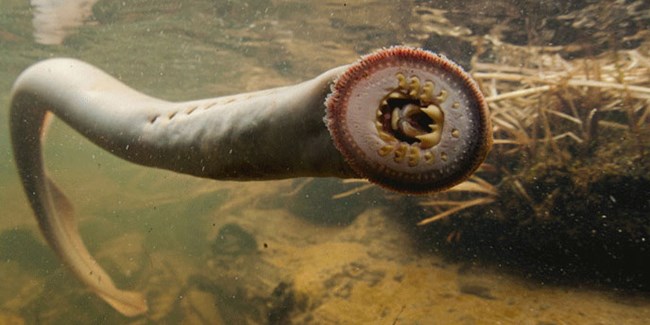 🇺🇸 United States and 1 morePacific lamprey
An anadromous parasitic jawless fish found along the Pacific Rim.Ancient · Rivers and lakes · 1872
 🇺🇸 United States and 4 moreSea lamprey
A jawless, parasitic fish native to the Northern Hemisphere that attacks other fish.Ancient · Rivers and lakes · 1758
More from Acipenseridae
All of them 🇺🇸 United StatesShovelnose sturgeon
Smallest North American freshwater sturgeon, known for its shovel-shaped snout and caviar production.Ancient · Rivers and lakes · 1820
 🇷🇺 RussiaSterlet
A small Eurasian sturgeon found in rivers flowing to the Black, Azov, and Caspian seas.Ancient · Rivers and lakes · 1758
 🇺🇸 United StatesPallid sturgeon
An endangered North American sturgeon species native to the Missouri and Mississippi river basins.Ancient · Rivers and lakes · 1905
 🇺🇸 United States and 1 moreLake sturgeon
A large, long-lived freshwater fish native to North America.Ancient · Rivers and lakes