
Pallid sturgeon
An endangered North American sturgeon species native to the Missouri and Mississippi river basins.
The pallid sturgeon is a large, ancient freshwater fish found in the United States. It faces severe population declines due to habitat loss from dams and channelization, leading to its protected status since 1990.
- Lives up to 100 years and reaches maturity at 15 years old.
- Distinctive pale coloration and cartilaginous armor plates.
- Endemic to Missouri and Mississippi river basins in the USA.
- Spawns infrequently, every three to ten years.
- Eggs historically used for caviar production.
What it is
This ray-finned fish belongs to the sturgeon family, a lineage dating back 70 million years. It possesses a primitive, dinosaur-like appearance with a cartilaginous skeleton covered by five rows of protective bony plates rather than scales. The body is grayish-white, becoming paler with age, which distinguishes it from the darker shovelnose sturgeon. Adults typically measure between 76 and 152 centimetres and can weigh up to 39 kilograms. Its head features a long snout and four sensory barbels used to locate food on the riverbed.
Where it lives
The species is endemic to the central United States, primarily inhabiting the Missouri and lower Mississippi River basins. Historical records suggest it may have once reached the St. Croix River, but current populations are restricted to these main waterways and the Atchafalaya River in Louisiana. The fish prefers turbid waters with depths ranging from three to twenty-five feet. It thrives in areas with sandy substrates and moderate to swift currents, often utilizing wider channels and mid-channel sandbars.
How it lives
Pallid sturgeon are bottom feeders that use their extendable mouths to suck up small fish and mollusks from the river floor. They lack teeth and rely on sensory barbels to detect prey. These fish are capable of significant movement, traveling up to twenty-one kilometres per day at speeds reaching nine kilometres per hour. They prefer warmer, muddy waters typical of pre-dam conditions. Predators are not explicitly detailed in the provided text, but their low survival rate as larvae suggests high mortality during early development stages.
Breeding and life cycle
Females reach reproductive maturity at approximately fifteen years of age, while males mature much earlier at five to seven years. Spawning occurs between May and July, with intervals of three to ten years between events. Historically, adults migrated upstream to deposit hundreds of thousands of eggs on rocky surfaces. Eggs hatch within a week, and larvae drift downstream before settling in slower waters. Natural reproduction has been rare recently, though wild spawning events have been documented in restored river sections.
Fish and people
Anglers previously valued this species for sport fishing due to its substantial size in freshwater environments. The meat is considered good-tasting, and the roe has been processed into caviar, though less frequently than other sturgeon varieties. Conservation efforts include raising offspring in hatcheries and releasing them into the wild. Researchers implant radio transmitters to track movements and identify spawning grounds. Federal and state agencies collaborate to restore gravel deposits and side channels essential for breeding.
Status and threats
Listed as endangered in 1990, the pallid sturgeon suffers from critically low numbers of young individuals. Habitat degradation caused by damming and channelization of the Missouri River has destroyed favored spawning areas. Genetic studies reveal distinct populations, with northern groups being reproductively isolated. Hybridization with the more common shovelnose sturgeon poses additional genetic concerns. Recovery programs aim to boost wild populations through hatchery releases and habitat restoration, but sightings remain rare.


Questions people ask about Pallid sturgeon
How does the pallid sturgeon differ from the shovelnose sturgeon?
The pallid sturgeon is significantly larger, weighing up to 39 kilograms compared to the shovelnose's maximum of 2.3 kilograms. It also exhibits a much paler, grayish-white coloration, whereas the shovelnose is brown. Additionally, the pallid has longer inner barbels positioned in front of the outer ones, unlike the straight alignment found in shovelnose sturgeons.
Why is the pallid sturgeon population declining?
The primary cause is habitat loss resulting from the damming and channelization of the Missouri River. This infrastructure reduces the gravel deposits and slow-moving side channels required for spawning. Consequently, natural reproduction has become extremely rare, and the remaining population consists largely of aging individuals with few juveniles observed.
What is the conservation status of this fish?
The pallid sturgeon is classified as endangered. It was added to the U.S. Fish and Wildlife Service list in 1990 due to severely diminished sightings and a lack of young fish. Conservationists actively raise offspring in hatcheries and release them to support wild populations, alongside efforts to restore critical spawning habitats.
Good reading and sources
- Pallid sturgeon on WikipediaEncyclopedia
- More photos on Wikimedia CommonsPhotos
- Wikidata recordOpen data
The facts on this page come from the Wikipedia article "Pallid sturgeon", written by its contributors and used under the CC BY-SA 4.0 licence, and from its Wikidata record (CC0). EveryFish rewrote the text in its own words, with AI assistance, and compares every page with the article to make sure no passage is copied. It may be reused under the same CC BY-SA 4.0 licence with a link back.
It may contain mistakes, and figures change over time. Nothing here is investment or buying advice. If something is wrong, tell us. Last refreshed 2026-11-15.
Like Pallid sturgeon
All ancient fish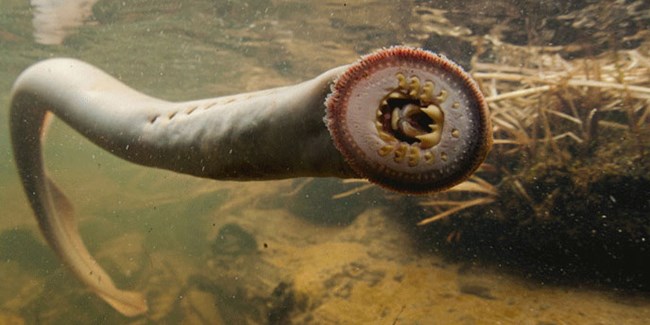 🇺🇸 United States and 1 morePacific lamprey
An anadromous parasitic jawless fish found along the Pacific Rim.Ancient · Rivers and lakes · 1872
 🇳🇬 NigeriaGymnarchus
African electric fish with a long dorsal fin used for swimming and sensing prey.Ancient · Rivers and lakes · 1829
 🇺🇸 United States and 1 moreShortnose sturgeon
A small, endangered North American sturgeon with a short snout.Ancient · Rivers and lakes · 1818
 🇺🇸 United StatesAmerican paddlefish
Ancient freshwater fish with a sensory snout and filter-feeding habits.Ancient · Rivers and lakes · 1792
More from Acipenseridae
All of them 🇷🇺 Russia and 2 moreKaluga
A massive semi-anadromous sturgeon from the Amur River basin hunted for caviar.Ancient · Rivers and lakes · 1872
 🇺🇸 United StatesShovelnose sturgeon
Smallest North American freshwater sturgeon, known for its shovel-shaped snout and caviar production.Ancient · Rivers and lakes · 1820
 🇷🇺 RussiaSterlet
A small Eurasian sturgeon found in rivers flowing to the Black, Azov, and Caspian seas.Ancient · Rivers and lakes · 1758
 🇺🇸 United States and 1 moreLake sturgeon
A large, long-lived freshwater fish native to North America.Ancient · Rivers and lakes