
Japanese rice fish
Small freshwater fish native to Japan and a key model organism.
The Japanese rice fish is a tiny species native to Japan that thrives in rice paddies and slow streams. It serves as a vital model organism in biological research due to its hardiness and rapid breeding cycle.
- First vertebrate to mate in orbit
- Can survive temperatures from 0 to 42 °C
- Female carries eggs before laying them
- Used extensively in genetic research
- Native only to specific Japanese islands
What it is
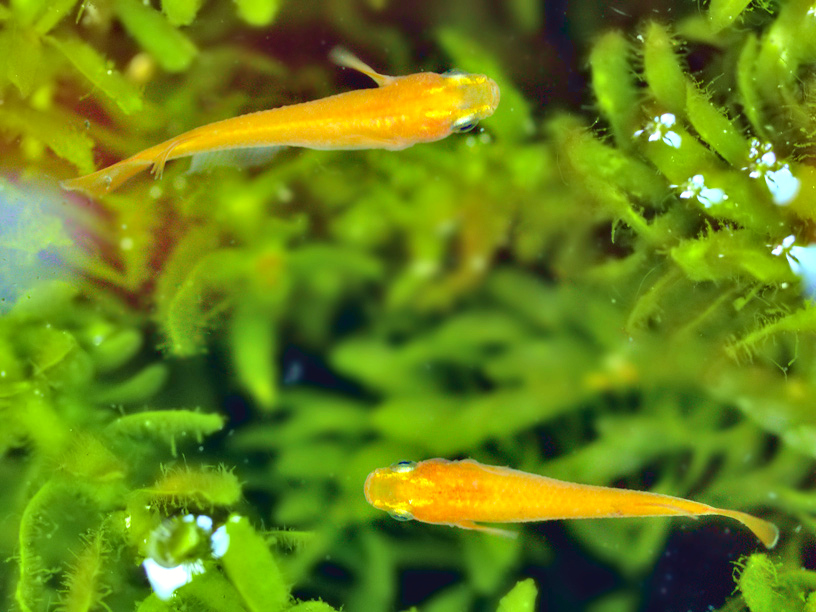
This small fish reaches lengths of about 3.6 centimetres. Wild individuals display creamy-white or yellowish hues, while captive breeds may appear orange, white, or bright yellow. It belongs to the genus Oryzias within the subfamily Oryziinae. The species is euryhaline, meaning it can tolerate both fresh and brackish water environments. Its body shape is compact, suited for shallow habitats like rice fields and marshes.
Where it lives
The native range is restricted to Japan, specifically eastern and southern Honshu, Shikoku, Kyushu, and nearby southern islands. Populations formerly grouped with this species in China and Korea are now classified separately. It inhabits rice paddies, shallow rivers, and tide pools. The fish withstands temperatures from freezing to 42 degrees Celsius, though it prefers 15 to 28 degrees. Introductions have occurred in Hokkaido, where the species is not indigenous.
How it lives
Medaka live in schools and can recognize individual faces within their group. They feed on small plankton and juvenile mosquitoes, providing a beneficial service by controlling pest populations. In the wild, they typically survive for two years, but laboratory conditions extend this to five years. They are active throughout the day and adapt well to varying water salinity levels due to advanced renal function.
Breeding and life cycle
Spawning occurs seasonally between spring and summer. Females produce 10 to 20 eggs per batch and can lay them daily under ideal conditions. After fertilization, the female carries the egg cluster attached near her anal fin before depositing them on aquatic plants. Hatching takes four to ten days. This rapid reproductive cycle makes them highly suitable for genetic studies.
Fish and people
Japanese keepers have valued medaka as pets since the 17th century. Today, rare strains command high prices, while common varieties remain affordable. Schools often raise them to teach children about life cycles. Scientists use them extensively in toxicology and genetics because they breed quickly and have a small genome. Transgenic lines that glow green or red exist but are banned in the European Union.
Status and threats
The International Union for Conservation of Nature lists the species as Least Concern due to its wide distribution. However, Japan’s Ministry of the Environment considers it endangered locally. Habitat loss from modernized agriculture threatens wild populations. Hybridization with domesticated orange strains reduces genetic diversity. Invasive mosquitofish also attack medaka, causing fin injuries that hinder reproduction.


Questions people ask about Japanese rice fish
Where does the Japanese rice fish live?
It is native to Japan, specifically Honshu, Shikoku, and Kyushu. It inhabits rice paddies, marshes, and slow streams. The fish tolerates both fresh and brackish water.
Why is it used in scientific research?
Medaka have a short generation time of seven weeks and a small genome. They breed prolifically and are hardy, making them ideal for studying genetics, toxicology, and development.
Is the Japanese rice fish endangered?
Globally it is listed as Least Concern. However, it is considered endangered in Japan due to habitat loss, pollution, and hybridization with domesticated aquarium strains.
Good reading and sources
- Japanese rice fish on WikipediaEncyclopedia
- More photos on Wikimedia CommonsPhotos
- Wikidata recordOpen data
The facts on this page come from the Wikipedia article "Japanese rice fish", written by its contributors and used under the CC BY-SA 4.0 licence, and from its Wikidata record (CC0). EveryFish rewrote the text in its own words, with AI assistance, and compares every page with the article to make sure no passage is copied. It may be reused under the same CC BY-SA 4.0 licence with a link back.
It may contain mistakes, and figures change over time. Nothing here is investment or buying advice. If something is wrong, tell us. Last refreshed 2026-11-15.
Like Japanese rice fish
All other fish WorldThree-spined stickleback
Small northern fish known for rapid evolution and complex breeding.Other · Rivers and lakes
 South AsiaGreen spotted puffer
Small brackish water pufferfish with a tiny genomeOther · Rivers and lakes
 🇺🇸 United States and 1 moreMexican tetra
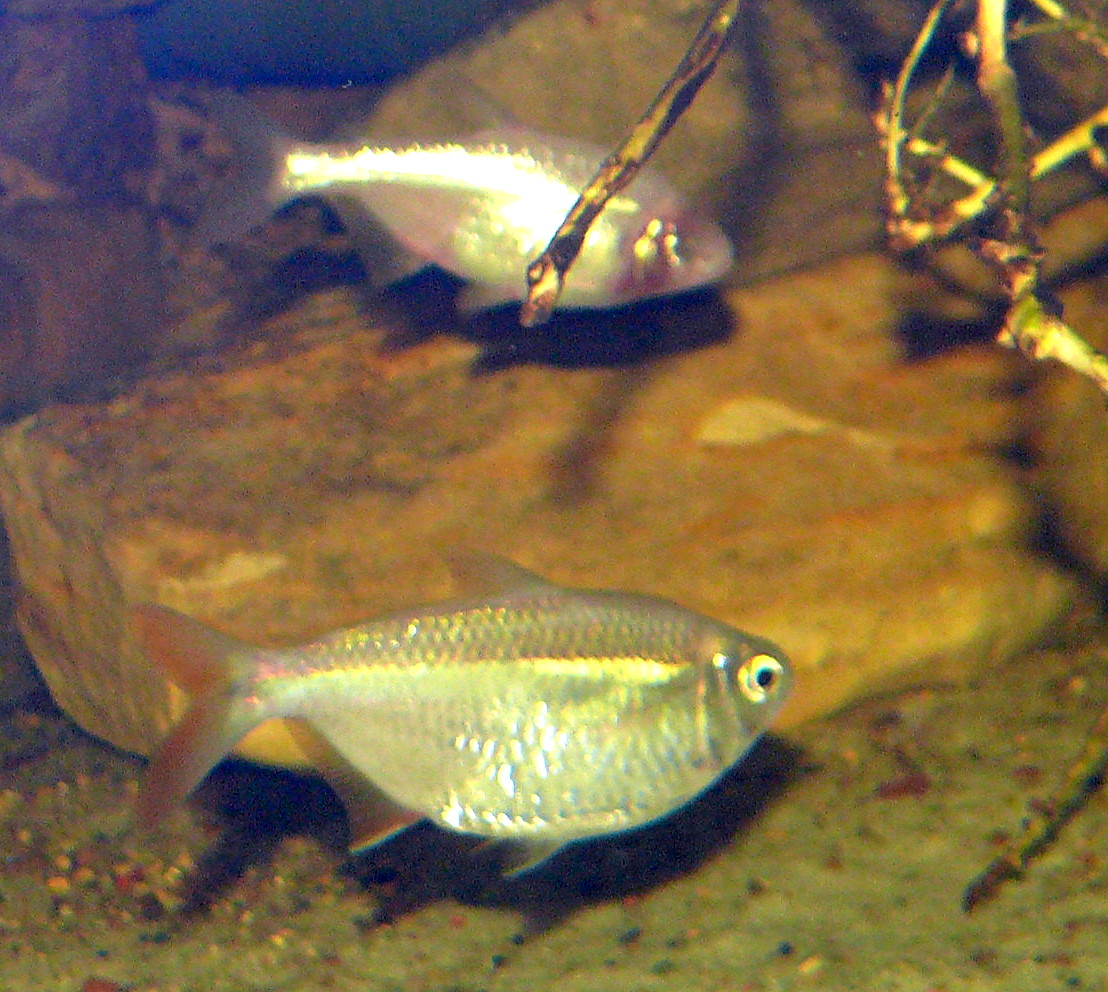
A freshwater characin with surface and blind cave forms, studied for evolutionary biology.Other · Rivers and lakes
 Southeast AsiaBumblebee goby
Small striped freshwater and brackish gobies from AsiaOther · Rivers and lakes