
Three-spined stickleback
Small northern fish known for rapid evolution and complex breeding.
The three-spined stickleback is a small fish found across the Northern Hemisphere in coastal and fresh waters. It is a key subject for studying evolution due to its rapid adaptation and varied body forms. Males build nests and care for young, displaying bright colours during breeding.
- Males build nests using a protein glue from their kidneys.
- Some populations evolved from marine to freshwater forms in just 12 years.
- Bright red throat colour indicates male health and diet quality.
- Fossil records show little morphological change for 10 million years.
What it is
This small fish has a laterally compressed body and lacks scales. Instead, bony plates protect its back, flanks, and belly. Three spines sit before the dorsal fin, giving the species its name. These spines can lock upright to deter predators. The tail base is slender, and the caudal fin has twelve rays. Colours range from olive to silvery green. During breeding, males develop bright red throats and blue eyes, while females may turn slightly pink.
Where it lives
It inhabits waters across the Northern Hemisphere, generally north of 30 degrees latitude. In North America, it ranges from Chesapeake Bay to Alaska and down the Pacific coast to California. European populations exist between 35 and 70 degrees north. Asian distribution extends from Japan to the Bering Straits. It prefers slow-moving water with vegetation, such as ponds, lakes, marshes, and sheltered bays. It is absent from the Arctic islands of Canada and the north coasts of Siberia and Alaska.
How it lives
Populations vary between anadromous forms that live in the sea and freshwater residents. Marine fish feed on plankton and other fish, while freshwater types often eat bottom-dwelling larvae and amphipods. Some consume terrestrial insects that fall into the water. Cannibalism of eggs and young occurs. Many fish take two years to mature, though some in extreme latitudes mature in one year. They often live in shoals outside the breeding season.
Breeding and life cycle
Males move to shallow areas in late April to build nests. They dig pits and bind plant material with a kidney secretion called spiggin. After creating a tunnel, the male performs a zigzag dance to attract females. A female enters the nest to lay up to 300 eggs, which the male fertilises. He then chases her away and guards the developing eggs against intruders. Multiple females may deposit eggs in one nest. The red throat colour signals male quality to potential mates.
Fish and people
Scientists study this fish extensively due to its ease of capture and maintenance in tanks. Its rapid evolutionary changes and diverse body forms provide insights into genetics and speciation. Researchers examine its behaviour, physiology, and parasite interactions. The species is not typically harvested for food or kept in home aquariums but remains vital for academic research in ethology and ecology.
Status and threats
The International Union for Conservation of Nature lists the species as Least Concern due to its wide distribution. However, specific freshwater populations face threats. In British Columbia, pairs of distinct benthic and limnetic forms are endangered. Predatory catfish introduced to Hadley Lake destroyed one pair, while interbreeding has merged another in Enos Lake. Pollution and habitat changes drive rapid adaptation in some Alaskan lakes.


Questions people ask about Three-spined stickleback
Why is it called the three-spined stickleback?
The name comes from the three sharp spines located in front of the dorsal fin. These spines can lock in an erect position, making the fish difficult for predators to swallow. Some individuals may have two or four spines, but three is the standard.
Do they live in salt water or fresh water?
They are highly tolerant of salinity changes. Many populations are anadromous, living in the sea but breeding in fresh or brackish water. Others spend their entire lives in freshwater lakes and streams. They can survive in all three water types.
How do they reproduce?
Males build spherical nests from plant debris glued together with a kidney secretion. They court females with a zigzag dance. After the female lays eggs in the nest, the male fertilises them and guards the clutch until they hatch, chasing away other fish.
Good reading and sources
- Three-spined stickleback on WikipediaEncyclopedia
- More photos on Wikimedia CommonsPhotos
- Wikidata recordOpen data
The facts on this page come from the Wikipedia article "Three-spined stickleback", written by its contributors and used under the CC BY-SA 4.0 licence, and from its Wikidata record (CC0). EveryFish rewrote the text in its own words, with AI assistance, and compares every page with the article to make sure no passage is copied. It may be reused under the same CC BY-SA 4.0 licence with a link back.
It may contain mistakes, and figures change over time. Nothing here is investment or buying advice. If something is wrong, tell us. Last refreshed 2026-11-15.
Like Three-spined stickleback
All other fish 🇺🇸 United States and 2 moreGar
Ancient armored fish with lung-like swim bladders found in North American waters.Ancient · Rivers and lakes · 1758
 WorldNile perch
Large freshwater predator native to Africa, now invasive in many lakes.Other · Rivers and lakes
 🇵🇭 Philippines and 4 moreMilkfish
The sole living species of the family Chanidae, found across the Indo-Pacific.Other · Coasts and shelves
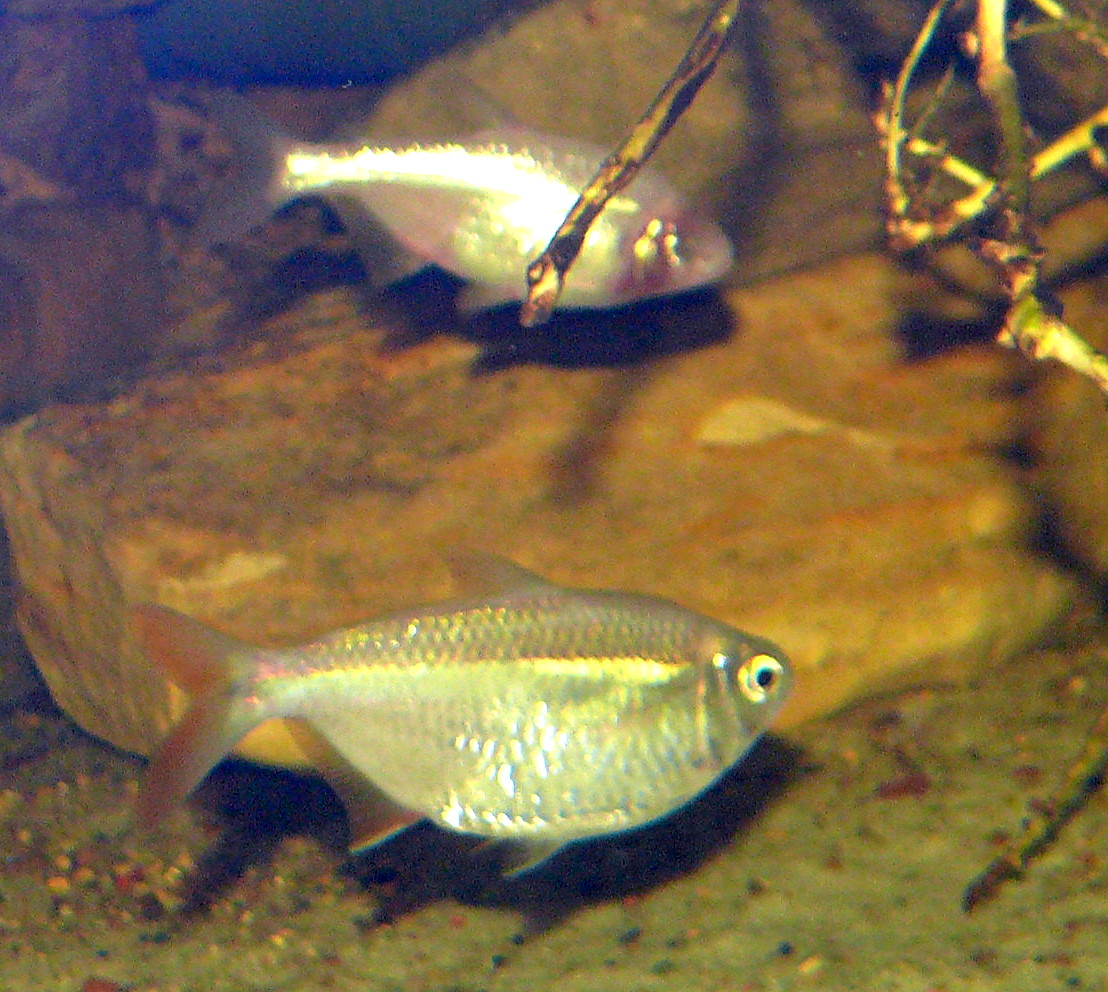 🇺🇸 United States and 1 moreMexican tetra
A freshwater characin with surface and blind cave forms, studied for evolutionary biology.Other · Rivers and lakes
