
Spotted gar
A small North American freshwater fish with a long snout and spotted scales.
The spotted gar is a primitive freshwater fish found in slow-moving waters across eastern North America. It feeds on smaller fish and crustaceans using its needle-like teeth, though habitat loss and pollution threaten its populations in the north.
- Spotted gars can live up to 18 years in the wild.
- Their eggs are green and highly toxic to predators.
- They breathe air via a gas bladder in low-oxygen water.
- High mercury levels make them unsafe for consumption.
- They are listed as threatened in Canada.
What it is
The spotted gar is one of the smallest gar species in North America, reaching lengths of up to 0.91 metres. Its body is elongated and dart-shaped, covered in thick diamond-shaped enamel scales known as ganoid scales. The fish displays dark spots across its head, fins, and body. It possesses a long, narrow mouth filled with sharp, needle-like teeth designed for gripping prey. This ancient lineage retains primitive features, including the ability to gulp atmospheric air into a gas bladder to survive in low-oxygen environments.
Where it lives
This species inhabits clear, slow-moving waters such as creeks, rivers, and lakes throughout eastern North America. Its range extends from southern Ontario westward to the Devils River in Texas, east to the northern Gulf of Mexico coast, and south to the lower Apalachicola River in Florida. Populations are denser in the Mississippi River basin but decline in northern areas like Lake Erie due to habitat destruction and pollution. Historical records also note presence in the Thames and Sydenham Rivers in Ontario.
How it lives
Spotted gars are voracious predators that primarily hunt at night, consuming seventy percent of their food during these hours. Their diet consists largely of shrimp, along with various fish species like bluegill and sunfish, as well as insect larvae and algae. They prefer submerged branches for cover and avoid exposed banks. Movement increases in warmer spring and summer months. As apex predators in their local ecosystems, they face few threats from other animals, except for larger carnivorous fish targeting juveniles.
Breeding and life cycle
Spawning occurs in spring when water temperatures reach between 21 and 26 degrees Celsius. Females lay approximately 13,000 green, adhesive eggs on aquatic vegetation. These eggs are highly toxic to potential predators. After ten to fourteen days, the eggs hatch, leaving the young vulnerable. Males mature at two or three years old, while females take three to four years. Typical lifespans are eight years for males and ten for females, though some individuals can live up to eighteen years or longer in captivity.
Fish and people
In central and northern United States, this fish is rarely consumed due to high mercury levels and accumulated carcinogenic compounds. Studies have identified significant concentrations of heavy metals in their tissues, posing health risks. Consequently, they are not considered a food source in many regions. However, they hold cultural significance in some areas and are protected under Canadian law due to their threatened status. Conservation efforts focus on improving water quality and reducing chemical contamination.
Status and threats
The spotted gar faces significant threats from habitat destruction, sedimentation, and chemical pollution. In Canada, it is designated as threatened under the Species at Risk Act and the federal Fisheries Act. Management plans aim to minimize pollution and analyze contaminated samples. While not federally endangered in the United States, it appears on special concern lists in some northern states. The primary biological decline results from the loss of clear pools with aquatic vegetation needed for survival and reproduction.


Questions people ask about Spotted gar
Is the spotted gar safe to eat?
No, it is generally not eaten in central and northern United States. Research shows high concentrations of mercury and organic compounds, making it a cancer risk for humans who consume it.
How does the spotted gar survive in low oxygen?
It gulps air and sends it to a primitive lung called a gas bladder. This adaptation allows it to thrive in slow-moving, shallow waters where oxygen levels are typically low.
What do spotted gars eat?
They are voracious predators eating shrimp, insect larvae, algae, and various fish like bluegill and sunfish. They hunt mostly at night and use their needle-like teeth to catch fast-moving prey.
Why are spotted gars threatened?
Habitat destruction is the main cause. Loss of clear pools with aquatic vegetation, increased sedimentation, and chemical pollution reduce their survivability and reproductive success.
Good reading and sources
The facts on this page come from the Wikipedia article "Spotted gar", written by its contributors and used under the CC BY-SA 4.0 licence, and from its Wikidata record (CC0). EveryFish rewrote the text in its own words, with AI assistance, and compares every page with the article to make sure no passage is copied. It may be reused under the same CC BY-SA 4.0 licence with a link back.
It may contain mistakes, and figures change over time. Nothing here is investment or buying advice. If something is wrong, tell us. Last refreshed 2026-11-15.
Like Spotted gar
All ancient fish 🇨🇳 ChinaChinese paddlefish
A giant freshwater predator from China that is now extinct.Ancient · Rivers and lakes · 1862
 🇷🇺 Russia and 2 moreKaluga
A massive semi-anadromous sturgeon from the Amur River basin hunted for caviar.Ancient · Rivers and lakes · 1872
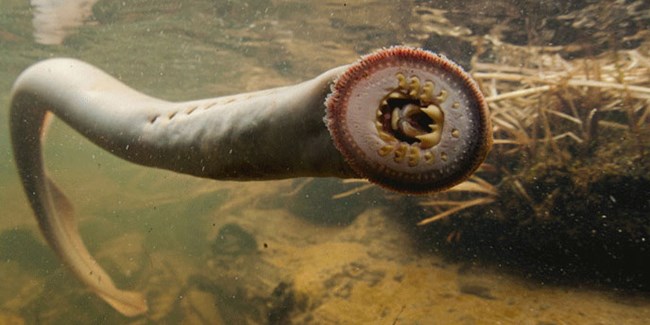 🇺🇸 United States and 1 morePacific lamprey
An anadromous parasitic jawless fish found along the Pacific Rim.Ancient · Rivers and lakes · 1872
 🇧🇯 Benin and 4 moreSaddled bichir
A large African freshwater fish with primitive lungs and multiple dorsal finlets.Ancient · Rivers and lakes · 1845
More from Lepisosteidae
All of them 🇺🇸 United States and 2 moreLongnose gar
A primitive ray-finned fish with a long snout and armored scales found in North America.Other · Rivers and lakes · 1758
 🇺🇸 United States and 2 moreGar
Ancient armored fish with lung-like swim bladders found in North American waters.Ancient · Rivers and lakes · 1758
 🇲🇽 Mexico and 2 moreTropical gar
A small freshwater predator from Central America known for its armored scales and air-breathing ability.Ancient · Rivers and lakes
 🇨🇺 CubaCuban gar
Large tropical freshwater predator native to western Cuba.Other · Rivers and lakes