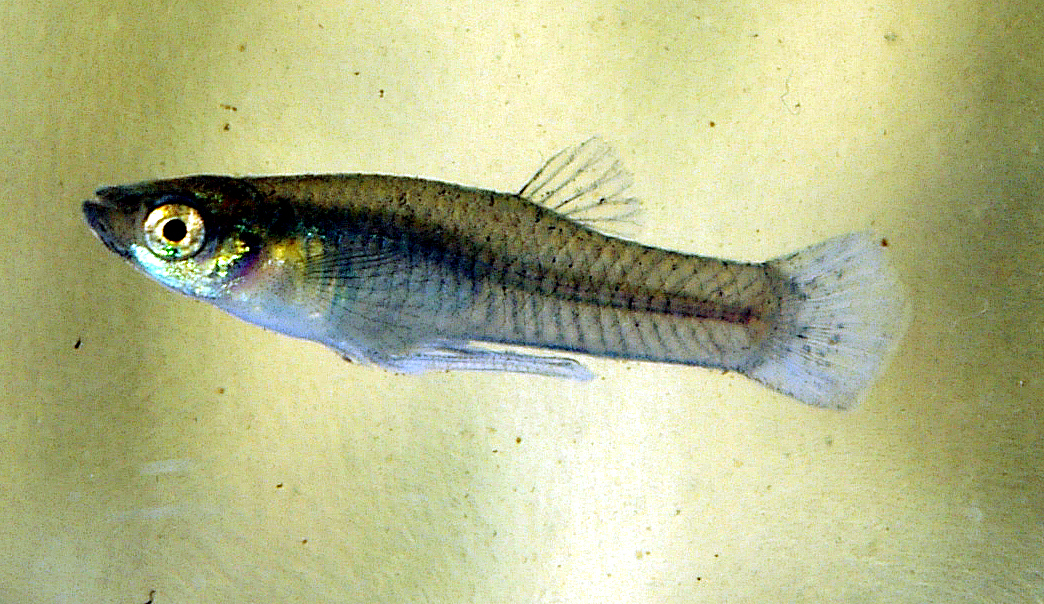
Xiphophorus
A genus of small livebearing fish native to Mexico and Central America, known for aquarium use and genetic research.
Xiphophorus is a group of freshwater and euryhaline fishes from the Poeciliidae family. They are native to Mexico and northern Central America. These small fish are widely kept in aquaria and used in scientific studies on genetics and disease.
- Max length reaches 16 cm depending on species.
- Key model organism for melanoma and hybridization research.
- Native to Mexico and northern Central America.
- Reproduce by giving birth to live young.
- Three species are common in the global aquarium trade.
What it is
Xiphophorus comprises small fishes belonging to the livebearing family Poeciliidae. Adults typically measure between 3.5 and 16 centimetres. The name reflects male anatomical features resembling swords. Members include platyfish and swordtails, though modern genetics shows these common names do not always match evolutionary lines. They possess streamlined bodies adapted for riverine environments.
Where it lives
Native populations span from the southern Rio Grande basin in Mexico through eastern drainages into the Gulf of Mexico. Their range extends northwards into Guatemala, Belize, and northern Honduras. Many species are endemic to specific Mexican river basins like the Pánuco and Coatzacoalcos. Some have been introduced globally, becoming invasive in new territories.
How it lives
These fish reproduce via internal fertilization, giving birth to free-swimming young rather than laying eggs. They often form groups in rivers and streams. Males display ornaments such as elongated tail fins to attract mates. In captivity, overcrowding with males can trigger aggression. They are hardy creatures capable of adjusting to varied water conditions in home tanks.
Breeding and life cycle
Females retain fertilized eggs internally until birth occurs. This live-bearing strategy allows for rapid population growth. Hybrids between different species frequently occur in nature and laboratories. Some species arise naturally from hybridization events. Captive breeding programs maintain genetic diversity for research purposes.
Fish and people
Three species dominate the aquarium trade due to their hardiness and ease of breeding. They are commonly sold alongside mollies and guppies. Scientists utilize them extensively for genetic research since the 1920s. Breeding centers preserve rare species that face extinction in the wild. Private aquarists help maintain insurance populations for threatened taxa.
Status and threats
Several species face severe threats from habitat loss and invasive competitors. The Monterrey platyfish and marbled swordtail are extinct in the wild. The spiketail and northern platyfish are classified as endangered. Conservation efforts rely heavily on captive breeding facilities. Localized species are particularly vulnerable to environmental changes in their restricted ranges.


Questions people ask about Xiphophorus
What kind of fish are Xiphophorus?
They are small freshwater and brackish livebearing fishes from the Poeciliidae family. Native to Mexico and Central America, they include popular aquarium species like platies and swordtails. They give birth to live young instead of laying eggs.
Why are they important to science?
Since the 1920s, scientists have used them to study genetics, hybridization, and pigmentation. They serve as a primary model for understanding spontaneous melanoma development in hybrids. Research helps explain how genes interact across different species.
Are they safe for aquariums?
Yes, three species are very hardy and adapt well to various water conditions. They are easy to breed in captivity. However, males may fight if females are scarce. Owners must ensure tanks have lids to prevent jumping.
What is their conservation status?
Many species are endangered or extinct in the wild due to habitat loss and invasive competition. Only captive populations survive for some taxa. Breeding centers and private hobbyists maintain these 'insurance' populations to prevent total extinction.
Good reading and sources
The facts on this page come from the Wikipedia article "Xiphophorus", written by its contributors and used under the CC BY-SA 4.0 licence, and from its Wikidata record (CC0). EveryFish rewrote the text in its own words, with AI assistance, and compares every page with the article to make sure no passage is copied. It may be reused under the same CC BY-SA 4.0 licence with a link back.
It may contain mistakes, and figures change over time. Nothing here is investment or buying advice. If something is wrong, tell us. Last refreshed 2026-11-15.
Like Xiphophorus
All killifish and livebearers WorldKillifish
Small egg-laying fish known for hardiness and short lifespansLivebearer · Rivers and lakes
 🇺🇸 United StatesLeast killifish
A tiny North American fish that gives birth to live young and measures just two centimetres long.Livebearer · Rivers and lakes
 🇧🇷 Brazil and 1 moreLargescale four-eyes
Surface-dwelling fish with split eyes for dual vision.Livebearer · Rivers and lakes · 1758
 🇺🇸 United States and 2 morePupfish
Small killifish known for surviving in extreme isolated waters.Livebearer · Rivers and lakes