
Hagfish
Eel-shaped jawless marine animals known for producing vast amounts of slime.
Hagfish are primitive, jawless fish that possess a skull but lack a vertebral column. They inhabit deep ocean waters worldwide and defend themselves with unique slime glands.
- Hagfish have a skull but no vertebral column.
- Slime expands 10,000 times its original size instantly.
- They can tie themselves in knots to escape predators.
- Skin contains nearly a third of their blood volume.
- Slime keratin is studied for body armor applications.
What it is
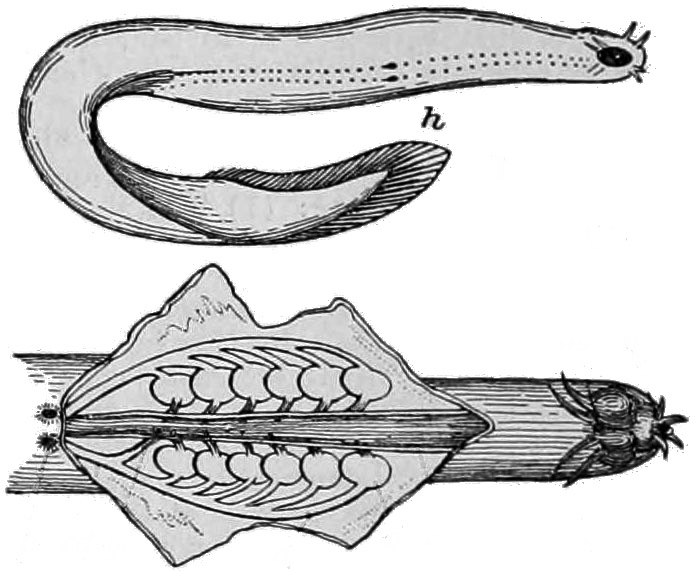
Hagfish belong to the class Myxini and are distinct among living animals for having a skull without a true vertebral column. Their bodies resemble eels, featuring elongated shapes and paddle-like tails covered by loose skin. They display dull pink, blue-grey, or black colours, often marked with spots. Unlike many fish, they lack true fins and jaws. Instead, they use horizontal dental plates with keratinous teeth to pull food. Simple eyespots detect light but cannot form images. A single nostril sits near their mouth, which is surrounded by sensory barbels.
Where it lives
These creatures live exclusively in marine habitats across the globe. Many species dwell in deep-sea environments, though some occupy shallower coastal waters. They are found on ocean floors where they act as both predators and scavengers. Their distribution spans various oceans, adapting to different depths and temperatures. The Atlantic and Pacific regions host specific representative subfamilies. Genetic studies indicate these ancient lineages have persisted since the Late Carboniferous period.
How it lives
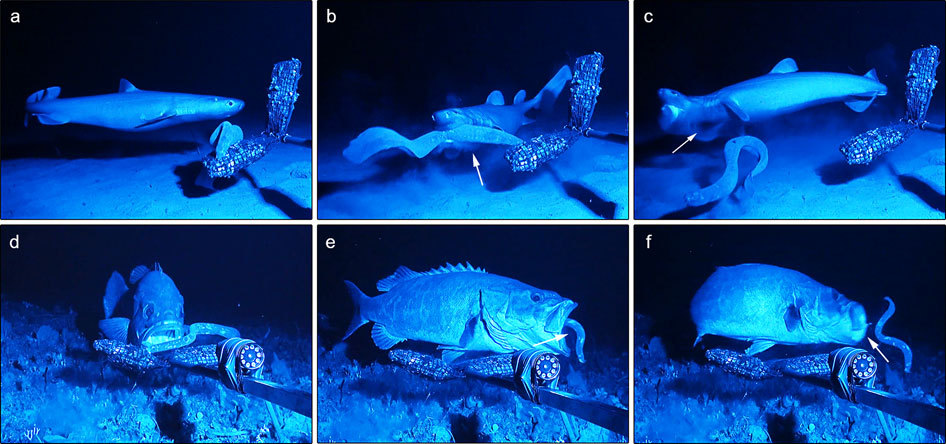
Hagfish feed on dead or dying marine organisms, using their specialized mouths to tear flesh. When threatened by larger predators, they release massive quantities of viscous slime from glands in their skin. This substance expands rapidly in seawater, clogging the gills of attackers and forcing them to release the hagfish. If trapped, they can tie their bodies into knots to slide off the predator or clear their own gills. They possess high tolerance for low oxygen levels and can respire through their skin when buried in mud.
Breeding and life cycle
Reproduction details remain largely unknown due to the difficulty of observing deep-sea species. Females generally outnumber males in wild populations. They lay between one and thirty tough, yolky eggs equipped with tufts that help them stick together. Researchers hypothesize eggs are placed in rock crevices or sand burrows, possibly held by slime, but direct evidence is lacking. Embryos develop for up to eleven months before hatching. Unlike lampreys, hagfish do not undergo a larval stage during development.
Fish and people
Hagfish hold little commercial value for food or aquaculture. Their primary significance lies in scientific research, particularly regarding evolutionary biology and physiology. Scientists study their unique circulatory systems, nervous structures, and slime composition. The keratin proteins in their slime are investigated for potential industrial applications, such as creating strong, flexible fibers similar to spider silk. Historical road accidents involving hagfish shipments have highlighted the practical challenges of handling large volumes of these slimy animals.
Status and threats
Conservation assessments for many hagfish species are classified as data deficient. Detailed population counts are difficult to obtain because most species inhabit inaccessible deep-ocean zones. While they face threats from deep-sea fishing activities, their defensive slime mechanism offers protection against natural predation. No major conservation programmes specifically target hagfish. Their ancient lineage and biological uniqueness make them important subjects for understanding vertebrate evolution, yet their ecological status remains poorly quantified.


Questions people ask about Hagfish
What makes hagfish skeletons unique?
Hagfish possess a cartilaginous skull but completely lack a vertebral column. They retain a notochord throughout their lives, which provides structural support. This combination distinguishes them from all other vertebrates, making them a key subject for studying spinal evolution.
How does hagfish slime work?
Specialized glands produce slime threads that expand massively upon contact with seawater. The mucus clogs the gills of attacking predators, causing suffocation risks. Hagfish also use this slime defensively, tying their bodies in knots to scrape it off and restore breathing function.
Do hagfish have eyes?
Yes, but they are simple eyespots rather than complex lenses. These structures detect light intensity and direction but cannot resolve detailed images. Evolutionary evidence suggests ancestral hagfish had better vision, which degenerated over time in deep-sea environments.
What do hagfish eat?
They are primarily scavengers that feed on dead marine animals. They also hunt weak or injured prey. Using horizontal dental plates with keratin teeth, they grip and tear flesh, pulling food toward their pharynx without chewing.
Good reading and sources
The facts on this page come from the Wikipedia article "Hagfish", written by its contributors and used under the CC BY-SA 4.0 licence, and from its Wikidata record (CC0). EveryFish rewrote the text in its own words, with AI assistance, and compares every page with the article to make sure no passage is copied. It may be reused under the same CC BY-SA 4.0 licence with a link back.
It may contain mistakes, and figures change over time. Nothing here is investment or buying advice. If something is wrong, tell us. Last refreshed 2026-11-15.
Like Hagfish
All eels WorldPelican eel
A deep-sea eel with a massive hinged jaw and ultra-black skin found in all oceans.Eel · Deep sea
 WorldSlender snipe eel
A deep-sea eel with a bird-like beak and extreme length.Eel · Open ocean
 🇧🇷 Brazil and 1 moreElectric eel
Neotropical freshwater fish capable of generating powerful electric shocks for hunting and defence.Eel · Rivers and lakes · 1766
 🇨🇳 China and 3 moreAsian swamp eel
A freshwater, air-breathing fish native to Asia and introduced elsewhere.Eel · Rivers and lakes