Science and research
Model organisms and fish famous in science. 52 fish on EveryFish so far.
Fish are important in science. Some species are model organisms, small, fast-breeding fish that are studied in depth in laboratories to understand biology in general, from how embryos grow to how genes cause disease. Others are famous for what they reveal about evolution, such as the coelacanth, the blind cave fish and the cichlids of the African lakes. Fish also help scientists monitor the health of rivers and seas.
Zebrafish and medaka
The zebrafish, a small striped danio of South Asian streams, became a major model organism from the 1970s and 1980s. Its embryos are see-through and grow outside the mother, so scientists can watch organs and nerves form under the microscope. It is used to study development, heart and nerve disease, cancer and the effects of drugs and pollutants. The Japanese medaka is another model, and in 1994 medaka became the first vertebrates to mate and produce young in orbit, on a Space Shuttle flight.
Fish that explain evolution
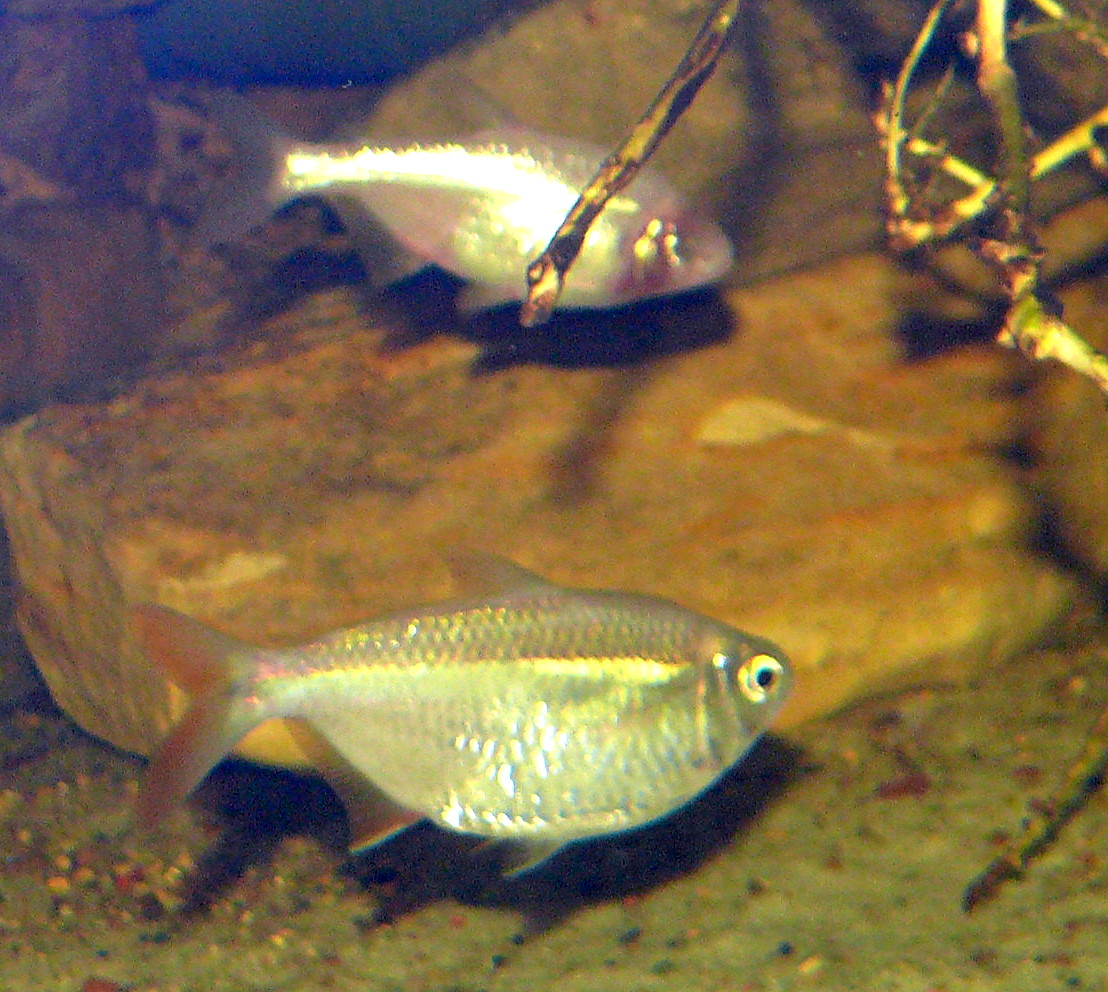
The three-spined stickleback has repeatedly lost its bony armour after moving from the sea into lakes, letting scientists trace the genes involved. Sighted and blind forms of the Mexican tetra show how eyes are lost in caves. The turquoise killifish, which lives only a few months, is used to study ageing. The coelacanth and lungfish shed light on how fish first moved onto land, and the spotted gar's genome helps link fish genes to human ones.
Famous science and research fish




Still to be written: Nothobranchius furzeri, Guppy.
Further reading
 🇺🇸 United States and 4 moreSea lamprey
A jawless, parasitic fish native to the Northern Hemisphere that attacks other fish.Ancient · Rivers and lakes · 1758
 🇺🇸 United States and 1 moreAtlantic sturgeon
A large anadromous fish native to the western Atlantic Ocean and its river systems.Ancient · Rivers and lakes
 🇺🇸 United States and 1 moreShortnose sturgeon
A small, endangered North American sturgeon with a short snout.Ancient · Rivers and lakes · 1818
 🇺🇸 United StatesPallid sturgeon
An endangered North American sturgeon species native to the Missouri and Mississippi river basins.Ancient · Rivers and lakes · 1905
 🇲🇽 Mexico and 2 moreTropical gar
A small freshwater predator from Central America known for its armored scales and air-breathing ability.Ancient · Rivers and lakes
 WorldLamprey
Jawless fish with a sucking mouth found in temperate waters worldwide.Ancient · Rivers and lakes
 🇺🇸 United StatesCladoselache
Extinct Late Devonian shark-like fish known for well-preserved fossils and streamlined body.Shark · Coasts and shelves
 🇳🇬 NigeriaGymnarchus
African electric fish with a long dorsal fin used for swimming and sensing prey.Ancient · Rivers and lakes · 1829
 🇿🇦 South Africa and 1 moreCoelacanth
Ancient lobe-finned fish thought extinct until rediscovered in the twentieth century.Ancient · Coasts and shelves · 1839
 🇺🇸 United StatesAmerican paddlefish
Ancient freshwater fish with a sensory snout and filter-feeding habits.Ancient · Rivers and lakes · 1792
 🇿🇦 South Africa and 4 moreWest Indian Ocean coelacanth
Rare deep-sea fish with blue scales and limb-like fins.Ancient · Deep sea · 1938
 🇮🇩 IndonesiaIndonesian coelacanth
A rare brown deep-sea fish found in Indonesian waters.Ancient · Open ocean · 1999
 🇸🇳 Senegal and 3 moreSenegal bichir
Ancient African fish that breathes air and walks on landAncient · Rivers and lakes
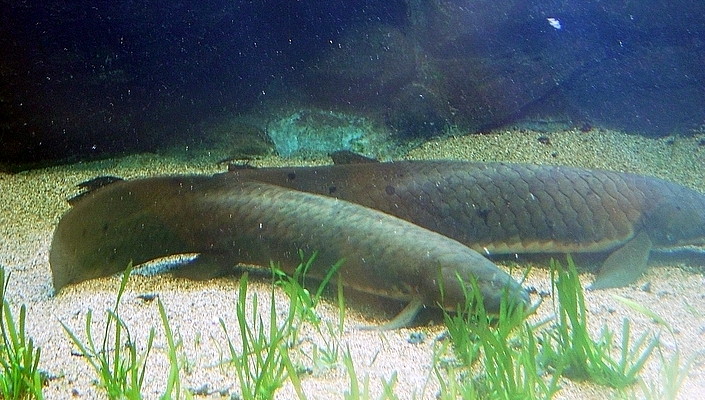 🇦🇺 AustraliaAustralian lungfish
Ancient air-breathing fish endemic to Queensland rivers, known for its longevity and living fossil status.Ancient · Rivers and lakes · 1871
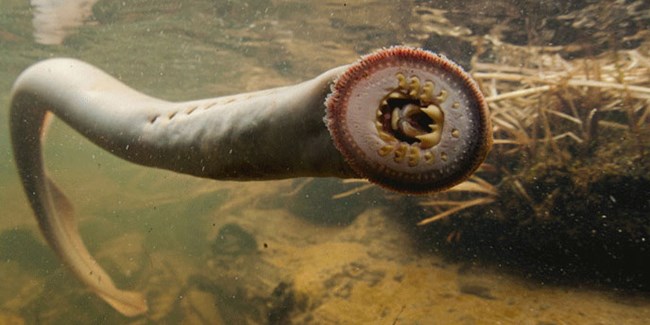 🇺🇸 United States and 1 morePacific lamprey
An anadromous parasitic jawless fish found along the Pacific Rim.Ancient · Rivers and lakes · 1872
🇨🇦 Canada and 1 moreAtlantic hagfish
A jawless marine scavenger known for its slime and lack of true eyes.Ancient · Deep sea · 1758
Photo credits on this page
The small pictures above come from Wikimedia Commons under free licences. Some are cropped to fit.
- Sea lamprey: Fernando Losada Rodríguez, CC BY-SA 4.0, source
- Lungfish: Unknown author, CC BY-SA 2.5, source
- Atlantic sturgeon: Jiaqian AirplaneFan, CC BY 3.0, source
- Shortnose sturgeon: Unknown author, Public domain, source
- Pallid sturgeon: USFWS Fish and Aquatic Conservation, Public domain, source
- Tropical gar: AlejandroLinaresGarcia, CC BY-SA 3.0, source
- Bichir: 5snake5, CC0, source
- Lamprey: Tiit Hunt, CC BY-SA 3.0, source
- Cladoselache: James St. John, CC BY 2.0, source
- Gymnarchus: Wiki-Harfus ; modified by Wildfeuer, CC BY-SA 3.0, source
- Mexican tetra: User:Haplochromis, CC BY-SA 3.0, source
- Coelacanth: Alberto Fernandez Fernandez, CC BY-SA 3.0, source
- American paddlefish: Timothy Knepp, Public domain, source
- Zebrafish: Roundish, CC0, source
- Indonesian coelacanth: Unknown author, CC BY-SA 2.5, source
- West Indian Ocean coelacanth: sybarite48, CC BY 2.0, source
- Three-spined stickleback: Gilles San Martin, CC BY-SA 2.0, source
- Spotted gar: Brian.gratwicke on English Wikipedia, CC BY 2.5, source
- Pacific lamprey: Dave Herasimtschuk, US Fish & Wildlife Service, Public domain, source
- Japanese rice fish: NOZO, CC BY 3.0, source