
Cladoselache
Extinct Late Devonian shark-like fish known for well-preserved fossils and streamlined body.
Cladoselache was a cartilaginous predator from the Late Devonian period of North America. It reached lengths of about two meters and possessed a streamlined shape similar to modern mako sharks, though it belonged to an early branch of chondrichthyans rather than modern sharks.
- Reached approximately 2.0 meters in length with a streamlined body.
- Possessed two dorsal fins, the first preceded by a stout curved spine.
- Teeth lacked enameloid, featuring broad roots with basiolabial depressions.
- Jaw suspension was amphistylic, connecting to both braincase and hyomandibula.
- Fossils from Cleveland Shale preserve soft tissues like skin and muscles.
What it is
Cladoselache represents an extinct lineage of shark-like cartilaginous fish that thrived during the Late Devonian epoch in North America. Despite sharing a streamlined silhouette with modern lamnid sharks like the great white, it did not belong to the same evolutionary group. The animal featured a skeleton made of tessellated cartilage, a specialized tissue combining flexible fibers with calcified plates. Its head bore similarities to the modern frilled shark, while its overall form suggested a highly active marine lifestyle. Fossil evidence indicates a deeply forked tail and large pectoral fins, adaptations supporting agility and speed in open water.
Where it lives
Fossils of this species are primarily recovered from the Cleveland Shale located on the south shore of Lake Erie in North America. This geological formation has yielded an exceptional number of specimens, making Cladoselache one of the most thoroughly understood early chondrichthyans. The preservation quality is remarkable, often retaining soft tissues such as skin impressions, muscle fibers, and internal organs like kidneys alongside the skeletal remains. These finds confirm its presence in ancient marine ecosystems during the Famennian stage of the Devonian period.
How it lives
Anatomical features suggest Cladoselache was a swift and agile marine predator. Its body plan, including a tapered tail stalk with stabilizing keels and a crescent-shaped caudal fin, points to efficient swimming capabilities comparable to modern fast-swimming sharks. The teeth were arranged in multiple rows that unfurled new replacements outward, a trait shared with later sharks but evolving independently here. The jaw structure, classified as amphistyly, provided stability through connections to both the braincase and hyomandibula, differing from the looser suspension seen in contemporary sharks.
Breeding and life cycle
Information regarding the reproductive habits of Cladoselache remains incomplete due to fossil limitations. No claspers, which are typically associated with male reproduction in cartilaginous fish, have been identified in specimens. This absence might result from reduced pelvic structures, reliance on external fertilization methods, or simply the lack of preserved male individuals. Close relatives within the symmoriiform group possessed distinct reproductive traits, but direct evidence for Cladoselache's spawning behavior is currently unavailable.
Fish and people
The primary significance of Cladoselache lies in scientific research and paleontological study. The abundance of well-preserved specimens from the Cleveland Shale provides critical insights into the anatomy and evolution of early cartilaginous fish. Researchers utilize these fossils to understand the development of skeletal structures, tooth replacement mechanisms, and sensory organ placement in ancient marine predators. It serves as a key reference point for distinguishing early chondrichthyan lineages from modern sharks and rays.
Status and threats
Cladoselache is an extinct genus with no living descendants in the modern fauna. It disappeared long before the rise of modern shark groups, which evolved much later during the Jurassic Period. Conservation status is not applicable as the species no longer exists. Current scientific interest focuses on its classification, with recent studies suggesting a closer relationship to symmoriiforms and possibly chimaeras rather than true sharks, reshaping our understanding of early vertebrate evolution.


Questions people ask about Cladoselache
Is Cladoselache a true shark?
No. Although it resembled modern lamnid sharks in body shape and ecology, it belonged to an earlier branch of cartilaginous fish. It lacked key modern shark traits like accelerated tooth replacement and loose jaw suspension.
Where are Cladoselache fossils found?
They are primarily discovered in the Cleveland Shale on the south shore of Lake Erie in North America. These deposits provide exceptionally preserved specimens including soft tissues.
What did Cladoselache eat?
It was a fast-moving marine predator. Its streamlined body, forked tail, and sharp cladodont teeth indicate it hunted agile prey in open water environments during the Late Devonian.
How does its jaw differ from modern sharks?
Cladoselache had an amphistylic jaw suspension, firmly connected to the braincase and hyomandibula. Modern sharks typically have hyostyly, where the jaw relies mainly on the hyomandibula for support.
Good reading and sources
The facts on this page come from the Wikipedia article "Cladoselache", written by its contributors and used under the CC BY-SA 4.0 licence, and from its Wikidata record (CC0). EveryFish rewrote the text in its own words, with AI assistance, and compares every page with the article to make sure no passage is copied. It may be reused under the same CC BY-SA 4.0 licence with a link back.
It may contain mistakes, and figures change over time. Nothing here is investment or buying advice. If something is wrong, tell us. Last refreshed 2026-11-15.
Like Cladoselache
All sharks WorldMegalodon
Extinct giant mackerel shark from the Miocene to Pliocene epochs.Shark · Coasts and shelves · 1843
 WorldBasking shark
The second-largest living fish, a slow-moving filter feeder found in temperate oceans worldwide.Shark · Coasts and shelves · 1765
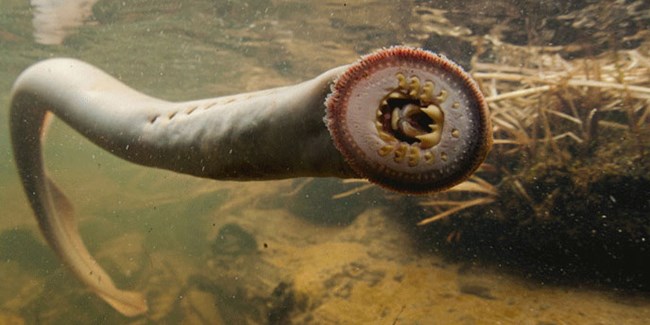 🇺🇸 United States and 1 morePacific lamprey
An anadromous parasitic jawless fish found along the Pacific Rim.Ancient · Rivers and lakes · 1872
 🇺🇸 United States and 3 moreStethacanthus
Extinct Devonian-Carboniferous shark with a distinctive anvil-shaped dorsal fin.Shark · Coasts and shelves · 1874