
Basking shark
The second-largest living fish, a slow-moving filter feeder found in temperate oceans worldwide.
The basking shark (Cetorhinus maximus) is the second-largest extant fish species, surpassed only by the whale shark. First described by Johan Ernst Gunnerus from a Norwegian specimen, this cosmopolitan migratory species feeds on plankton near the surface of temperate waters across all major oceans.
- Second-largest living fish after the whale shark.
- Filters up to 500 tons of water per hour.
- Migrates thousands of kilometres seasonally.
- Listed as Endangered by the IUCN.
- Liver comprises 25% of body weight.
What it is
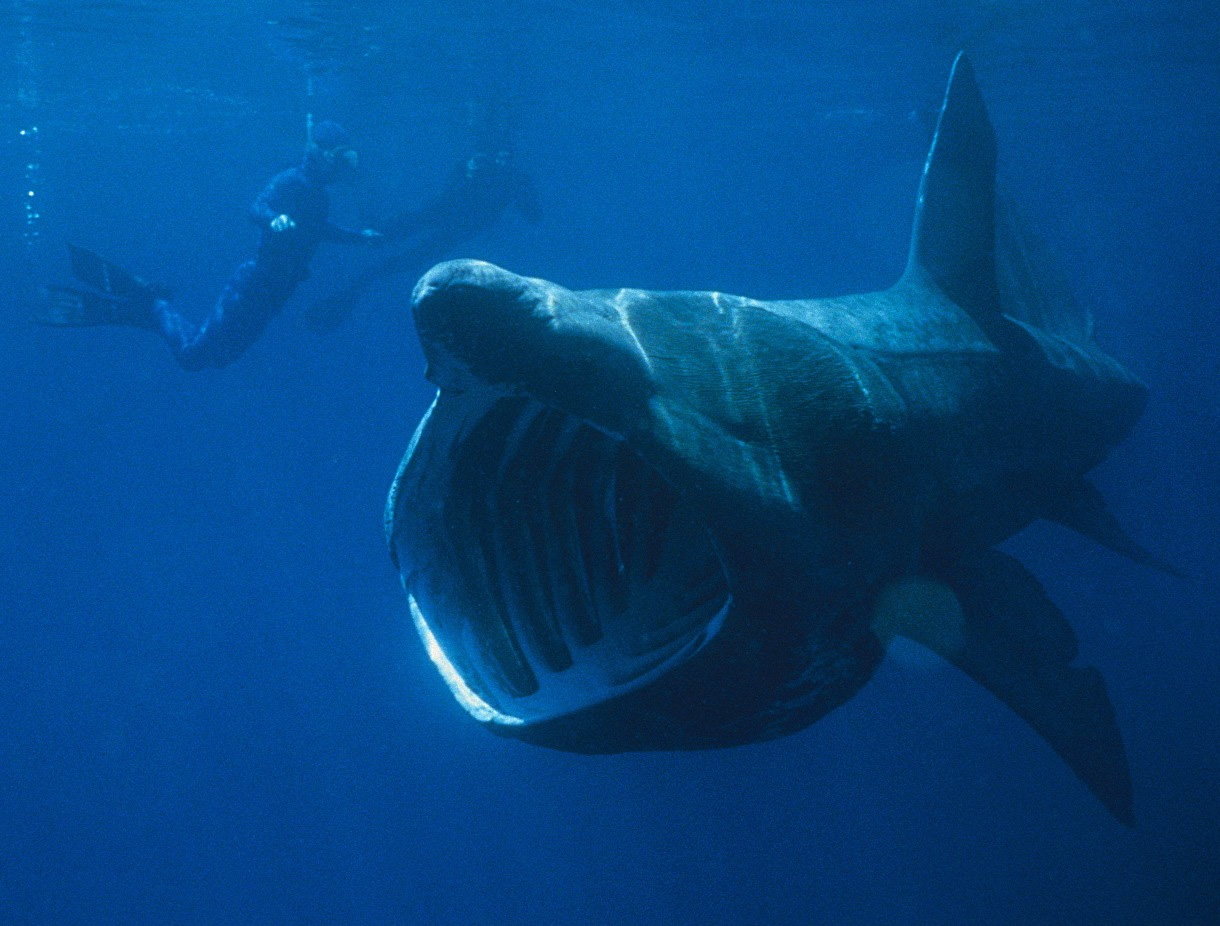
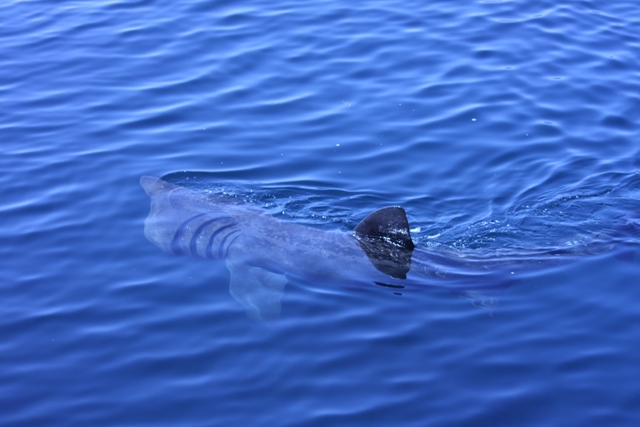
The basking shark is the second-largest living fish, trailing only the whale shark. It typically reaches lengths of seven to eight metres, though historical records note individuals exceeding twelve metres. Its body displays dark brown to black dorsal colouring that fades to white underneath. The head features a conical snout and cavernous jaws capable of opening wide enough for filter feeding. Distinctive traits include highly developed gill rakers resembling bristles, small eyes, and a strongly keeled tail fin. Despite its imposing size, the animal possesses the smallest brain-to-body ratio among sharks, reflecting a passive lifestyle.
Where it lives
This species inhabits temperate oceans globally, ranging from polar to warm-temperate zones. It frequents coastal areas and continental shelves but can dive deeper than nine hundred metres. The shark follows plankton concentrations, often surfacing where food is dense. Satellite tracking confirms extensive migrations, with some individuals crossing the equator to reach southern waters like Brazil during winter months. They avoid cold polar extremes and warm tropical central oceans, preferring temperatures between eight and fourteen degrees Celsius.
How it lives
Basking sharks are slow-moving ram feeders, swimming forward with mouths agape to strain zooplankton through their gill rakers. They target specific patches of copepods rather than feeding indiscriminately. Although generally solitary, they aggregate in large groups during summer months when plankton densities peak. These gatherings may involve courtship behaviours or social interactions. They face few natural predators, though killer whales and great white sharks have been observed scavenging or attacking them. Parasites like lampreys attach to their skin but rarely cause fatal harm.
Breeding and life cycle
Reproduction is ovoviviparous, meaning embryos develop inside eggs retained within the mother until hatching. Young sharks feed on unfertilized eggs produced by the mother, a behaviour known as oophagy. Gestation likely lasts two to three years, resulting in fully developed pups measuring one and a half to two metres long. Mating occurs in early summer, with births following in late summer. Females mature at lengths between four and six metres, with breeding cycles estimated at two to four years apart.
Fish and people
Historically, these sharks were heavily exploited for their oil, leather, and flesh due to their slow speed and placid nature. Modern fishing primarily targets their fins for soup, while other parts are used for feed or research. Conservation efforts have intensified as populations declined significantly from overexploitation. Several regions now classify the species as threatened or endangered, implementing management plans to protect remaining stocks. Research initiatives utilise satellite tagging and museum donations to better understand their biology and migration patterns.
Status and threats
The International Union for Conservation of Nature lists the basking shark as endangered. Populations have suffered severe reductions due to historical commercial hunting and modern bycatch in trawl nets. New Zealand classifies the species as nationally vulnerable following mass bycatch events in the late twentieth century. The eastern North Pacific population is considered a species of concern by US authorities. Protection measures vary by region, with some areas banning capture entirely while others monitor stock levels closely to prevent further decline.


Questions people ask about Basking shark
How does the basking shark eat?
It swims forward with its massive mouth open, acting as a ram feeder. Water passes over specialized gill rakers that trap zooplankton, small fish, and invertebrates, allowing the shark to filter food without pumping water actively.
Is the basking shark dangerous to humans?
No. Despite its enormous size and wide mouth, it is harmless and non-aggressive. It feeds exclusively on tiny plankton and does not view humans as prey or threats.
How big do basking sharks get?
They typically reach seven to eight metres in length. The largest verified specimen measured 12.27 metres, though historical unverified reports suggest sizes up to fourteen metres.
Where do they live?
They are found in temperate oceans worldwide. They prefer coastal shelves and deep pelagic waters, migrating seasonally to follow plankton blooms and avoid extreme temperatures.
Good reading and sources
- Basking shark on WikipediaEncyclopedia
- More photos on Wikimedia CommonsPhotos
- Wikidata recordOpen data
The facts on this page come from the Wikipedia article "Basking shark", written by its contributors and used under the CC BY-SA 4.0 licence, and from its Wikidata record (CC0). EveryFish rewrote the text in its own words, with AI assistance, and compares every page with the article to make sure no passage is copied. It may be reused under the same CC BY-SA 4.0 licence with a link back.
It may contain mistakes, and figures change over time. Nothing here is investment or buying advice. If something is wrong, tell us. Last refreshed 2026-11-15.
Like Basking shark
All sharks WorldGreat white shark
A large, globally distributed predator known for its size and apex status in marine ecosystems.Shark · Coasts and shelves · 1758
 🇿🇦 South Africa and 4 moreWhale shark
The largest living fish species, a gentle giant of tropical oceans.Shark · Open ocean · 1829
 WorldMegalodon
Extinct giant mackerel shark from the Miocene to Pliocene epochs.Shark · Coasts and shelves · 1843
 🇺🇸 United StatesCladoselache
Extinct Late Devonian shark-like fish known for well-preserved fossils and streamlined body.Shark · Coasts and shelves