🇺🇸 Fish of the United States
183 fish from the United States, best known first.
The United States operates the world's second-largest exclusive economic zone, supporting a massive commercial and recreational fishing industry. Management is split between state nearshore controls and federal oversight of coastal waters, focusing on stock recovery and habitat protection. Major catches include lobster, scallops, salmon, and tuna across diverse marine ecosystems.
- U.S. exclusive economic zone covers 11.4 million square kilometres
- New Bedford is the top fishing port by value at $369 million
- Aleutian Islands Habitat Conservation Area spans 725,000 square km
- Aquaculture allowed in Gulf of Mexico federal waters since 2016
- Magnuson-Stevens Act enabled federal fishery management in 1976
Fish of the United States
The United States manages an exclusive economic zone covering 11.4 million square kilometres, the second largest globally. This vast area supports significant wild capture and aquaculture production. Federal law enacted in 1976 established active management to prevent resource depletion. The National Marine Fisheries Service works with regional councils to monitor stocks and reduce bycatch. Inland fisheries remain small compared to marine operations. State authorities handle nearshore zones up to three nautical miles from shore. Federal agencies oversee the broader coastal waters within the exclusive economic zone. The industry relies on data collection from vessels and partnerships with research institutions.
Notable species
Notable species include American lobster and Atlantic sea scallop in the Northeast. Groundfish like haddock and cod have faced overfishing but show signs of recovery. Pacific salmon and halibut are key resources on the West Coast. Highly migratory species such as bluefin tuna and swordfish cross international boundaries. Shrimp varieties dominate Southeast catches. King and Spanish mackerel stocks rebounded after regulatory restrictions. Spiny lobster populations in the Western Pacific declined due to oceanographic shifts. Pacific sardines are recovering after decades of low numbers. Rockfish grow slowly and require careful management.
Seas and rivers
Eight large marine ecosystems define the U.S. exclusive economic zone. These include the Northeast and Southeast continental shelves, the Gulf of Mexico, the Caribbean Sea, the California Current, the Insular Pacific-Hawaiian region, the Gulf of Alaska, and the Eastern Bering Sea. Nearshore areas consist of estuaries and coastal waters under state control. Coastal fisheries extend to two hundred nautical miles offshore. The Aleutian Islands habitat conservation area protects seafloor communities from bottom trawling. Seamounts within U.S. jurisdiction host commercially important fish stocks. Inland waters feature the Great Lakes and Mississippi River basin.
Fishing and farming
Commercial fleets use diesel vessels equipped with advanced navigation and detection technology. Purse seiners, longliners, and otter trawls are common gear types. Factory ships process catch at sea for efficiency. Individual fishing quotas help manage harvest levels. Marine protected areas restrict destructive fishing methods. Aquaculture in federal waters began in 2016 to boost domestic production. Recreational fishing contributes significantly to nearshore economies. Size limits and bag restrictions apply to many game fish. Bycatch reduction measures aim to protect non-target species. Ecosystem-based management guides policy decisions.
Fish in culture
Fishing traditions developed alongside coastal settlement patterns. Port cities like New Bedford serve as major hubs for landings. Lobster and scallop trades support local economies. Indigenous communities participate in tribal fisheries programs. Historical concerns about diminishing fish stocks date back to the nineteenth century. Modern management balances ecological sustainability with economic interests. Fishing festivals celebrate regional maritime heritage. Educational programmes promote responsible angling practices.
Today
Current efforts focus on restoring overfished stocks and protecting essential habitats. Regional councils implement specific plans for each fishery. Data transmission from observers improves monitoring accuracy. International cooperation addresses transboundary species migration. Climate impacts influence stock distribution and abundance. Technology aids in locating schools and optimizing routes. Conservation zones limit access to sensitive areas. Industry stakeholders collaborate on sustainable practices.
The facts in this overview come from the Wikipedia article "Fishing industry in the United States", written by its contributors and used under the CC BY-SA 4.0 licence. EveryFish rewrote the text in its own words, with AI assistance, and compares every page with the article to make sure no passage is copied. It may be reused under the same CC BY-SA 4.0 licence with a link back.
Fish places in the United States
 🇺🇸 United States and 1 moreSailfin molly
Small livebearing fish with a large dorsal fin in males.Livebearer · Rivers and lakes · 1821
 🇺🇸 United StatesBig skate
Largest skate in North American Pacific watersRay · Coasts and shelves · 1855
 🇺🇸 United States and 3 morePacific angelshark
A flat-bodied ambush shark of the eastern Pacific coast.Shark · Coasts and shelves · 1859
 🇺🇸 United States and 4 moreCaribbean reef shark
Large requiem shark of western Atlantic coral reefsShark · Coasts and shelves · 1876
 🇺🇸 United States and 1 moreLeopard shark
A coastal Pacific houndshark with black saddle markings and spots.Shark · Coasts and shelves · 1854
 🇺🇸 United States and 1 moreHorn shark
Small spotted bullhead shark from the eastern Pacific coast.Shark · Coasts and shelves · 1855
 🇺🇸 United States and 4 moreBonnethead
A small hammerhead shark with a spade-shaped head and omnivorous diet.Shark · Coasts and shelves
 🇺🇸 United States and 1 moreNurse shark
A bottom-dwelling shark found in tropical coastal waters of the Atlantic and Pacific.Shark · Coasts and shelves
 🇺🇸 United States and 3 morePacific bonito
Striped marine fish of the Pacific coastTuna · Coasts and shelves
 🇺🇸 United States and 1 moreEulachon
A small anadromous smelt known for its high fat content and cultural importance in Pacific North America.Other · Rivers and lakes
 🇺🇸 United States and 2 moreAmerican eel
A catadromous fish that migrates between North American rivers and the Sargasso Sea to spawn.Eel · Rivers and lakes
 🇺🇸 United StatesSpotted seatrout
Estuarine drum fish of the US southeast coastOther · Estuaries and mangroves
 🇺🇸 United States and 1 moreSummer flounder
A predatory flatfish of the US Atlantic coast.Flatfish · Coasts and shelves
 🇺🇸 United StatesFlorida pompano
A fast-growing marine fish prized for food and sport fishing.Other · Coasts and shelves
 🇺🇸 United States and 4 moreMutton snapper
A colourful Atlantic reef fish prized for its meat.Perch-like · Coasts and shelves · 1828
 🇺🇸 United States and 1 moreAcadian redfish
A deep-water rockfish native to the northwestern Atlantic Ocean.Shark · Deep sea · 1854
 🇺🇸 United States and 1 moreYellowtail flounder
A flatfish species found in the western North Atlantic, known for its yellow fins and vulnerable conservation status.Flatfish · Coasts and shelves · 1835
 🇺🇸 United StatesAtlantic menhaden
A silvery herring species found along the North American Atlantic coast.Herring · Coasts and shelves
 🇺🇸 United States and 1 moreGulf menhaden
Small filter-feeding fish of the Gulf of MexicoHerring · Coasts and shelves
 🇺🇸 United States and 2 moreLingcod
A large predatory fish of the North American Pacific coast.Other · Coasts and shelves
 🇺🇸 United States and 1 moreNorth Pacific hake
A silver-gray marine fish found in the northeast Pacific Ocean, used for surimi production.Other · Coasts and shelves
 🇺🇸 United States and 1 moreBonefish
A prized shallow-water game fish of the western Atlantic.Other · Coasts and shelves
 🇺🇸 United StatesAtlantic tarpon
Large, acrobatic saltwater game fish of the Atlantic.Other · Coasts and shelves · 1847
 🇷🇺 Russia and 3 moreChum salmon
A Pacific salmon species known for its large size and wide distribution across the North Pacific.Salmonid · Rivers and lakes · 1836
 🇺🇸 United States and 3 morePorkfish
Striped Atlantic grunt found on reefs and in seagrass beds.Other · Coasts and shelves · 1758
 🇺🇸 United StatesCalifornia grunion
Small silvery fish that spawns on sandy beaches during high tides.Other · Coasts and shelves
 🇺🇸 United States and 4 moreSea lamprey
A jawless, parasitic fish native to the Northern Hemisphere that attacks other fish.Ancient · Rivers and lakes · 1758
 🇨🇦 Canada and 4 moreAtlantic halibut
The world's largest flatfish, found in the North Atlantic.Flatfish · Coasts and shelves
🇨🇦 Canada and 1 moreWinter flounder
Right-eyed flatfish of the western North Atlantic coast.Flatfish · Coasts and shelves
 🇺🇸 United StatesCutthroat trout
A group of Pacific trout native to western North America, known for red throat markings.Salmonid · Rivers and lakes · 1793
 🇺🇸 United StatesCisco
Small salmonid fish of northern lakes and seasSalmonid · Rivers and lakes
 🇧🇷 Brazil and 1 moreFrench angelfish
A slow-growing Caribbean reef fish known for its sponge diet.Reef fish · Coasts and shelves · 1799
 🇺🇸 United States and 1 moreAtlantic sturgeon
A large anadromous fish native to the western Atlantic Ocean and its river systems.Ancient · Rivers and lakes
 🇺🇸 United States and 1 moreShortnose sturgeon
A small, endangered North American sturgeon with a short snout.Ancient · Rivers and lakes · 1818
 🇺🇸 United States and 2 moreGar
Ancient armored fish with lung-like swim bladders found in North American waters.Ancient · Rivers and lakes · 1758
 🇺🇸 United States and 3 moreBlack crappie
A spotted freshwater sunfish native to North America, prized by anglers for its sport and table fare.Perch-like · Rivers and lakes · 1856
 🇺🇸 United States and 2 moreRainbow parrotfish
Largest Atlantic parrotfish found on coral reefs and in mangroves.Reef fish · Coasts and shelves
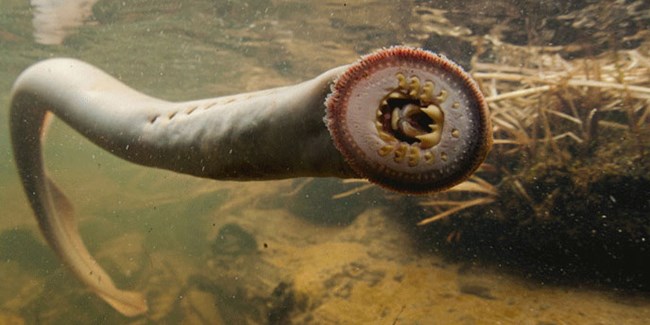 🇺🇸 United States and 1 morePacific lamprey
An anadromous parasitic jawless fish found along the Pacific Rim.Ancient · Rivers and lakes · 1872
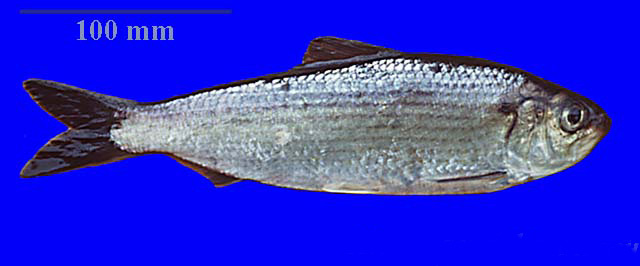 🇺🇸 United States and 1 moreAlewife
A small North American herring that migrates between sea and rivers.Herring · Coasts and shelves
 🇮🇩 Indonesia and 2 moreRed lionfish
Venomous coral reef fish native to the Indo-Pacific and invasive in the Atlantic.Reef fish · Coral reefs · 1758
 🇮🇱 Israel and 1 moreBlue tilapia
Hardy cichlid native to Africa and the Middle EastCichlid · Rivers and lakes
 🇺🇸 United StatesBrown bullhead
A hardy North American catfish known for surviving poor water conditions.Catfish · Rivers and lakes · 1819
 🇺🇸 United States and 1 moreGafftopsail catfish
Marine catfish with venomous spines and mouthbrooding malesCatfish · Coasts and shelves
 🇺🇸 United States and 4 moreOncorhynchus
A genus of migratory fish native to the North Pacific basin.Salmonid · Rivers and lakes
 🇺🇸 United States and 3 moreDolly Varden trout
A cold-water char native to the North Pacific rim.Salmonid · Rivers and lakes · 1792
 🇺🇸 United States and 1 moreBat ray
A large eagle ray with wing-like fins found in the eastern Pacific.Ray · Coasts and shelves
 🇺🇸 United States and 1 moreCownose ray
A migratory coastal ray with a distinctive head shape.Ray · Coasts and shelves
 🇺🇸 United States and 4 moreSpiny butterfly ray
A large Atlantic ray with a tail spine, valued for food and now critically endangered in many areas.Ray · Estuaries and mangroves
Photo credits on this page
The small pictures above come from Wikimedia Commons under free licences. Some are cropped to fit.
- Sea lamprey: Fernando Losada Rodríguez, CC BY-SA 4.0, source
- Atlantic halibut: Vsevolod Rudyi, CC BY 4.0, source
- Cutthroat trout: Hazzard, Lloyde / U.S. Fish and Wildlife Service, Public domain, source
- Cisco: Painting by Ellen Edmonson, Public domain, source
- French angelfish: LASZLO ILYES (laszlo-photo), CC BY 2.0, source
- Atlantic sturgeon: Jiaqian AirplaneFan, CC BY 3.0, source
- Shortnose sturgeon: Unknown author, Public domain, source
- Gar: Unknown author, Public domain, source
- Black crappie: USFWS Mountain-Prairie, Public domain, source
- Rainbow parrotfish: Paul Asman and Jill Lenoble, CC BY 2.0, source
- Pacific lamprey: Dave Herasimtschuk, US Fish & Wildlife Service, Public domain, source
- Alewife: Unknown author, CC BY-SA 3.0, source
- Sailfin molly: (c) Nick Tobler (Cowturtle), some rights reserved (CC BY), CC BY 4.0, source
- Red lionfish: Photo by Jens Petersen , Edited by User:Olegiwit (cloned in part of fi, CC BY 2.5, source
- Blue tilapia: Michael Rupert Hayes, CC BY-SA 2.0, source
- Brown bullhead: Unknown author, CC BY-SA 2.5, source
- Gafftopsail catfish: Bobby McCabe, CC BY 4.0, source
- Oncorhynchus: David Menke, Public domain, source
- Dolly Varden trout: The original uploader was PDH at English Wikipedia ., Public domain, source
- Bat ray: Martin Holst Friborg Pedersen, CC BY 2.0, source
- Cownose ray: This illustration was made by Citron You must credit this : Citron / C, CC BY-SA 3.0, source
- Spiny butterfly ray: NOAA Northeast Fisheries Science Center, Public domain, source
- Big skate: NOAA - AFSC, Public domain, source
- Pacific angelshark: Chris_huh, CC BY-SA 3.0, source
- Caribbean reef shark: Albert kok, CC BY-SA 3.0, source
- Leopard shark: Mfield , Matthew Field, www.photography.mattfield.com, CC BY-SA 3.0, source
- Horn shark: Ed Bierman, CC BY 2.0, source
- Bonnethead: Valerie Everett, CC BY-SA 2.0, source
- Nurse shark: Unknown author, Public domain, source
- Pompano: H. L. Todd, Public domain, source
- Pacific bonito: nmoorhatch, CC BY 4.0, source
- Eulachon: en:User:James Crippen, Public domain, source
- American eel: Ellen Edmonson and Hugh Chrisp, Public domain, source
- Spotted seatrout: United States Fish Commission, Public domain, source
- Summer flounder: Arturodomiao, CC BY-SA 4.0, source
- Mutton snapper: Dan Schofield, CC BY 4.0, source
- Acadian redfish: Steven G. Johnson, CC BY-SA 3.0, source
- Yellowtail flounder: Eviolite, CC BY-SA 4.0, source
- Atlantic menhaden: ricofish, CC0, source
- Gulf menhaden: Joel boumje, Public domain, source
- Lingcod: Will Sides, CC BY 4.0, source
- North Pacific hake: Anonymous Unknown author, Public domain, source
- Bonefish: Brian Gratwicke, CC BY 2.0, source
- Atlantic tarpon: Daiju Azuma, CC BY-SA 4.0, source
- Chum salmon: Focus Saranpat Ouilapan, CC0, source
- Porkfish: Diego Delso, CC BY-SA 4.0, source
- California grunion: Eric Wittman, CC BY 2.0, source