Gulf menhaden
Small filter-feeding fish of the Gulf of Mexico
The Gulf menhaden is a small marine fish found in nearshore waters across the Gulf of Mexico. It supports the second largest fishery by weight in the United States, primarily for reduction into meal and oil.
- Second largest US fishery by weight
- Detects ultrasound above 50 kHz
- Certified sustainable by Friend of the Sea
- Spawns offshore from October to March
- Primarily harvested for fish meal and oil
What it is
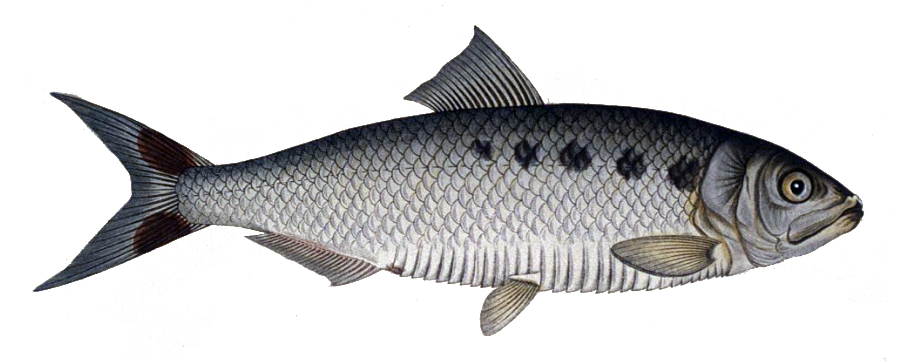
This small marine fish belongs to the family Alosidae. It has a dull silver body with a greenish back. A prominent black spot sits behind the gill cover, followed by a row of smaller spots. Adults commonly reach eight inches in length but can grow to twelve inches. It is a filter feeder that uses modified gill structures to collect food from the water.
Where it lives
The species lives throughout the nearshore waters of the Gulf of Mexico. Its distribution is patchy, with the highest concentrations in the northwest and northcentral regions, particularly off Louisiana and Texas. The range excludes the extreme eastern Yucatan and western Cuba. In the southern Gulf, it overlaps with the finescale menhaden, while in the east, it shares habitat with the yellowfin menhaden.
How it lives
Larvae feed mainly on zooplankton because their gill rakers are not fully developed. Juveniles under one year old switch to phytoplankton. As they age and their filtering apparatus matures, adults shift back to consuming primarily zooplankton. This fish has an unusual ability to detect ultrasound frequencies above 50 kHz, which is far higher than the hearing limit of most other fish species.
Breeding and life cycle
Spawning takes place offshore during the winter months, from October through March. The eggs and larvae are pelagic, meaning they float in the open water. Prevailing currents carry them into estuarine nursery areas. This long migration at the early life stage suggests that populations across the Gulf comprise a single genetic stock.
Fish and people
It supports the second largest fishery by weight in the United States. Most catches are processed into fish meal and oil, with a smaller portion used as bait for recreational anglers. The fishery has received sustainability certification from Friend of the Sea due to healthy stock levels and low bycatch. Recreational anglers value it as an important bait fish.
Status and threats
The Gulf States Marine Fisheries Commission manages the stock. A 2013 assessment stated the species was neither overfished nor experiencing overfishing. It is considered one of the most closely monitored fisheries in the region. Officials note that the commercial harvest targets adults that eat zooplankton, so the fishery does not significantly reduce phytoplankton blooms caused by nitrogen pollution.
Questions people ask about Gulf menhaden
What do Gulf menhaden eat?
Their diet changes with age. Larvae and adults primarily consume zooplankton, while juveniles under one year old feed mainly on phytoplankton. They are filter feeders that use gill rakers to collect food from the water.
Where are Gulf menhaden found?
They reside in nearshore waters throughout the Gulf of Mexico. The largest populations are in the northwest and northcentral Gulf, especially off Louisiana and Texas. They are absent from the extreme eastern Yucatan and western Cuba.
Is the Gulf menhaden fishery sustainable?
Yes, it has been recognized as sustainable by Friend of the Sea. The Gulf States Marine Fisheries Commission reported in 2013 that the stock was not overfished. The fishery uses purse seine nets which result in low levels of bycatch.
Good reading and sources
- Gulf menhaden on WikipediaEncyclopedia
- More photos on Wikimedia CommonsPhotos
- Wikidata recordOpen data
The facts on this page come from the Wikipedia article "Gulf menhaden", written by its contributors and used under the CC BY-SA 4.0 licence, and from its Wikidata record (CC0). EveryFish rewrote the text in its own words, with AI assistance, and compares every page with the article to make sure no passage is copied. It may be reused under the same CC BY-SA 4.0 licence with a link back.
It may contain mistakes, and figures change over time. Nothing here is investment or buying advice. If something is wrong, tell us. Last refreshed 2026-11-15.
Like Gulf menhaden
All herrings and sardines 🇺🇸 United StatesAtlantic menhaden
A silvery herring species found along the North American Atlantic coast.Herring · Coasts and shelves
 🇺🇸 United States and 1 moreAlewife
A small North American herring that migrates between sea and rivers.Herring · Coasts and shelves
 🇹🇷 Turkey and 4 moreAnchovy
Small, oily forage fish found in oceans and some rivers worldwide.Herring · Coasts and shelves
 🇮🇪 IrelandTwait shad
Anadromous herring-like fish with flank spotsHerring · Rivers and lakes