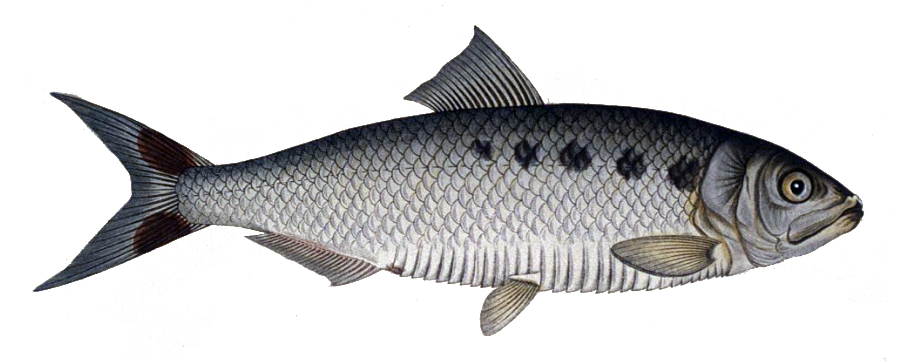
Atlantic menhaden
A silvery herring species found along the North American Atlantic coast.
The Atlantic menhaden is a small, schooling fish belonging to the herring family. It lives in coastal waters from Nova Scotia to Florida and plays a vital role as forage for larger predators and in commercial fisheries.
- Filter feeders that switch from zooplankton to phytoplankton as they age.
- Chesapeake Bay serves as a primary nursery for juvenile populations.
- Key prey for striped bass, ospreys, and humpback whales.
- Harvested commercially via purse seine nets for oil and meal production.
- Native American name translates to 'that which manures' referring to fertilizer use.
What it is
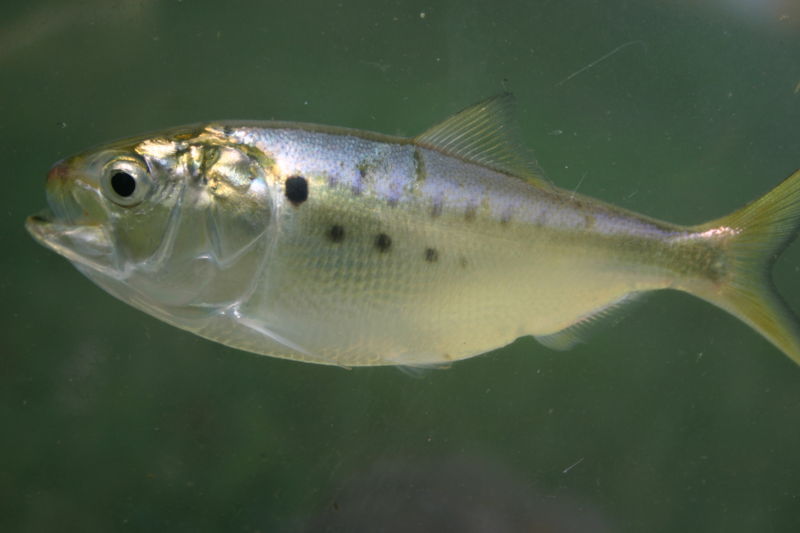
This silvery fish features a compressed body and a distinct black spot behind the gills. Adults typically reach about 15 inches in length. They form large schools that separate by age and size along the coast. Younger fish inhabit southern areas like the Chesapeake Bay, while older individuals prefer northern waters. The species belongs to the herring family and thrives in varying salinity levels across its range.
Where it lives
These fish inhabit the western Atlantic Ocean from Nova Scotia down to northern Florida. They are abundant in all salinity zones of the Chesapeake Bay and Mid-Atlantic waters. Juveniles develop in sheltered estuaries before moving to the open ocean. Older fish migrate northward along the coastline. The Chesapeake Bay serves as a critical nursery area where larvae enter during late winter and early summer.
How it lives
Atlantic menhaden are filter feeders that strain water through specialized gill structures. Young fish eat zooplankton, while adults switch to phytoplankton as their gill rakers grow. They face predation from striped bass, bluefish, ospreys, eagles, and whales. Dolphins can consume significant amounts daily. A recent study linked declining osprey success to lower menhaden numbers. Their diet shifts directly with their physical development and age.
Breeding and life cycle
Spawning occurs year-round off the Atlantic coast, peaking near North Carolina in late autumn. Eggs hatch within two to three days in the open ocean. Larvae drift into estuaries via currents, spending their first year developing there. This juvenile stage is locally called the peanut bunker. Females produce thousands of eggs, reaching maturity around their second year. The population remains stable enough to sustain reproduction until death.
Fish and people
Historically, Native Americans used these fish as fertilizer for crops. Early settlers also utilized them for oil, bait, and food. Some regions fried them like sardines or served them to poorer classes. Today, they are harvested commercially using purse seines for reduction into meal and oil. Recreational anglers catch them for bait. Conservation groups criticize the reduction fishery for impacting other species and causing bycatch issues.
Status and threats
Management falls under the Atlantic States Marine Fisheries Commission. Assessments indicate the stock has not been overfished since the 1990s. Overfishing was identified in 2010, leading to reduced catch limits. By 2015, mortality rates improved, allowing increased harvest allowances. The commission monitors fecundity and mortality to maintain balance. Concerns remain regarding ecological impacts on predators like striped bass and ospreys due to harvesting levels.
Questions people ask about Atlantic menhaden
What do Atlantic menhaden eat?
They are filter feeders that strain water through their gills. Young fish primarily consume zooplankton. As they mature and their gill rakers enlarge, they shift their diet to phytoplankton. This dietary change supports their growth throughout their lifespan.
Where do Atlantic menhaden live?
They inhabit coastal waters from Nova Scotia to northern Florida. They thrive in all salinity levels of the Chesapeake Bay. Juveniles develop in estuaries before migrating to the open ocean. Schools stratify by age, with younger fish staying south and older fish moving north.
Why are they called pogies?
The term pogy derives from the Native American word pauhagen or pookagan. It carries the same meaning as munnawhatteaug, which refers to fertilizer. Fishermen in the Northeastern United States commonly use this regional slang for the species.
Are Atlantic menhaden safe to eat?
While some sources claim they are inedible, they were historically consumed. Maine fishermen fried them for breakfast, and others prepared them like sardines. They were sold to poorer classes when not used for bait. Modern consumption is less common due to commercial reduction uses.
How big do they get?
Adults typically reach approximately 15 inches in length. They possess a moderately compressed body shape. A distinctive black spot appears on the shoulder behind the gill openings. This size allows them to serve as effective forage for larger marine predators.
Good reading and sources
- Atlantic menhaden on WikipediaEncyclopedia
- More photos on Wikimedia CommonsPhotos
- Wikidata recordOpen data
The facts on this page come from the Wikipedia article "Atlantic menhaden", written by its contributors and used under the CC BY-SA 4.0 licence, and from its Wikidata record (CC0). EveryFish rewrote the text in its own words, with AI assistance, and compares every page with the article to make sure no passage is copied. It may be reused under the same CC BY-SA 4.0 licence with a link back.
It may contain mistakes, and figures change over time. Nothing here is investment or buying advice. If something is wrong, tell us. Last refreshed 2026-11-15.
Like Atlantic menhaden
All herrings and sardines 🇹🇷 Turkey and 4 moreAnchovy
Small, oily forage fish found in oceans and some rivers worldwide.Herring · Coasts and shelves
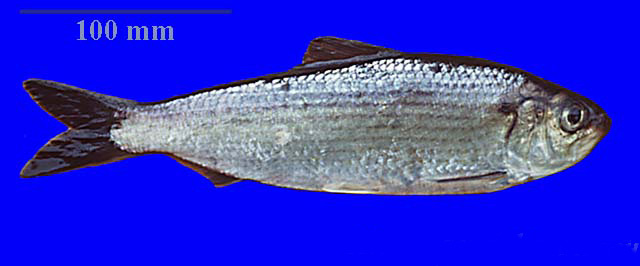 🇺🇸 United States and 1 moreAlewife
A small North American herring that migrates between sea and rivers.Herring · Coasts and shelves
 🇺🇸 United States and 1 moreGulf menhaden
Small filter-feeding fish of the Gulf of MexicoHerring · Coasts and shelves
 🇺🇸 United States and 3 moreMenhaden
Small silver forage fish that filter plankton and support marine food webs.Herring · Coasts and shelves