
Menhaden
Small silver forage fish that filter plankton and support marine food webs.
Menhaden are small, oily-clad members of the herring order Clupeiformes. They live along the coasts of the Americas, where they feed on plankton and serve as vital prey for larger predators and birds.
- Filter feeders that eat phytoplankton and zooplankton.
- Processed into fish oil and meal rather than human food.
- Critical prey for birds, sharks, and commercial fish.
- Harvested using purse seines in coastal waters.
- Name derives from Algonquian word for fertilizer.
What it is
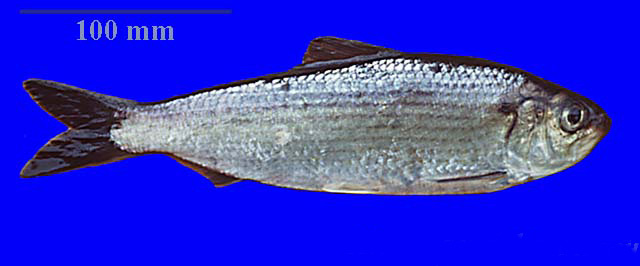
Menhaden are flat, soft-fleshed fish with deeply forked tails and bright silver scales. They rarely grow beyond thirty-eight centimetres. Some species display smaller spots behind their main humeral mark, while others have yellow tail rays. These small herrings form tight schools and move slowly through coastal waters. Their bodies are adapted for filtering vast amounts of water to extract tiny organisms.
Where it lives
These fish inhabit the western Atlantic and eastern Pacific oceans. Species range from Nova Scotia down to Florida, extending into the Gulf of Mexico and along South American coasts to Brazil and Argentina. They thrive in estuaries, bays, and river mouths, preferring water temperatures near eighteen degrees Celsius. Adults often migrate offshore in winter and return to shallower inland waters during summer.
How it lives
Menhaden are omnivorous filter feeders that strain phytoplankton and zooplankton from the water column. Younger individuals consume mostly plant matter, shifting to animal plankton as they mature. They travel in large, packed schools with open mouths to maximize filtration. This feeding habit makes them a crucial energy bridge between microscopic life and larger predators like tuna, sharks, and seabirds.
Breeding and life cycle
Reproduction occurs externally in the open ocean during winter months, typically between December and March. Females release eggs and sperm directly into the water column at the planktonic level. There are no visible external differences between sexes due to a lack of accessory reproductive organs. Larvae drift with currents toward estuaries and inland waterways to begin their growth cycle.
Fish and people
Menhaden are not eaten directly by humans but are processed into fish meal and oil rich in omega-3 fatty acids. This oil serves as an ingredient in animal feed, fertilizers, and dietary supplements. Commercial fisheries use purse seines to harvest millions of fish annually. The catch supports bait markets for crabbers and recreational anglers, while the reduction industry converts the biomass into industrial products.
Status and threats
Overfishing has led to depletion concerns, particularly for Atlantic menhaden in the Chesapeake Bay. Conservationists argue that removing too many fish disrupts the food chain, harming predator populations like striped bass and ospreys. Management bodies have implemented caps on harvest limits to protect ecological balance. These measures aim to preserve the species' role in mitigating algal blooms and supporting marine biodiversity.


Questions people ask about Menhaden
Are menhaden safe to eat?
No, they are not used directly for human consumption. Instead, they are processed into fish oil, meal, and fertilizer. The flesh contains high levels of omega-3 fats, which are extracted for supplements and animal feed.
Why are menhaden important?
They act as a keystone species by converting plankton into energy for larger predators. They also help control toxic algal blooms by filtering phytoplankton, which improves water quality in estuaries and bays.
How do menhaden reproduce?
They spawn externally in the open ocean during winter. Eggs and sperm are released into the water column, and larvae drift with currents into estuaries. Sex cannot be determined externally due to a lack of visible reproductive organs.
What is the origin of the name?
The name comes from an Algonquian word meaning he fertilizes. Indigenous peoples historically used these fish as fertilizer for crops, a practice later adopted by early settlers in North America.
Good reading and sources
- OpinionThe New York Times, Article
- ‘Never seen anything like it’: fisherman’s video captures shark feeding frenzyThe Guardian, Article
The facts on this page come from the Wikipedia article "Menhaden", written by its contributors and used under the CC BY-SA 4.0 licence, and from its Wikidata record (CC0). EveryFish rewrote the text in its own words, with AI assistance, and compares every page with the article to make sure no passage is copied. It may be reused under the same CC BY-SA 4.0 licence with a link back.
It may contain mistakes, and figures change over time. Nothing here is investment or buying advice. If something is wrong, tell us. Last refreshed 2026-11-15.
Like Menhaden
All herrings and sardines 🇹🇷 Turkey and 4 moreAnchovy
Small, oily forage fish found in oceans and some rivers worldwide.Herring · Coasts and shelves
 🇺🇸 United States and 2 moreAmerican gizzard shad
A silvery freshwater forage fish with a muscular gizzard.Herring · Rivers and lakes
 🇺🇸 United States and 1 moreAlewife
A small North American herring that migrates between sea and rivers.Herring · Coasts and shelves
 🇺🇸 United States and 1 moreKnightia
Extinct herring-like fish from the Green River Formation, famous for its abundant fossils.Herring · Rivers and lakes · 1856