River or lake, Russia
Lake Baikal
The world's deepest and oldest lake, in Siberia, home of the omul and the see-through golomyanka.
Lake Baikal, in southern Siberia, is the deepest lake on Earth at about 1,640 metres and probably the oldest, at around 25 million years. It holds about a fifth of the world's unfrozen fresh surface water. Its long isolation has produced many animals found nowhere else, including the Baikal seal and dozens of fish species, and it became a World Heritage Site in 1996.
Omul and golomyanka
The omul, a whitefish of the salmon family, is the lake's best-known food fish, smoked and sold along the shore. The golomyanka, or Baikal oilfish, is a strange, see-through fish with no scales and a body rich in oil, which gives birth to live young. It lives in the open water down to great depths and is the main food of the Baikal seal. Many sculpins, small bottom fish, have evolved into separate species in the lake.
Protecting the omul
Omul numbers fell sharply in the 2010s, and in 2017 Russia banned commercial omul fishing for several years to let the stock recover. Pollution from towns and a former paper mill on the shore, spreading algae near beaches and warming water are concerns for the lake. The Baikal pulp and paper mill closed in 2013.
Fish of Lake Baikal

Still to be written: Omul.
Also tied to Lake Baikal
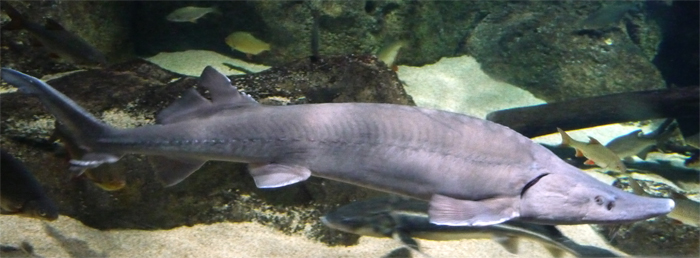
Photo credits on this page
The small pictures above come from Wikimedia Commons under free licences. Some are cropped to fit.
- Comephorus: Unknown author, Public domain, source
- Siberian sturgeon: This illustration was made by Citron You must credit this : Citron / C, CC BY-SA 3.0, source