River or lake, Brazil
The Amazon at Manaus
The world's richest river for fish, where the dark Rio Negro meets the muddy Solimoes, home of arapaima and piranhas.
The Amazon basin holds more freshwater fish species than any other river system, with well over 2,000 known and more described every year. At Manaus, the black water of the Rio Negro meets the pale, muddy Solimoes, and the two flow side by side for kilometres before mixing, a sight called the Meeting of Waters. The city's markets sell tambaqui, pirarucu and catfish from the rivers around it.
Giants and swarms
The arapaima, called pirarucu, is among the largest freshwater fish with scales, growing to about 3 metres, and must rise to breathe air. The tambaqui, a large fruit-eating relative of the piranhas, swims into flooded forests to feed on fallen seeds. Red-bellied piranhas, electric eels, discus and stingrays live in the same waters. The Rio Negro is the source of many aquarium fish, especially the cardinal tetra, collected by local fishers around Barcelos.
Fishing and the flooded forest
Each year the rivers rise by about 10 metres or more and flood the forest for months, and fish move in to feed and spawn. The arapaima was overfished almost to vanishing in many areas, but community management schemes, beginning in the Mamiraua reserve in the 1990s, where local people count the fish and set their own catch limits, have brought numbers back. Deforestation, dams, mining and droughts in 2023 and 2024 are growing threats.
Fish of The Amazon at Manaus


Still to be written: Red-bellied piranha, Cardinal tetra, Discus (fish).
Also tied to The Amazon at Manaus
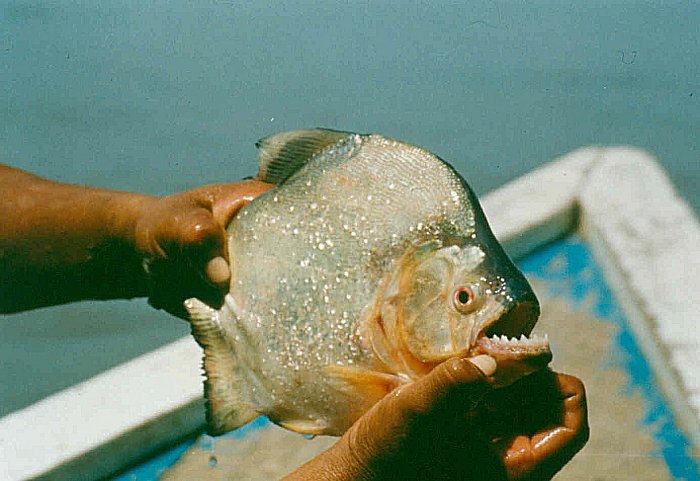
Photo credits on this page
The small pictures above come from Wikimedia Commons under free licences. Some are cropped to fit.
- Redeye piranha: Torox, CC BY-SA 3.0, source
- Tambaqui: w_endo, CC0, source
- Arapaima: This illustration was made by Citron You must credit this : Citron / C, CC BY-SA 3.0, source
- Electric eel: Steven G. Johnson, CC BY-SA 3.0, source