
Eulachon
A small anadromous smelt known for its high fat content and cultural importance in Pacific North America.
The eulachon is a small fish that lives in the ocean but returns to rivers to breed. Indigenous peoples have relied on it for food and trade for centuries along the Pacific coast.
- Adults contain up to 15% body weight in fat, allowing them to be burned as candles.
- Indigenous trade routes for eulachon oil are known as grease trails.
- The Nisga’a new year begins with the eulachon spawning run in March.
- Southern populations are listed as threatened under the US Endangered Species Act.
- Males develop fleshy ridges along their bodies during the spawning season.
What it is
The eulachon is a small member of the smelt family found along the Pacific coast. Adults reach up to thirty centimetres in length, though most measure between fifteen and twenty centimetres. Their backs appear brown or blue, fading to silvery sides and a white belly. Males develop raised bumps on their fins and fleshy ridges along their bodies during breeding season. The name candlefish comes from the fish’s extreme oiliness, which allows dried specimens to burn like candles when strung on a wick.
Where it lives
This species inhabits the coastal waters of North America, ranging from northern California through Alaska. It spends its adult years in the ocean before migrating upstream into freshwater rivers and streams to reproduce. Spawning runs occur in major river systems, with timing varying by location. Some rivers experience large annual returns while others see irregular patterns. The migration typically begins with males arriving first, followed by females midway through the season.
How it lives
Eulachon feed primarily on plankton and small crustaceans while living in the sea. They also consume fish eggs and insect larvae. As they approach spawning grounds, they stop feeding. These fish serve as a crucial food source for numerous predators, including birds and larger marine animals. Their predictable return to freshwater makes them easy targets for both wildlife and human harvesters. The run often starts with a male-dominated group before females join later in the season.
Breeding and life cycle
These fish are anadromous, meaning they migrate from saltwater to freshwater to spawn. They return to the specific streams where they were born to lay eggs. After reproducing, the adults die. Spawning usually occurs in early spring, marking the end of winter for many indigenous communities. The timing varies annually, and some rivers may skip a year entirely. Males display distinct physical changes, such as enlarged teeth and body ridges, to attract mates.
Fish and people
Indigenous communities along the Pacific coast have harvested eulachon for centuries as a vital food source and trade commodity. The fish is processed into oil, known as grease, which was traded inland via routes called grease trails. Traditional methods involve fermenting the fish in pits to extract the oil. Today, the fish is also frozen, smoked, or canned. Non-indigenous uses include bait for sport fishing and pet food. The Nisga’a people mark their new year based on the arrival of the eulachon run.
Status and threats
Conservation efforts focus on protecting distinct population segments, particularly those in the southern range. The southern population was listed as threatened under the US Endangered Species Act in 2010 due to declines caused by dams, pollution, and overfishing. In Canada, several populations are classified as endangered or threatened. Climate change and habitat loss from logging further threaten survival. Recovery plans aim to restore spawning habitats and manage harvest levels to ensure long-term viability.

Questions people ask about Eulachon
Why is the eulachon called candlefish?
The name comes from the fish's high fat content, which can reach 15% of its body weight. When dried and placed on a wick, the oil allows the fish to burn slowly like a candle, a practice noted by early explorers.
Where does the eulachon live?
It lives in the ocean along the Pacific coast of North America, from northern California to Alaska. As an anadromous fish, it migrates into freshwater rivers and streams to spawn before returning to the sea, though it dies after spawning.
How do indigenous peoples use eulachon?
They are a staple food and valuable trade item. Oil is extracted by fermenting the fish in ground pits, then boiling and skimming the surface. This grease was traded inland via routes called grease trails, supporting economies far from the coast.
What is the conservation status of eulachon?
Southern US populations are listed as threatened under the Endangered Species Act. In Canada, some groups are endangered or threatened. Threats include dam construction, pollution, habitat loss, and climate change affecting spawning runs.
How big do eulachon get?
Adults typically measure between fifteen and twenty centimetres in length. The maximum recorded size is thirty centimetres. Males are slightly larger than females and develop distinct physical features during the breeding season.
Good reading and sources
The facts on this page come from the Wikipedia article "Eulachon", written by its contributors and used under the CC BY-SA 4.0 licence, and from its Wikidata record (CC0). EveryFish rewrote the text in its own words, with AI assistance, and compares every page with the article to make sure no passage is copied. It may be reused under the same CC BY-SA 4.0 licence with a link back.
It may contain mistakes, and figures change over time. Nothing here is investment or buying advice. If something is wrong, tell us. Last refreshed 2026-11-15.
Like Eulachon
All other fish 🇧🇷 Brazil and 4 moreGolden dorado
A large predatory freshwater fish native to South America known for its golden colour.Other · Rivers and lakes
 🇺🇸 United StatesGuadalupe bass
A rare Texas endemic black bass prized by anglers for its fighting spirit.Other · Rivers and lakes
 🇵🇭 Philippines and 4 moreMilkfish
The sole living species of the family Chanidae, found across the Indo-Pacific.Other · Coasts and shelves
 🇧🇷 Brazil and 3 moreTambaqui
A large freshwater fish from South America known for its heavy body and seed-eating habits.Other · Rivers and lakes
More from Osmeridae
All of them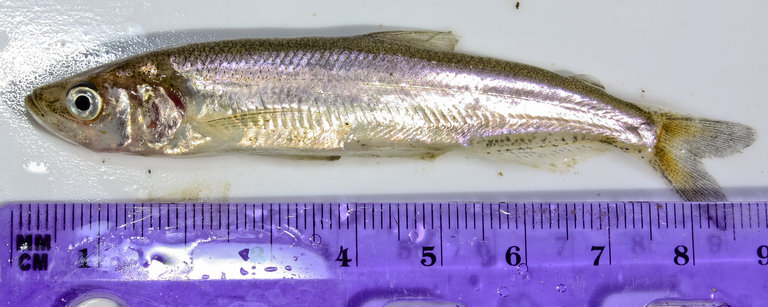 🇺🇸 United States and 1 moreLongfin smelt
Small anadromous fish of the North Pacific coastOther · Rivers and lakes
 🇩🇪 Germany and 4 moreEuropean smelt
Small coastal fish with a cucumber scentOther · Rivers and lakes
 🇺🇸 United StatesDelta smelt
A tiny, endangered fish native to California's Sacramento-San Joaquin River Delta.Other · Rivers and lakes · 1963