
Florida pompano
A fast-growing marine fish prized for food and sport fishing.
The Florida pompano is a silver and yellow marine fish found along the Atlantic coast. It supports major commercial and recreational fisheries, particularly in Florida. Its rapid growth makes it a key species for aquaculture development.
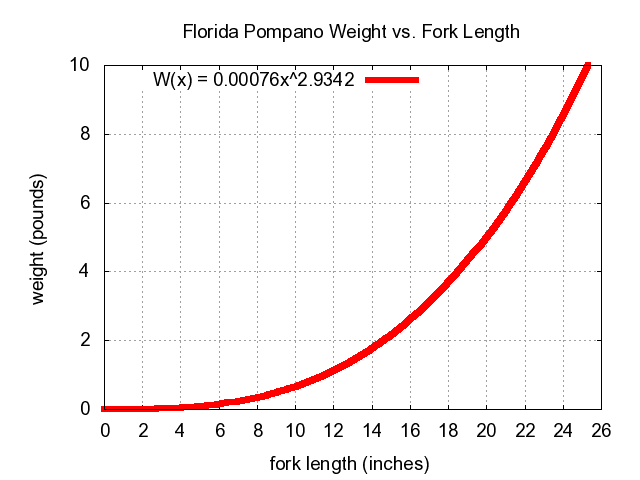
- Grows to 26 inches and weighs up to 9 pounds
- Migrates north in summer and south in fall
- Popular for aquaculture due to fast growth rate
- Named after the city of Pompano Beach, Florida
- Feeds on small clams and zoobenthos on sea floor
What it is
This marine species belongs to the jack family and features a deeply compressed body with a blunt snout. Its colouration shifts from blue-greenish silver on the back to yellow on the belly, throat, and fins. The tail is deeply forked, and the first dorsal fin has low spines that may disappear in larger adults. Most individuals caught by anglers weigh under three pounds, though record specimens reach nine pounds. It resembles the permit but is distinguished by its specific fin ray counts and colour patterns.
Where it lives
Its distribution spans the western Atlantic from Massachusetts down to Brazil, although it is most abundant near Florida. The fish migrates seasonally, moving north in summer and south in autumn to stay within warm waters between 70 and 89 degrees Fahrenheit. Summer sightings occur near Sebastian and Cape Hatteras, while winter finds them near Palm Beach and oil rigs. They avoid clear waters like those around the Bahamas, preferring surf flats and turbid coastal zones.
How it lives
These fast swimmers travel in schools and feed primarily on the sea floor. Their diet consists of zoobenthos and small clams, which they crush with short teeth. Juveniles grow rapidly, adding up to nearly two inches per month depending on the population. This quick growth allows them to reach about one pound in their first year. Adults generally live for three to four years, with some surviving up to seven years in the wild.
Fish and people
Chefs value this fish for its even fillet thickness and mild, rich flavour. A classic New Orleans dish steams it in parchment with wine and shellfish. High market demand has driven significant aquaculture efforts, as the species tolerates low salinity and grows quickly. Recreational anglers prize it for its fight on light tackle, while commercial fleets harvest most of the catch off Florida’s west coast. The city of Pompano Beach takes its name from this popular seafood item.
Status and threats
Studies indicate the population remains healthy and the fishery is sustainable under current management. Although fishing mortality rose sharply in the late 1990s, assessments by wildlife commissions concluded the stock was stable by 2005. No specific conservation threats are detailed beyond historical fishing pressure, and no formal endangered status is assigned in the provided data.

Questions people ask about Florida pompano
What does the Florida pompano taste like?
The flesh is white, opaque, and oily with a rich but mild flavour. Chefs appreciate it because the fillets have even thickness, making them easy to cook uniformly. It is often prepared steamed or grilled.
Where is the best place to catch Florida pompano?
They are most common near Florida, especially along the western coast. In winter, look near oil rigs, Palm Beach, and Hobe Sound. In summer, they move north to areas like Cape Hatteras and Sebastian.
Why is this fish farmed commercially?
It is ideal for aquaculture because it grows quickly, tolerates low-salinity water, and commands high market prices. Farming helps meet the high demand for this popular food and sport fish without depleting wild stocks.
Good reading and sources
- Florida pompano on WikipediaEncyclopedia
- More photos on Wikimedia CommonsPhotos
- Wikidata recordOpen data
The facts on this page come from the Wikipedia article "Florida pompano", written by its contributors and used under the CC BY-SA 4.0 licence, and from its Wikidata record (CC0). EveryFish rewrote the text in its own words, with AI assistance, and compares every page with the article to make sure no passage is copied. It may be reused under the same CC BY-SA 4.0 licence with a link back.
It may contain mistakes, and figures change over time. Nothing here is investment or buying advice. If something is wrong, tell us. Last refreshed 2026-11-15.
Like Florida pompano
All other fish 🇦🇷 Argentina and 4 moreArgentinian silverside
A large, adaptable silverside native to South America.Other · Rivers and lakes
 WorldGreat barracuda
Large predatory fish found in warm oceans worldwide.Other · Coasts and shelves
 🇵🇭 Philippines and 4 moreMilkfish
The sole living species of the family Chanidae, found across the Indo-Pacific.Other · Coasts and shelves
 WorldGreater amberjack
Large predatory jack found in warm seas worldwide.Other · Coasts and shelves · 1810