
Horn shark
Small spotted bullhead shark from the eastern Pacific coast.
The horn shark is a small, bottom-dwelling bullhead shark found along the coasts of California and Baja California. It hunts at night for hard-shelled prey using powerful jaws and exhibits rare parental care by hiding its eggs. Though harmless to humans, it faces limited threats and remains data deficient in conservation status.
- Produces highest relative bite force of any shark species
- Female sharks hide eggs in crevices for protection
- Active only at night, guided by environmental light
- Uses tail as lever to pull prey from substrate
- Spines worn down by movement over rocky reefs
What it is
The horn shark is a small member of the bullhead shark family, characterised by a short, blunt head with prominent ridges above the eyes. Its body is cylindrical and covered in small, smooth scales, coloured brown or grey with many dark spots that may fade with age. Two high dorsal fins sit on its back, each armed with a stout spine at the front. These spines can wear down in rocky habitats but remain sharp enough to deter predators. The shark rarely exceeds one metre in length, though specimens up to 1.2 metres have been recorded. Its underside is yellowish, and a dark patch of spots sits below each eye.
Where it lives
This species lives in the eastern Pacific Ocean, ranging from Monterey Bay in California south through the Gulf of California. It prefers coastal waters, staying close to the sea floor on rocky reefs or in algae beds. During winter, it moves to deeper water below thirty metres, sometimes reaching depths of two hundred metres in caves. Juveniles inhabit deeper sandy flats, often using pits dug by bat rays for shelter. The shark favours water warmer than twenty degrees Celsius, which limits its presence in cooler northern channels where swell sharks dominate.
How it lives
Horn sharks are solitary, slow-moving predators that hunt at night within small home ranges. They rest motionless in crevices or algae during the day, becoming active only when light levels drop. Their activity is controlled by external light rather than an internal clock. Adults crush hard-shelled prey like molluscs and sea urchins using the highest relative bite force of any shark. They use suction to pull prey from the substrate and lever their bodies to dislodge attached items. Juveniles eat softer prey such as worms and anemones. Larger fish, elephant seals, and bald eagles prey on them.
Breeding and life cycle
Mating occurs in December or January, with males biting the female’s pectoral fin during copulation. Females lay up to twenty-four spiral-flanged eggs between February and April in shallow water. Unlike most sharks, horn sharks exhibit parental care by picking up the egg cases and wedging them into rock crevices to protect them from predators. In captivity, this behaviour is absent, and eggs may be eaten. The eggs hatch after six to ten months, releasing young sharks that rely on a yolk sac for their first month. Growth rates vary significantly, making age determination difficult.
Fish and people
Horn sharks are generally harmless but can bite if harassed, and their dorsal spines inflict painful wounds. They adapt well to captivity and are common in public aquariums across the United States. In Mexico, they are used for food and fishmeal, while in California, their spines are sometimes crafted into jewelry. They are not targeted by commercial fisheries, though small numbers are caught as bycatch. A notable incident in 2018 involved the theft of a juvenile from an aquarium, highlighting their appeal to the public despite their lack of commercial value in the US.
Status and threats
The International Union for Conservation of Nature lists the horn shark as Data Deficient due to insufficient information. However, recent assessments suggest the population is stable. The species faces few threats off the coast of the United States, as it is not a primary target for fishermen. In Mexico, some harvesting occurs for local consumption. Climate change may affect its distribution, as warming waters have increased its numbers in areas like Santa Catalina Island while reducing populations of cold-tolerant competitors.


Questions people ask about Horn shark
Are horn sharks dangerous to humans?
They are generally harmless and can be approached underwater. However, they may bite if harassed or handled, and their dorsal fin spines can cause painful wounds. Care should be taken when interacting with them.
What do horn sharks eat?
Adults primarily eat hard-shelled animals like molluscs, sea urchins, and crabs, which they crush with powerful jaws. Juveniles prefer softer prey such as worms and sea anemones. They also scavenge on squid and small fish.
Do horn sharks lay eggs or give birth to live young?
They are oviparous, meaning they lay eggs. Females produce up to twenty-four eggs with spiral flanges, which they wedge into rock crevices to protect them from predators until they hatch months later.
Where can you find horn sharks?
They are endemic to the eastern Pacific, found from Monterey Bay, California, south to the Gulf of California. They inhabit rocky reefs, algae beds, and sandy flats, usually in shallow coastal waters.
Good reading and sources
The facts on this page come from the Wikipedia article "Horn shark", written by its contributors and used under the CC BY-SA 4.0 licence, and from its Wikidata record (CC0). EveryFish rewrote the text in its own words, with AI assistance, and compares every page with the article to make sure no passage is copied. It may be reused under the same CC BY-SA 4.0 licence with a link back.
It may contain mistakes, and figures change over time. Nothing here is investment or buying advice. If something is wrong, tell us. Last refreshed 2026-11-15.
Like Horn shark
All sharks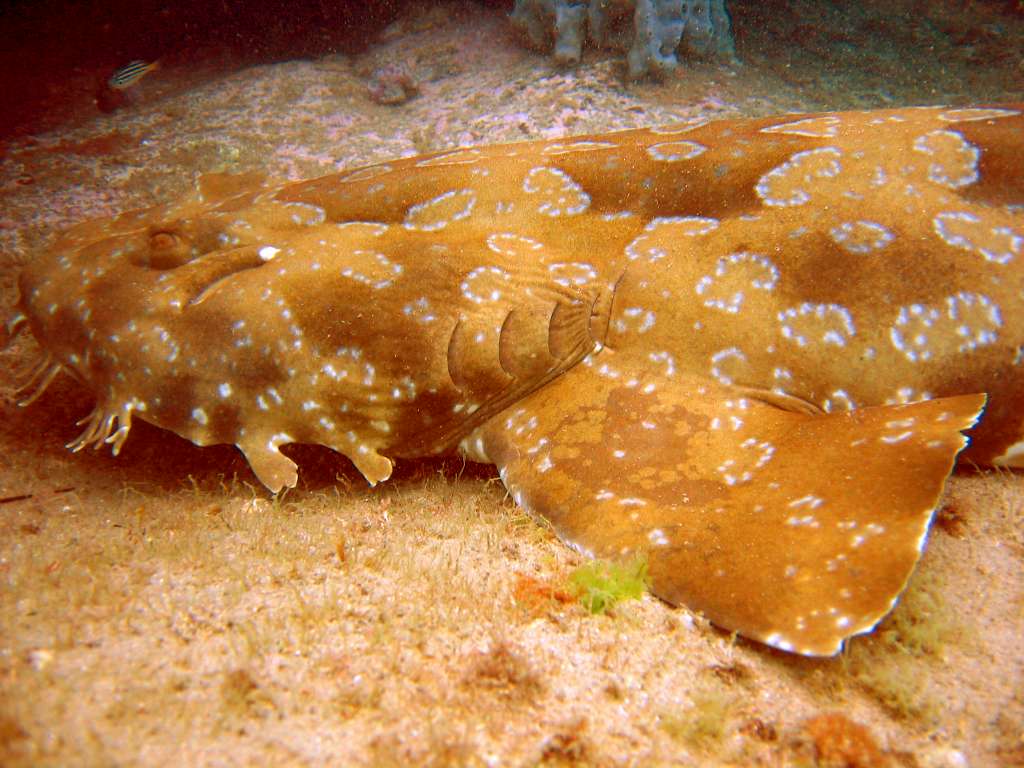 🇦🇺 Australia and 2 moreWobbegong
Camouflaged bottom-dwelling sharks found in the western Pacific and eastern Indian Ocean.Shark · Coasts and shelves
 🇺🇸 United States and 4 moreCaribbean reef shark
Large requiem shark of western Atlantic coral reefsShark · Coasts and shelves · 1876
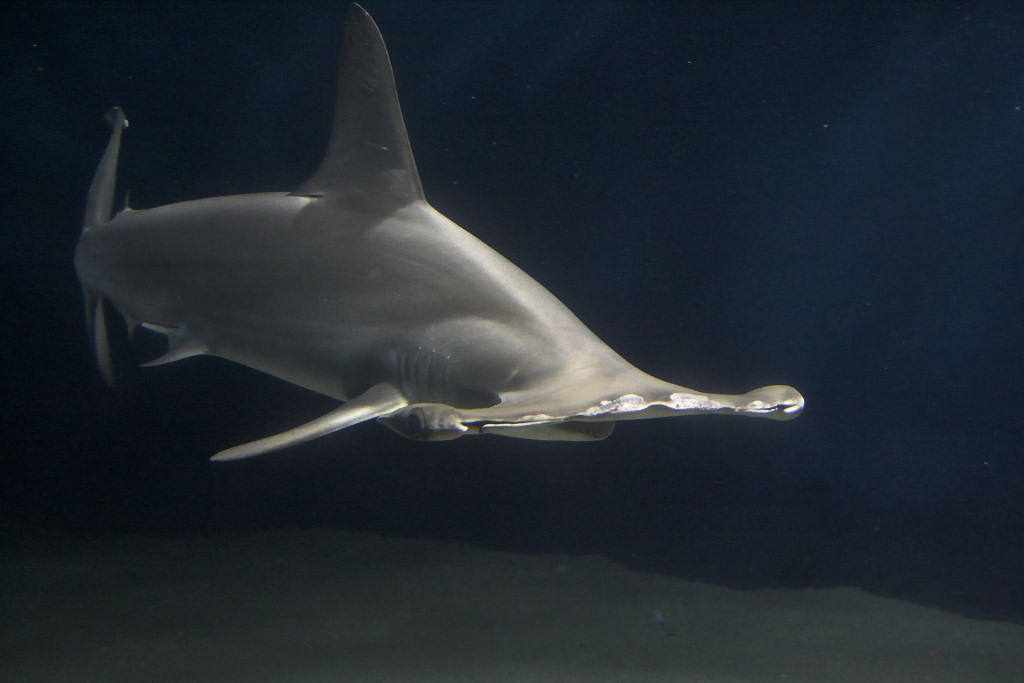 WorldHammerhead shark
Sharks with T-shaped heads for better vision and sensing prey.Shark · Coasts and shelves
 🇮🇩 Indonesia and 4 moreWhitespotted bamboo shark
A small, bottom-dwelling carpet shark with purple and pink spots, common in Asian coral reefs.Shark · Coasts and shelves
