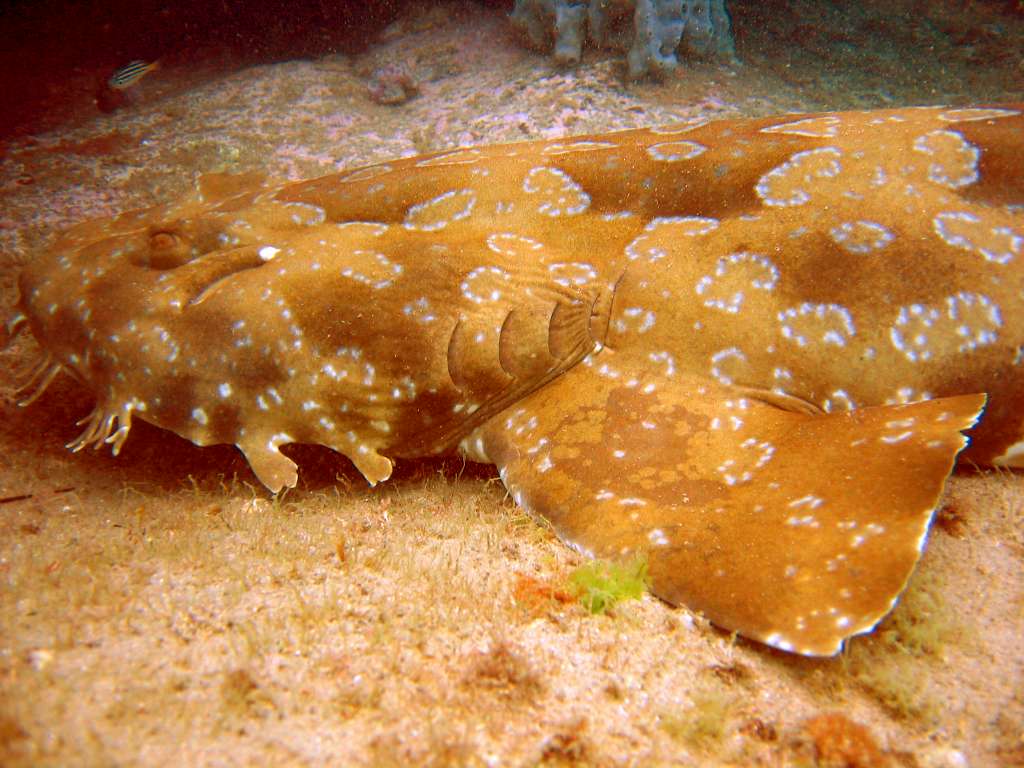
Wobbegong
Camouflaged bottom-dwelling sharks found in the western Pacific and eastern Indian Ocean.
Wobbegongs are a group of twelve carpet shark species known for their camouflage and ambush hunting. They live in shallow coastal waters around Australia and Indonesia, using electroreception to find prey.
- Twelve species form the wobbegong family, known for carpet-like patterns.
- Largest species, spotted and banded wobbegongs, reach up to three metres.
- They use electroreception to detect electrical signals from prey.
- Females give birth to live litters ranging from nine to forty-five pups.
- Over fifty unprovoked attacks on humans have been recorded since 1900.
What it is
Wobbegongs are a family of twelve shark species distinguished by bold patterns that resemble woven carpets. This visual disguise helps them blend into rocky seabeds. The name comes from an Australian Aboriginal word meaning shaggy beard, referring to the skin growths around their mouths. These sharks rest on the ocean floor rather than swimming continuously. Most species grow to about one metre, but the spotted and banded varieties can reach three metres. Their bodies are flattened, allowing them to lie flat against the substrate while waiting for prey.
Where it lives
These sharks inhabit the western Pacific Ocean and the eastern Indian Ocean. Their primary range covers the coastal waters of Australia and Indonesia. One species, the Japanese wobbegong, extends northward to Japan. They are endemic to these regions, meaning they do not migrate long distances or travel seasonally like some other sharks. They prefer shallow, temperate, and tropical environments, specifically around coastal rocky reefs where their camouflage is most effective.
How it lives
Wobbegongs are ambush predators that rely on stealth rather than speed. They hide among rocks and coral, using their patterned skin to remain unseen. When smaller fish swim too close, they strike quickly with powerful jaws and needle-like teeth. They also possess ampullae of Lorenzini, pores that detect electrical signals from living organisms. This electroreception aids in locating hidden prey and navigating. Their diet includes bony fish, cephalopods, and other sharks, with some species even consuming members of their own family.
Breeding and life cycle
These sharks are viviparous, meaning females give birth to live young after embryos develop inside the body. Litter sizes vary significantly between species, ranging from nine to forty-five pups. Reproduction follows a triennial ovarian cycle, involving distinct stages of follicle development and pregnancy. Studies suggest that sympatric species may synchronize their reproductive seasons, though specific timelines can differ based on location and individual species traits. Research into their breeding habits remains limited due to the difficulty of observing them in the wild.
Fish and people
Wobbegongs are commercially fished in Australia, particularly in New South Wales, where they are sold as food fillets to markets in Japan, China, and Malaysia. Some smaller species are kept in aquariums due to their lethargic nature, though they require extensive habitat replication. While generally not considered dangerous, they have attacked humans who inadvertently disturb them near the shore. Their bites can be severe due to sharp teeth, and they often hold onto victims once attached. Public perception of these sharks is influenced by media reports of unprovoked attacks.
Status and threats
Specific conservation statuses for individual wobbegong species are not detailed in the provided sources. However, commercial fishing pressures exist, particularly in Australian waters. Habitat degradation and human interaction through tourism and fishing pose potential threats. Research in captivity helps improve understanding of their biology, which supports conservation efforts. The lack of comprehensive data on their populations makes precise assessment challenging, highlighting the need for continued study and monitoring of their ecological role.


Questions people ask about Wobbegong
What does the name wobbegong mean?
The name originates from the Dharug language, an Australian Aboriginal tongue. It translates to shaggy beard, describing the distinctive skin growths surrounding the shark's mouth area.
Are wobbegongs dangerous to humans?
They are generally not considered dangerous but have attacked swimmers and divers who come too close. Their bites can be severe due to sharp teeth, and they may hold onto victims, making removal difficult without intervention.
How do wobbegongs hunt?
They are ambush predators that rest on the sea floor. Using camouflage and electroreception via ampullae of Lorenzini, they detect nearby prey and strike quickly with powerful jaws and needle-like teeth.
Where do wobbegongs live?
They inhabit shallow temperate and tropical waters in the western Pacific and eastern Indian Ocean. Their primary range includes coastal rocky reefs around Australia and Indonesia, with one species found in Japan.
Good reading and sources
The facts on this page come from the Wikipedia article "Wobbegong", written by its contributors and used under the CC BY-SA 4.0 licence, and from its Wikidata record (CC0). EveryFish rewrote the text in its own words, with AI assistance, and compares every page with the article to make sure no passage is copied. It may be reused under the same CC BY-SA 4.0 licence with a link back.
It may contain mistakes, and figures change over time. Nothing here is investment or buying advice. If something is wrong, tell us. Last refreshed 2026-11-15.
Like Wobbegong
All sharks 🇮🇩 Indonesia and 4 moreWhitespotted bamboo shark
A small, bottom-dwelling carpet shark with purple and pink spots, common in Asian coral reefs.Shark · Coasts and shelves
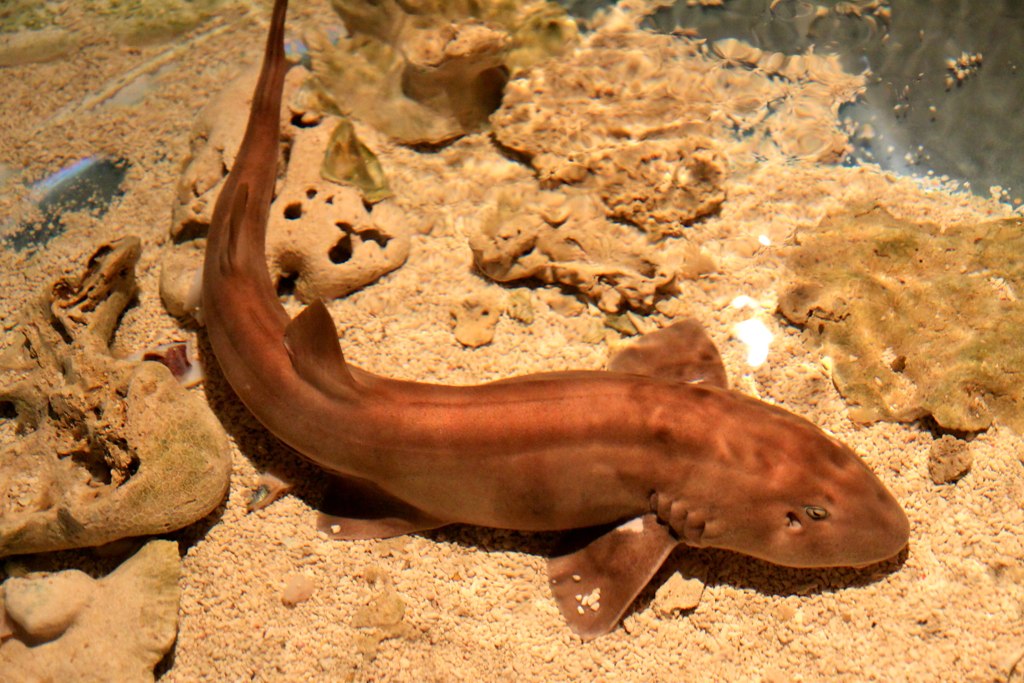 WorldBrownbanded bamboo shark
Small, docile reef shark suited for captivityShark · Coral reefs
 🇮🇩 Indonesia and 4 moreEstuarine stonefish
A venomous marine ray-finned fish found in the Indo-Pacific region.Shark · Coasts and shelves · 1766
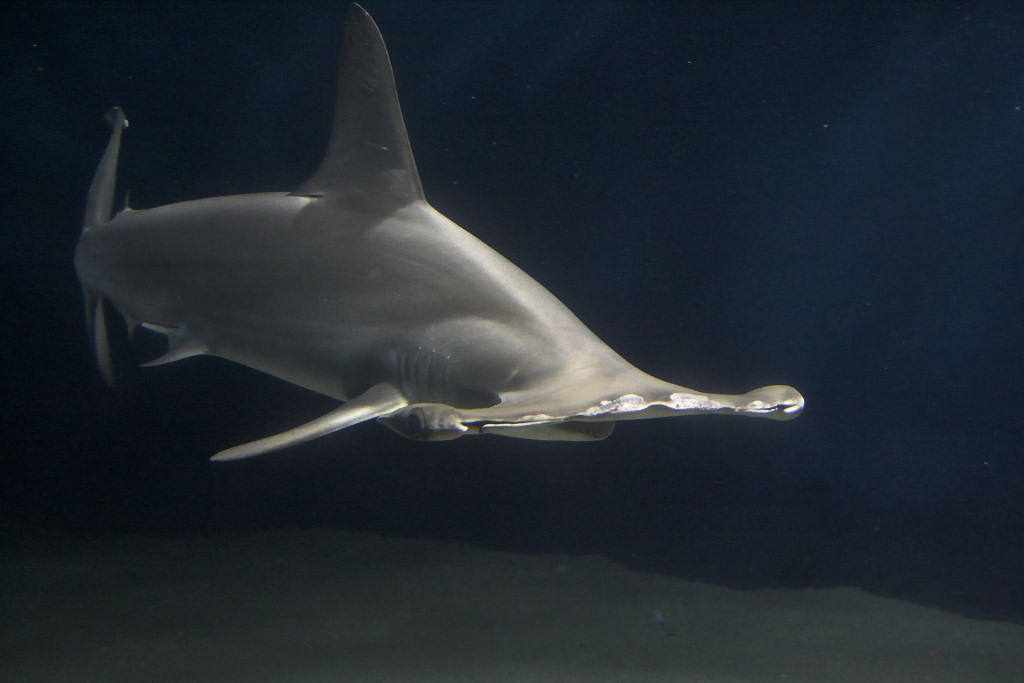 WorldHammerhead shark
Sharks with T-shaped heads for better vision and sensing prey.Shark · Coasts and shelves