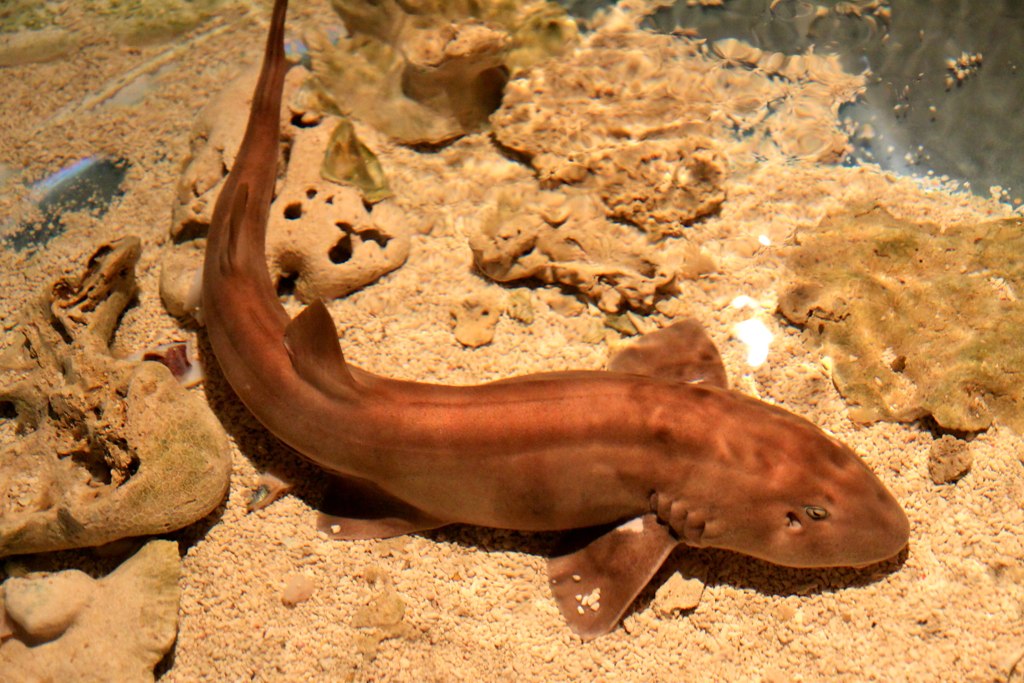
Brownbanded bamboo shark
Small, docile reef shark suited for captivity
The brownbanded bamboo shark is a small, bottom-dwelling shark found in the Indo-West Pacific. It is popular in public aquaria due to its calm nature and ability to survive briefly out of water.
- Can survive out of water for up to 12 hours
- Juveniles have dark bands, adults are plain
- Genome sequenced in 2018 by Japanese researchers
- Lives up to 25 years in public aquaria
- Featured in the 2012 film SeeFood
What it is
This shark belongs to the family Hemiscylliidae within the order Orectolobiformes. Adults lack distinct colour patterns, but juveniles display dark transverse bands and spots. A key identifying feature is the concave posterior margin of the dorsal fin. It grows to a maximum length of 1.04 metres. The animal possesses barbels that look like cat whiskers, leading to the common name cat shark, though it is not a true catshark.
Where it lives
Its distribution spans the Indo-West Pacific region, extending from Japan in the north to northern Australia in the south. It inhabits latitudes between 34° N and 26° S. These sharks reside around coral reefs and in tide pools. They are found at depths reaching down to 85 metres. The species is adapted to coastal environments where it can navigate shallow waters and complex reef structures.
How it lives
The brownbanded bamboo shark is nocturnal and generally sedentary. It is known for its docile disposition, which makes it suitable for captivity. Remarkably, it can survive out of water for up to twelve hours. In aquarium settings, it requires a stable environment as its strength can knock over loose items. It should not be housed with aggressive feeders or species like triggers and puffers that may nip its fins.
Breeding and life cycle
Reproduction is oviparous, meaning the female lays eggs. In captivity, these sharks have been bred successfully, including through in-vitro fertilisation techniques. The minimum population doubling time ranges from 4.5 to 14 years, indicating a relatively slow reproductive rate compared to many other fish species. This slow rate contributes to their vulnerability when populations are depleted.
Fish and people
This species is highly valued in the aquarium trade due to its small size and calm nature. In public aquaria, individuals can live for up to 25 years. Keepers must provide shaded hiding spots and feed them bite-sized portions of shrimp, squid, or fish two to three times weekly. Iodine supplements are often added to prevent goitre. It is also captured for food in some regions. The shark featured as the protagonist Pup in the 2012 animated film SeeFood.
Status and threats
Major threats include habitat loss, pollution, and capture for both the aquarium trade and human consumption. Its slow population growth rate means it recovers slowly from depletion. Conservation efforts are complicated by its widespread use in public displays and local fisheries. The genome was sequenced in 2018, revealing insights into elasmobranch evolution, including the presence of HoxC genes previously thought lost.


Questions people ask about Brownbanded bamboo shark
Can brownbanded bamboo sharks breathe air?
They cannot breathe air like mammals, but they can survive out of water for up to twelve hours. This adaptation helps them move between tide pools or escape predators in shallow reef areas during low tide.
What do brownbanded bamboo sharks eat in captivity?
They are carnivores fed fresh shrimp, scallop, squid, and marine fishes two to three times a week. Meals must be bite-sized to prevent regurgitation, and iodine supplements are often added to their diet to prevent goitre disease.
Why are they called cat sharks?
They have barbels near their mouth that resemble feline whiskers. Despite this nickname, they are not part of the catshark family. They belong to the order Orectolobiformes, making them relatives of nurse sharks and wobbegongs.
Good reading and sources
- Brownbanded bamboo shark on WikipediaEncyclopedia
- More photos on Wikimedia CommonsPhotos
- Wikidata recordOpen data
The facts on this page come from the Wikipedia article "Brownbanded bamboo shark", written by its contributors and used under the CC BY-SA 4.0 licence, and from its Wikidata record (CC0). EveryFish rewrote the text in its own words, with AI assistance, and compares every page with the article to make sure no passage is copied. It may be reused under the same CC BY-SA 4.0 licence with a link back.
It may contain mistakes, and figures change over time. Nothing here is investment or buying advice. If something is wrong, tell us. Last refreshed 2026-11-15.
Like Brownbanded bamboo shark
All sharks 🇮🇩 Indonesia and 4 moreWhitespotted bamboo shark
A small, bottom-dwelling carpet shark with purple and pink spots, common in Asian coral reefs.Shark · Coasts and shelves
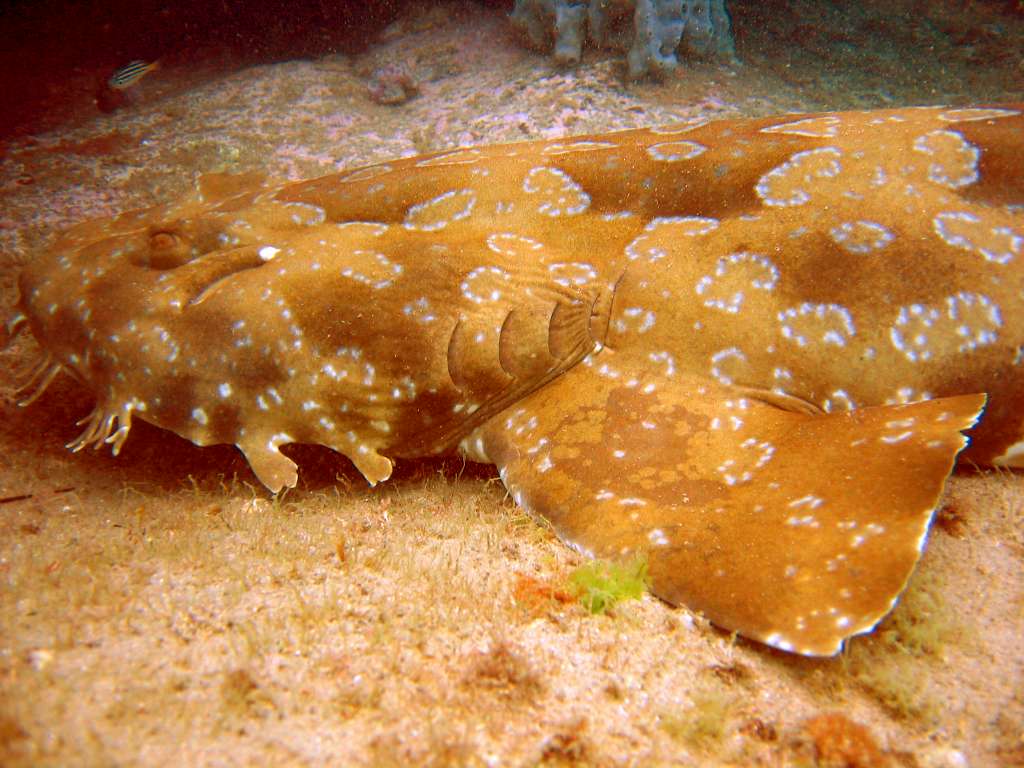 🇦🇺 Australia and 2 moreWobbegong
Camouflaged bottom-dwelling sharks found in the western Pacific and eastern Indian Ocean.Shark · Coasts and shelves
 🇺🇸 United States and 1 moreHorn shark
Small spotted bullhead shark from the eastern Pacific coast.Shark · Coasts and shelves · 1855
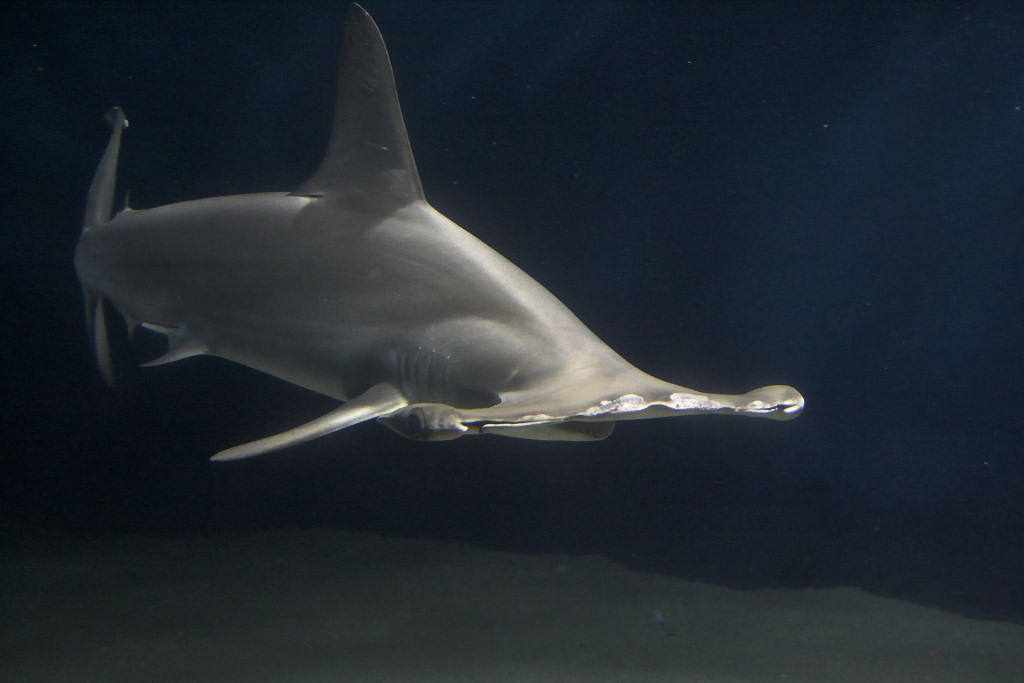 WorldHammerhead shark
Sharks with T-shaped heads for better vision and sensing prey.Shark · Coasts and shelves
