
Whitespotted bamboo shark
A small, bottom-dwelling carpet shark with purple and pink spots, common in Asian coral reefs.
The whitespotted bamboo shark is a small carpet shark species found across the Indo-Pacific. It reaches nearly one metre in length and is frequently kept in home aquariums due to its manageable size and harmless nature.
- Grows up to 93 centimetres in length.
- Rests on the sea floor using bent pectoral fins.
- Lays eggs that hatch after 14 to 15 weeks.
- Found from Japan to India and Madagascar.
- Kept commonly in home aquariums over 180 gallons.
What it is
This species is a small carpet shark that grows to approximately one metre. Adults display a white body covered in purple and pink spots alongside dark bands. They possess dorsal fins with curved back edges and unique teeth featuring a central point and weak side lobes. These sharks rest on the seabed by propping their heads and bodies up with bent pectoral fins. Their distinct coloration makes them easy to identify within their family.
Where it lives
These sharks inhabit coral reefs in the Pacific Ocean. Their distribution spans from Japan down to India, with high populations in Indonesian coastal waters. They are also present in Madagascar and Taiwan. The species occupies shallow reef environments where they can easily access the sea floor for resting and hunting.
How it lives
They are primarily nocturnal hunters that feed on small fish and invertebrates near the ocean bottom. Their teeth grip soft prey but pivot backward when crushing hard shells like crabs. As benthic predators, they use electroreceptors along their snouts to locate buried food in sand and mud. This adaptation allows them to efficiently consume detrital carbon resources compared to open-water sharks.
Breeding and life cycle
These sharks lay eggs that measure roughly five inches in length. Incubation lasts between fourteen and fifteen weeks before hatching. Hatchlings emerge at about six inches long. In rare cases, females have produced viable offspring without male contact, a process known as parthenogenesis. Albino mutations also occur occasionally in captive populations.
Fish and people
Humans keep these sharks in large home aquariums because of their small size and calm demeanor. They require tanks of at least 180 gallons and thrive on diets of squid, shrimp, and marine fish. In places like Madagascar and Taiwan, they are harvested for human consumption. Their ease of breeding in captivity supports the aquarium trade.
Status and threats
The International Union for Conservation of Nature lists this species as Near Threatened. Overfishing for food and collection for the aquarium trade pose potential risks. While they are common in some areas like Indonesia, their overall population stability requires monitoring to prevent further decline.


Questions people ask about Whitespotted bamboo shark
How big do whitespotted bamboo sharks get?
Adults reach a maximum length of 93 centimetres. Hatchlings start at approximately 150 millimetres. They are considered small sharks suitable for large home aquariums.
Are whitespotted bamboo sharks dangerous to humans?
No, they are harmless to humans. They are small, bottom-dwelling sharks that rest on the seabed. Their teeth are designed for grasping or crushing prey, not for attacking people.
What do whitespotted bamboo sharks eat?
They feed on small fish, invertebrates, crabs, squid, shrimp, clams, and scallops. They use electroreceptors to find buried prey and crush hard shells with specialized teeth.
Can whitespotted bamboo sharks reproduce without males?
Yes, through parthenogenesis. A female in Detroit laid unfertilized eggs that hatched into viable young. This rare event suggests sperm storage or self-fertilization capabilities.
Good reading and sources
- Whitespotted bamboo shark on WikipediaEncyclopedia
- More photos on Wikimedia CommonsPhotos
- Wikidata recordOpen data
The facts on this page come from the Wikipedia article "Whitespotted bamboo shark", written by its contributors and used under the CC BY-SA 4.0 licence, and from its Wikidata record (CC0). EveryFish rewrote the text in its own words, with AI assistance, and compares every page with the article to make sure no passage is copied. It may be reused under the same CC BY-SA 4.0 licence with a link back.
It may contain mistakes, and figures change over time. Nothing here is investment or buying advice. If something is wrong, tell us. Last refreshed 2026-11-15.
Like Whitespotted bamboo shark
All sharks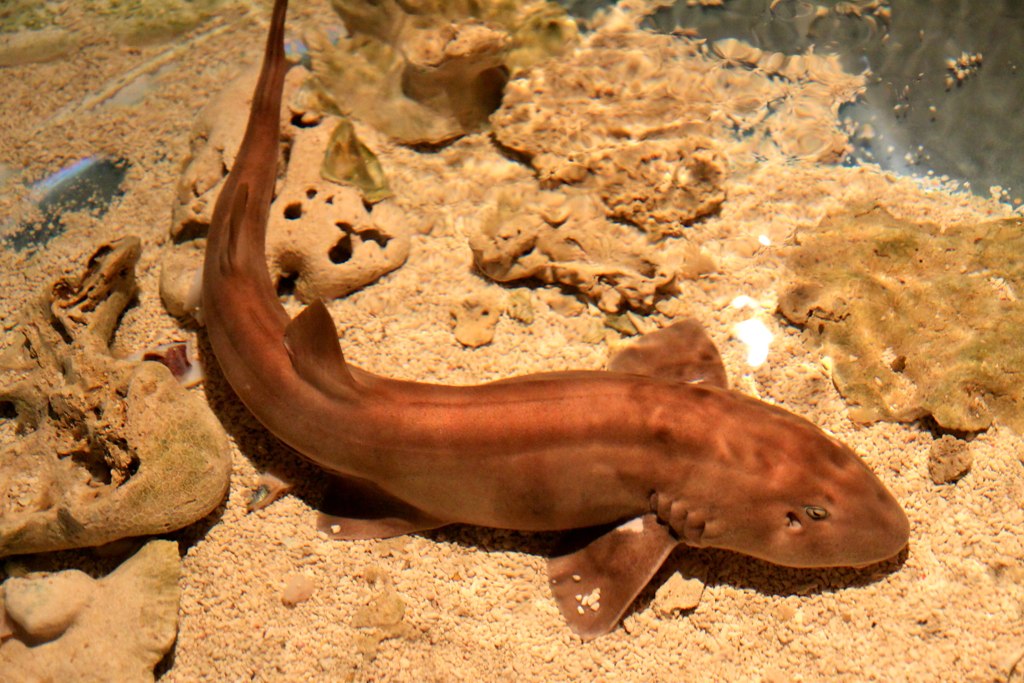 WorldBrownbanded bamboo shark
Small, docile reef shark suited for captivityShark · Coral reefs
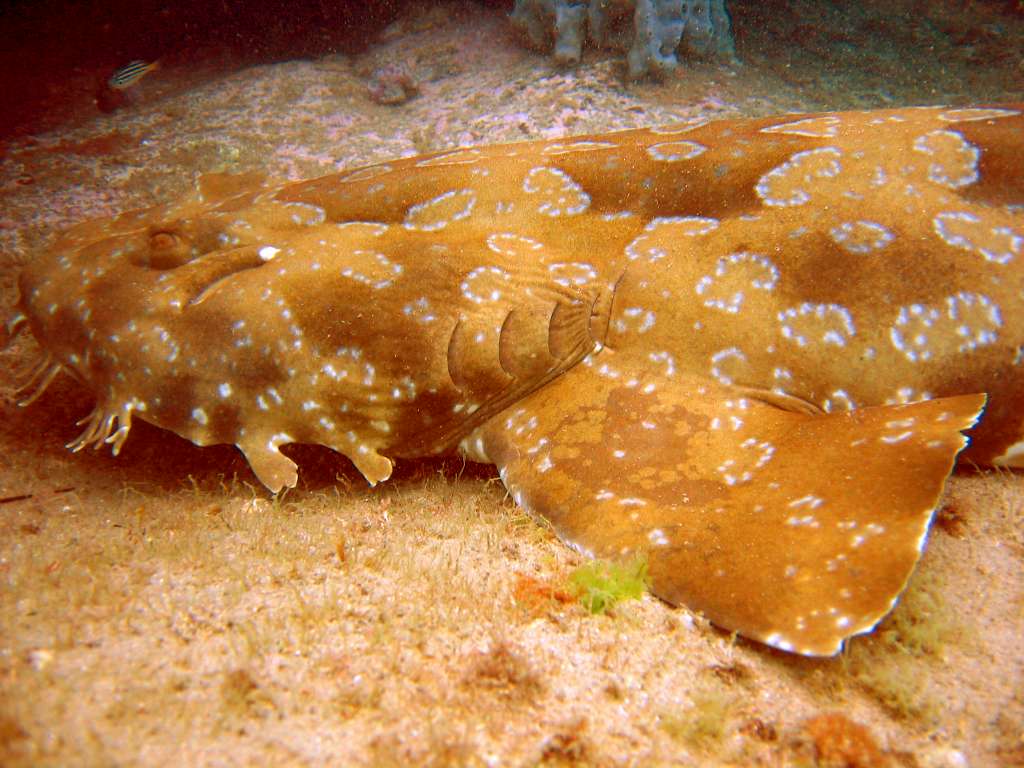 🇦🇺 Australia and 2 moreWobbegong
Camouflaged bottom-dwelling sharks found in the western Pacific and eastern Indian Ocean.Shark · Coasts and shelves
 🇺🇸 United States and 1 moreHorn shark
Small spotted bullhead shark from the eastern Pacific coast.Shark · Coasts and shelves · 1855
 WorldSkate
Cartilaginous fish with flat bodies and egg cases, found on sea floors worldwide.Shark · Coasts and shelves
