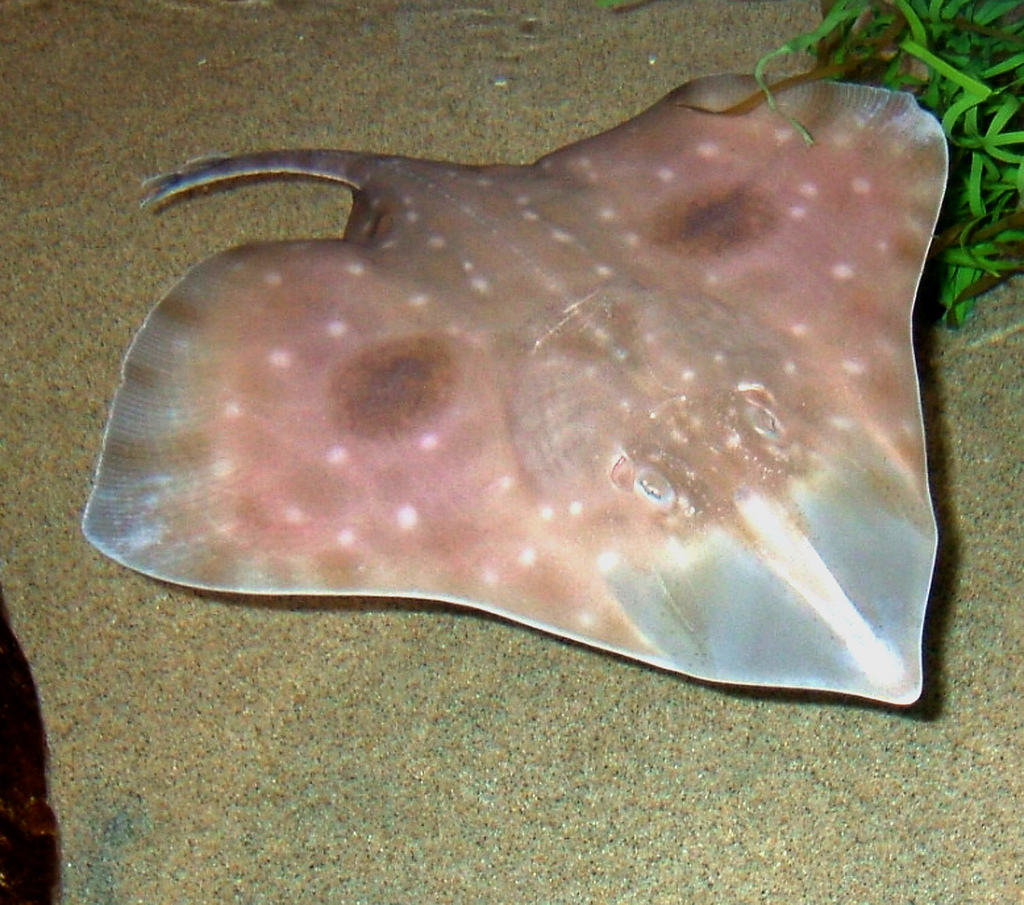
Skate
Cartilaginous fish with flat bodies and egg cases, found on sea floors worldwide.
Skates are cartilaginous fishes in the family Rajidae, distinguished by their flat bodies and unique reproductive method of laying egg cases. They inhabit cold to temperate waters globally, serving as both ecological predators and food sources for humans.
- Skates lay egg cases called mermaid's purses containing one to seven embryos.
- They inhabit depths greater than 3,000 meters in cool, temperate waters.
- Some species possess electric organs used possibly for reproductive communication.
- Skates are oviparous, unlike viviparous rays which give birth to live young.
- Slow growth and late maturity make skates vulnerable to overfishing.
What it is
Skates belong to the family Rajidae within the superorder Batoidea. These cartilaginous fishes possess a flattened body plan with pectoral fins that extend along most of their length. This structure provides propulsion for swimming near the sea floor. Their skin is covered in rough placoid scales, which are tooth-like structures. Unlike sharks, skates have gill slits on their underside and spiracles on top to breathe while buried. They also feature two dorsal fins, a long tail, and paired pelvic fins. Some species possess electric organs in their tails, though their function remains unclear.
Where it lives
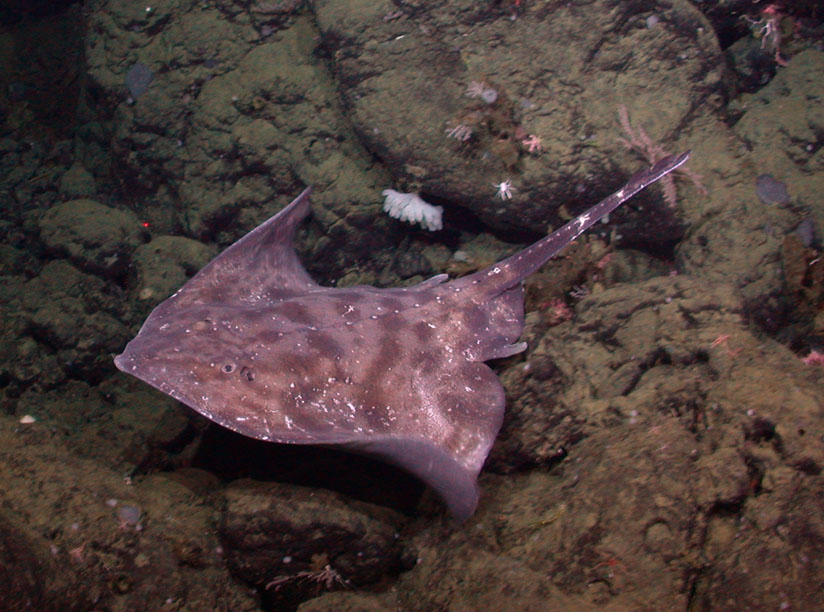
Skates inhabit waters from the intertidal zone down to depths exceeding 3,000 metres. They are most diverse in cool, temperate, and polar regions, particularly on outer continental shelves and upper slopes. This makes them unique among cartilaginous fish for thriving at higher latitudes. They generally avoid warm, shallow waters where stingrays dominate. While absent from freshwater, rare instances occur in estuaries, such as those in Tasmania and Long Island Sound.
How it lives
These fish feed on bottom-dwelling invertebrates including shrimp, crabs, oysters, and clams. They use grinding plates in their mouths to crush shells. Skates move using Rajiform locomotion, undulating their pectoral fins to glide along the sediment. Some species also use pelvic fins for walking-like movement. They play a key role in demersal food webs. Their electric organs produce weak, asynchronous signals, possibly used for communication during reproduction rather than hunting or defense.
Breeding and life cycle
Skates are oviparous, meaning they lay eggs rather than giving birth to live young. Males use claspers on their pelvic fins to transfer semen to females. Fertilized eggs develop inside a protective fibrous case known as a mermaid's purse. The female deposits these cases on the ocean floor. Embryos remain inside for up to 15 months before hatching. Each case typically contains one to seven embryos, varying by species.
Fish and people
Skates are harvested for food in various parts of the world. In South Korea, fermented skate dishes like Hongeohoe are traditional foods. Historically, dried skate carcasses were crafted into fake sea monsters called Jenny Hanivers. Research into skate locomotion explores potential links to the evolution of terrestrial walking. Despite their abundance in some areas, many populations face pressure from commercial fishing due to slow growth rates.
Status and threats
Skates exhibit slow growth and late sexual maturity, resulting in low reproductive rates. This biology makes them highly susceptible to overfishing. Many global populations have declined significantly due to heavy harvesting pressure. Conservation efforts are complicated by taxonomic uncertainties and the difficulty in assessing stock levels accurately. Current data suggests several species are near threatened or vulnerable.



Questions people ask about Skate
How do skates reproduce?
Skates are oviparous, meaning they lay eggs. Females deposit protected egg cases called mermaid's purses onto the sea floor. These cases contain one to seven embryos that develop for up to 15 months before hatching. Males use claspers to fertilize the eggs internally.
What is the difference between skates and stingrays?
The main difference is reproduction: skates lay egg cases, while stingrays give birth to live young. Skates also lack the whip-like tail and stinging spines found in many stingrays. Both share flat bodies and ventral gill slits, but skates often have electric organs in their tails.
Where do skates live?
Skates are found globally from intertidal zones to depths over 3,000 meters. They prefer cool, temperate, and polar waters on continental shelves and slopes. They are most diverse at higher latitudes and are rarely found in warm, shallow waters or freshwater environments.
Are skates dangerous to humans?
Skates are not considered dangerous to humans. They lack stinging spines and venom. Some species have electric organs, but the discharges are weak and likely used for communication rather than defense. They are primarily benthic feeders on invertebrates.
Good reading and sources
The facts on this page come from the Wikipedia article "Skate (fish)", written by its contributors and used under the CC BY-SA 4.0 licence, and from its Wikidata record (CC0). EveryFish rewrote the text in its own words, with AI assistance, and compares every page with the article to make sure no passage is copied. It may be reused under the same CC BY-SA 4.0 licence with a link back.
It may contain mistakes, and figures change over time. Nothing here is investment or buying advice. If something is wrong, tell us. Last refreshed 2026-11-15.
Like Skate
All sharks WorldElectric ray
Cartilaginous fish capable of producing electric discharges for hunting and defense.Ray · Coasts and shelves
 WorldSmooth butterfly ray
A diamond-shaped ray with a short tail and no sting.Ray · Coasts and shelves
 WorldBasking shark
The second-largest living fish, a slow-moving filter feeder found in temperate oceans worldwide.Shark · Coasts and shelves · 1765
 WorldSpotted eagle ray
Tropical ray with white spots and a long tail.Ray · Coasts and shelves · 1790
