
Blonde ray
A short-tailed skate found in the Eastern Atlantic and Mediterranean.
The blonde ray is a cartilaginous fish with a kite-shaped body and short tail. It inhabits sandy seabeds in the Eastern Atlantic and Mediterranean, where it feeds on crustaceans and small fish. This slow-growing species faces fishing pressure due to its coastal nursery habits.
- Maximum length reaches 120 cm with a short tail
- Found in Eastern Atlantic from Scotland to Morocco
- Lays 40 to 140 eggs per clutch
- Diet includes shrimp and small bony fish
- Record sport catch weighed 17 kg in Ireland
What it is
The blonde ray is a species of cartilaginous fish belonging to the skate family. Its body is flattened and kite-shaped, featuring broad pectoral fins that resemble wings. A distinguishing feature is its short tail, which gives the species its scientific name. The skin is brown with creamy-white blotches and dense dark spots that extend to the fin edges and tail. Adults can reach a maximum length of 120 centimetres, while newborns measure between 16 and 18 centimetres.
Where it lives
This species inhabits the Eastern Atlantic Ocean, ranging from Scotland down to Morocco. It is also found occasionally in the Mediterranean Sea. The blonde ray prefers demersal environments with sandy or muddy seabeds. It typically lives at depths between 10 and 380 metres, though individuals have been recorded as deep as 900 metres. Shallow coastal waters serve as important nursery areas for juveniles.
How it lives
Juvenile and adult blonde rays feed on cephalopods, small bony fish, and crustaceans such as shrimp. They are demersal hunters that rest on the seabed. Genetic conditions like leucism and albinism occur in this population. Leucistic individuals appear white with black spots and tend to be smaller, while albino rays have a white dorsal side with few spots and altered eye colour. These genetic variations do not appear to cause increased physical damage or disease.
Breeding and life cycle
The blonde ray is oviparous, meaning females lay eggs rather than giving birth to live young. Embryos develop by feeding solely on yolk reserves. A single clutch contains between 40 and 140 eggs, and females tend to the eggs after laying them. Sexual maturity is reached at a length of 85 to 92 centimetres, which corresponds to an age of eight to ten years. The average lifespan is approximately 15 years.
Fish and people
Fishermen target the blonde ray for human consumption, particularly in the United Kingdom. It is also pursued as a sport fish, with a record weight of 17 kilograms caught in Cobh, Ireland. Skates are generally vulnerable to overfishing because they grow slowly, mature late, and produce few offspring. Their tendency to aggregate in shallow waters makes them easy to catch, often leading to juveniles being harvested before they can breed.
Status and threats
Human impact affects the blonde ray due to its presence in accessible shallow waters. Although aggregated landings of rays have remained relatively stable over the past six decades, the species remains susceptible to capture in many fisheries. The combination of large size, specific morphology, and aggregating behaviour increases their risk. Fishing pressure on juveniles before they reach breeding age poses a significant threat to population sustainability.


Questions people ask about Blonde ray
What does the blonde ray eat?
Its diet consists mainly of cephalopods, small bony fish, and crustaceans. Shrimp, particularly the species Crangon crangon, are a common food source for both juvenile and adult rays.
How big do blonde rays get?
They reach a maximum published length of 120 centimetres. Newborns are much smaller, measuring between 16 and 18 centimetres at birth, and reach maturity at around 80 to 90 centimetres.
Where do blonde rays live?
They are found in the Eastern Atlantic from Scotland to Morocco and occasionally in the Mediterranean. They prefer sandy and muddy seabeds at depths of 10 to 380 metres.
Do blonde rays lay eggs?
Yes, they are oviparous. Females lay clutches of 40 to 140 eggs, and the embryos feed only on yolk. The female tends to the eggs after laying them.
Good reading and sources
The facts on this page come from the Wikipedia article "Blonde ray", written by its contributors and used under the CC BY-SA 4.0 licence, and from its Wikidata record (CC0). EveryFish rewrote the text in its own words, with AI assistance, and compares every page with the article to make sure no passage is copied. It may be reused under the same CC BY-SA 4.0 licence with a link back.
It may contain mistakes, and figures change over time. Nothing here is investment or buying advice. If something is wrong, tell us. Last refreshed 2026-11-15.
Like Blonde ray
All rays and skates WorldSmooth butterfly ray
A diamond-shaped ray with a short tail and no sting.Ray · Coasts and shelves
 🇺🇸 United States and 4 moreSpiny butterfly ray
A large Atlantic ray with a tail spine, valued for food and now critically endangered in many areas.Ray · Estuaries and mangroves
 WorldDevil fish
A large Mediterranean ray with a spiny tail and horn-like flaps.Ray · Coasts and shelves
 EuropeThornback ray
A spiny-skinned ray found in European coastal waters.Ray · Coasts and shelves · 1758
More from Rajidae
All of them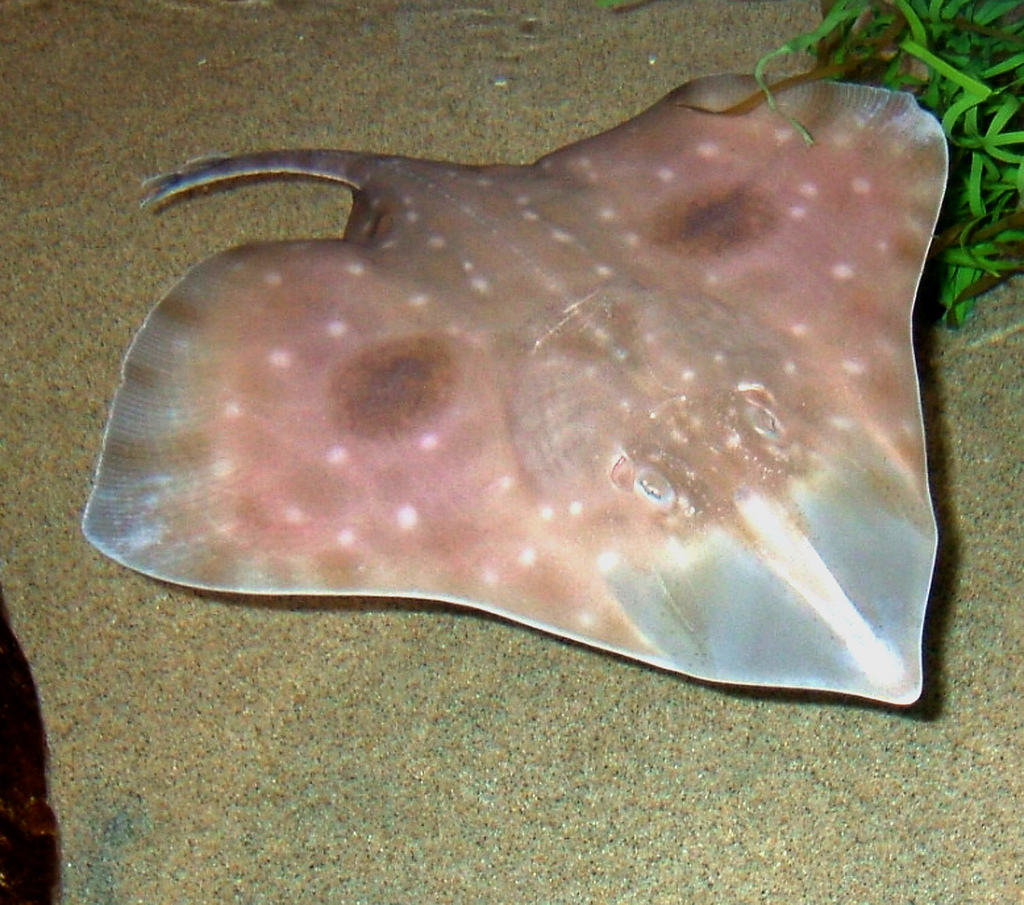 WorldSkate
Cartilaginous fish with flat bodies and egg cases, found on sea floors worldwide.Shark · Coasts and shelves
 🇨🇦 CanadaLittle skate
Small Atlantic skate known for walking on the sea floor.Ray · Coasts and shelves
 🇨🇦 CanadaWinter skate
Endangered North Atlantic skate with eye-like spotsRay · Coasts and shelves
EuropeBlue skate
A large, slow-growing ray native to the northeast Atlantic.Ray · Coasts and shelves · 1758