
Winter skate
Endangered North Atlantic skate with eye-like spots
The winter skate is a slow-growing ray found in the northwest Atlantic. It faces endangerment due to bycatch in commercial fisheries and rising natural mortality from grey seals. Populations have declined sharply in the Gulf of St. Lawrence.
- Grows up to 109 cm in length
- Listed as endangered by the IUCN
- Matures late, between 5 and 13 years
- Lays 50 egg cases per year
- Range declined 99% in Southern Gulf
What it is
The winter skate is a type of ray with a flat, diamond-shaped body. It grows up to 109 centimetres long. The upper side is light brown with small dark spots and one to four eye-like markings called ocelli. These markings have dark centres and pale edges. Small spines cover most of the disk and tail. The underside is white with irregular brown blotches. Males have claspers for reproduction, while females do not. The fins propel the animal through water, keeping the tail stiff.
Where it lives
This species lives in the northwest Atlantic Ocean. Its range extends from north of the Gulf of St. Lawrence in Canada down to Cape Hatteras in North Carolina. It prefers sandy or gravelly seabeds. Winter skates are typically found at depths between 110 and 370 metres. They thrive in cold waters, with temperatures ranging from minus 1.2 to 15 degrees Celsius. The population is divided into three groups: the Gulf of St. Lawrence, the Eastern Scotian Shelf and Newfoundland, and the Western Scotian Shelf.
How it lives
Winter skates are bottom-dwellers that feed on various prey depending on their age. Juveniles eat small shrimp, amphipods, and sand lance. Adults consume fish such as rainbow smelt, winter flounder, and Atlantic herring. They also eat Atlantic rock crab, razor clams, and sticklebacks. Grey seals are a major predator, contributing significantly to adult mortality. The overlap in range between seals and skates has increased during summer months due to changing temperatures.
Breeding and life cycle
These skates reproduce by laying eggs, a strategy known as oviparity. Females produce about 50 egg cases per year, each containing a single embryo. These capsules are often called mermaid purses. Gestation lasts six to nine months in the Gulf of Saint Lawrence. The species matures late, which makes recovery from population declines difficult. In the southern Gulf of St. Lawrence, maturity occurs at around five years. Elsewhere, it takes 11 to 13 years to reach sexual maturity.
Fish and people
There is no directed fishery for winter skates in the Gulf of Saint Lawrence. However, they are frequently caught as bycatch in commercial operations targeting other species. The scallop industry often captures them because their habitats overlap. Most captured skates are discarded back into the sea. Discard rates have fallen from roughly 100 tons in the early 1970s to about one or two tons since 2005. Bottom-contacting fishing gear can damage the seafloor structure and reduce prey abundance.
Status and threats
The International Union for Conservation of Nature lists the winter skate as endangered. Populations in the Southern Gulf of St. Lawrence have dropped by 99 percent since the 1980s. Egg cases are now rare on local beaches in that area. Threats include incidental capture in fisheries and high natural mortality from grey seals. Habitat alteration from mobile fishing gear also poses a risk. The slow growth and late maturity of the species make it particularly vulnerable to these pressures.


Questions people ask about Winter skate
Where does the winter skate live?
It inhabits the northwest Atlantic Ocean, from the Gulf of St. Lawrence to Cape Hatteras. It prefers cold, deep waters with sandy or gravelly bottoms, typically at depths of 110 to 370 metres.
Why is the winter skate endangered?
The species faces threats from bycatch in commercial fisheries, particularly in the scallop industry. High natural mortality from grey seals and its slow growth rate also contribute to its endangered status.
What does the winter skate eat?
Juveniles feed on small shrimp and sand lance. Adults consume a variety of fish, including smelt and flounder, as well as crabs, clams, and other bottom-dwelling invertebrates.
Good reading and sources
The facts on this page come from the Wikipedia article "Winter skate", written by its contributors and used under the CC BY-SA 4.0 licence, and from its Wikidata record (CC0). EveryFish rewrote the text in its own words, with AI assistance, and compares every page with the article to make sure no passage is copied. It may be reused under the same CC BY-SA 4.0 licence with a link back.
It may contain mistakes, and figures change over time. Nothing here is investment or buying advice. If something is wrong, tell us. Last refreshed 2026-11-15.
Like Winter skate
All rays and skates EuropeBlonde ray
A short-tailed skate found in the Eastern Atlantic and Mediterranean.Ray · Coasts and shelves
 WorldEagle ray
Large oceanic rays with wing-like fins and crushing teethRay · Open ocean
 WorldDevil fish
A large Mediterranean ray with a spiny tail and horn-like flaps.Ray · Coasts and shelves
WorldCommon eagle ray
A large, venomous ray found in the eastern Atlantic and Mediterranean.Ray · Coasts and shelves
More from Rajidae
All of them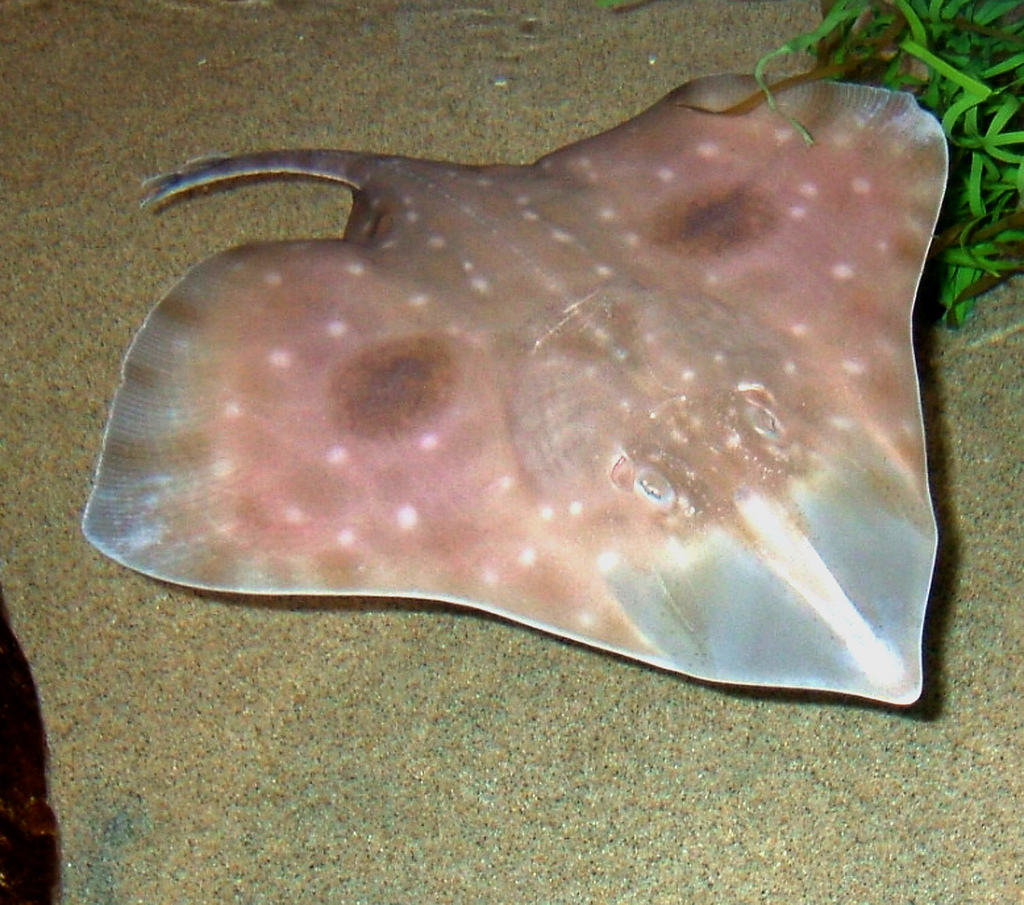 WorldSkate
Cartilaginous fish with flat bodies and egg cases, found on sea floors worldwide.Shark · Coasts and shelves
 🇨🇦 CanadaLittle skate
Small Atlantic skate known for walking on the sea floor.Ray · Coasts and shelves
 EuropeThornback ray
A spiny-skinned ray found in European coastal waters.Ray · Coasts and shelves · 1758
EuropeBlue skate
A large, slow-growing ray native to the northeast Atlantic.Ray · Coasts and shelves · 1758