
Electric ray
Cartilaginous fish capable of producing electric discharges for hunting and defense.
Electric rays are flattened cartilaginous fish in the order Torpediniformes. They use specialized organs to generate electricity ranging from 8 to 220 volts, a trait known since antiquity for medical and scientific study.
- Discharges range from 8 to 220 volts depending on species.
- Ancient Greeks used rays to numb surgical pain.
- Research influenced founders of electrophysiology.
- Sixty-nine species exist across four families.
- Swim using tails, not pectoral fins.
What it is
Electric rays belong to the order Torpediniformes, a group of flattened cartilaginous fish. They possess enlarged pectoral fins that form a rounded disc, supported by two moderately large dorsal fins and a stout tail with a caudal fin. Their bodies are thick and flabby, covered in soft loose skin without thorns. A pair of kidney-shaped electric organs sit at the base of the pectoral fins. The snout is broad in some families but reduced in others. Mouth, nostrils, and gill slits are located on the underside of the disc.
Where it lives
These fish inhabit waters from shallow coastal areas down to depths of at least 1,000 metres. They are sluggish swimmers, moving primarily by propelling themselves with their tails rather than using their pectoral fins like other rays. They typically lie in wait below sand or other substrates, remaining stationary until prey approaches within range.
How it lives
Electric rays feed on invertebrates and small fish. They rely on their electrical capabilities to stun and capture prey while lying in ambush. The discharge serves both for hunting and for defense against predators. While torpedinids use electricity to stun larger prey whole, narcinids specialize in smaller bottom-dwelling prey. It remains unclear whether narcinids actively use electricity during feeding, though they certainly employ it for protection.
Fish and people
The electrogenic properties of these rays have been recognized since ancient times. Greek physicians used them to numb pain during childbirth and surgery. Roman physician Scribonius Largus recorded their use for treating headaches and gout in 46 AD. In folklore, the torpedo fish was viewed as magical, with its numbing effect cited as evidence of occult qualities. In the 1770s, research by John Walsh and John Hunter influenced Luigi Galvani and Alessandro Volta, founders of electrophysiology. Henry Cavendish also mimicked their behavior using Leyden jars in 1773.


Questions people ask about Electric ray
How do electric rays produce electricity?
They possess specialized electric organs made of hexagonal columns of modified muscle plaques. These batteries connect in parallel circuits in marine species and series circuits in freshwater rays, allowing higher voltage transmission in less conductive water.
What is the purpose of the electric discharge?
The primary uses are stunning prey for consumption and defense against predators. Rays lie in wait below substrates, using electricity to incapacitate invertebrates and small fish before swallowing them.
How did ancient people view electric rays?
They were seen as magical creatures with occult qualities. Ancient Greeks and Romans utilized their numbing effects for medical treatments, including pain relief during childbirth and operations, as well as for headaches and gout.
Good reading and sources
The facts on this page come from the Wikipedia article "Electric ray", written by its contributors and used under the CC BY-SA 4.0 licence, and from its Wikidata record (CC0). EveryFish rewrote the text in its own words, with AI assistance, and compares every page with the article to make sure no passage is copied. It may be reused under the same CC BY-SA 4.0 licence with a link back.
It may contain mistakes, and figures change over time. Nothing here is investment or buying advice. If something is wrong, tell us. Last refreshed 2026-11-15.
Like Electric ray
All rays and skates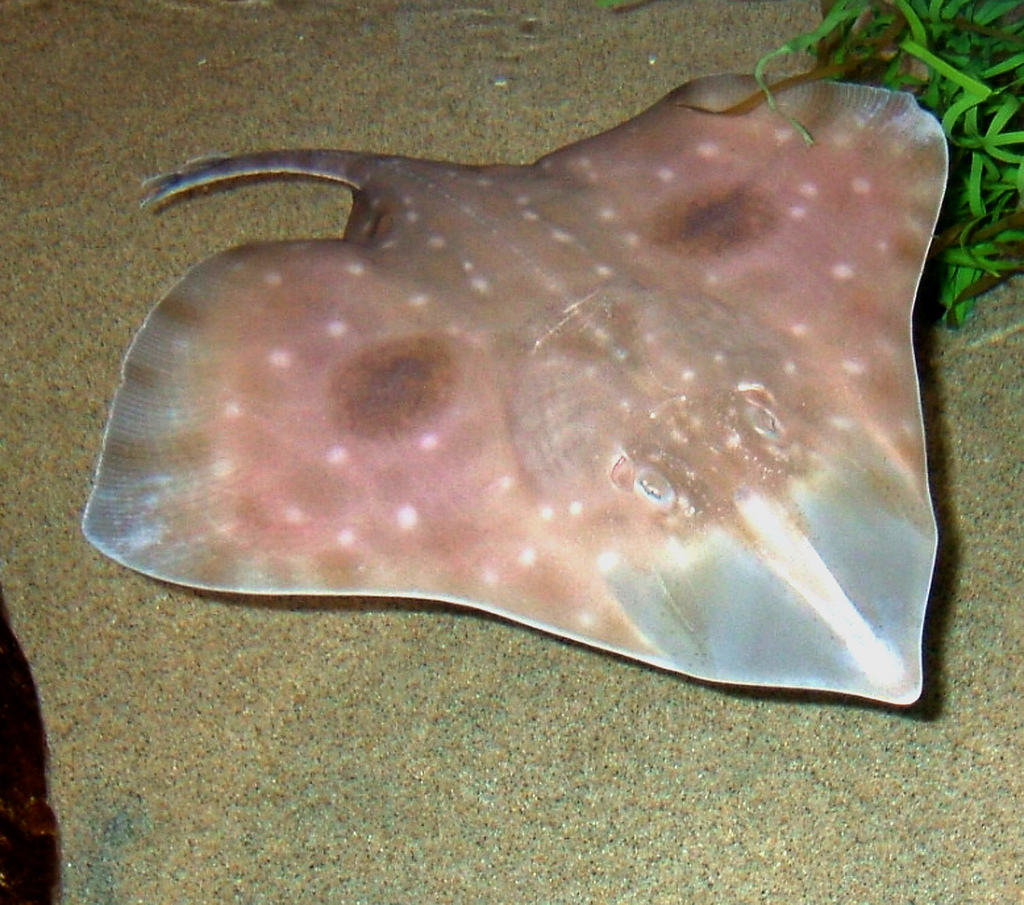 WorldSkate
Cartilaginous fish with flat bodies and egg cases, found on sea floors worldwide.Shark · Coasts and shelves
 WorldGiant oceanic manta ray
The world's largest ray, a massive filter-feeding predator of tropical oceans.Ray · Coasts and shelves · 1827
 WorldGuitarfish
A family of rays with a shark-like tail and flattened head found in warm waters worldwide.Ray · Coasts and shelves
 WorldEagle ray
Large oceanic rays with wing-like fins and crushing teethRay · Open ocean