🇺🇸 Fish of the United States
171 fish from the United States, best known first.
The United States operates the world's second-largest exclusive economic zone, supporting a massive commercial and recreational fishing industry. Management is split between state nearshore controls and federal oversight of coastal waters, focusing on stock recovery and habitat protection. Major catches include lobster, scallops, salmon, and tuna across diverse marine ecosystems.
- U.S. exclusive economic zone covers 11.4 million square kilometres
- New Bedford is the top fishing port by value at $369 million
- Aleutian Islands Habitat Conservation Area spans 725,000 square km
- Aquaculture allowed in Gulf of Mexico federal waters since 2016
- Magnuson-Stevens Act enabled federal fishery management in 1976
Fish of the United States
The United States manages an exclusive economic zone covering 11.4 million square kilometres, the second largest globally. This vast area supports significant wild capture and aquaculture production. Federal law enacted in 1976 established active management to prevent resource depletion. The National Marine Fisheries Service works with regional councils to monitor stocks and reduce bycatch. Inland fisheries remain small compared to marine operations. State authorities handle nearshore zones up to three nautical miles from shore. Federal agencies oversee the broader coastal waters within the exclusive economic zone. The industry relies on data collection from vessels and partnerships with research institutions.
Notable species
Notable species include American lobster and Atlantic sea scallop in the Northeast. Groundfish like haddock and cod have faced overfishing but show signs of recovery. Pacific salmon and halibut are key resources on the West Coast. Highly migratory species such as bluefin tuna and swordfish cross international boundaries. Shrimp varieties dominate Southeast catches. King and Spanish mackerel stocks rebounded after regulatory restrictions. Spiny lobster populations in the Western Pacific declined due to oceanographic shifts. Pacific sardines are recovering after decades of low numbers. Rockfish grow slowly and require careful management.
Seas and rivers
Eight large marine ecosystems define the U.S. exclusive economic zone. These include the Northeast and Southeast continental shelves, the Gulf of Mexico, the Caribbean Sea, the California Current, the Insular Pacific-Hawaiian region, the Gulf of Alaska, and the Eastern Bering Sea. Nearshore areas consist of estuaries and coastal waters under state control. Coastal fisheries extend to two hundred nautical miles offshore. The Aleutian Islands habitat conservation area protects seafloor communities from bottom trawling. Seamounts within U.S. jurisdiction host commercially important fish stocks. Inland waters feature the Great Lakes and Mississippi River basin.
Fishing and farming
Commercial fleets use diesel vessels equipped with advanced navigation and detection technology. Purse seiners, longliners, and otter trawls are common gear types. Factory ships process catch at sea for efficiency. Individual fishing quotas help manage harvest levels. Marine protected areas restrict destructive fishing methods. Aquaculture in federal waters began in 2016 to boost domestic production. Recreational fishing contributes significantly to nearshore economies. Size limits and bag restrictions apply to many game fish. Bycatch reduction measures aim to protect non-target species. Ecosystem-based management guides policy decisions.
Fish in culture
Fishing traditions developed alongside coastal settlement patterns. Port cities like New Bedford serve as major hubs for landings. Lobster and scallop trades support local economies. Indigenous communities participate in tribal fisheries programs. Historical concerns about diminishing fish stocks date back to the nineteenth century. Modern management balances ecological sustainability with economic interests. Fishing festivals celebrate regional maritime heritage. Educational programmes promote responsible angling practices.
Today
Current efforts focus on restoring overfished stocks and protecting essential habitats. Regional councils implement specific plans for each fishery. Data transmission from observers improves monitoring accuracy. International cooperation addresses transboundary species migration. Climate impacts influence stock distribution and abundance. Technology aids in locating schools and optimizing routes. Conservation zones limit access to sensitive areas. Industry stakeholders collaborate on sustainable practices.
The facts in this overview come from the Wikipedia article "Fishing industry in the United States", written by its contributors and used under the CC BY-SA 4.0 licence. EveryFish rewrote the text in its own words, with AI assistance, and compares every page with the article to make sure no passage is copied. It may be reused under the same CC BY-SA 4.0 licence with a link back.
Fish places in the United States
 🇷🇺 Russia and 3 moreChum salmon
A Pacific salmon species known for its large size and wide distribution across the North Pacific.Salmonid · Rivers and lakes · 1836
 🇺🇸 United States and 3 moreSockeye salmon
Anadromous Pacific salmon known for red spawning colour and zooplankton diet.Salmonid · Rivers and lakes · 1792
 🇺🇸 United States and 1 moreYellow perch
Freshwater fish native to North America with distinctive vertical bars.Perch-like · Rivers and lakes · 1814
 🇺🇸 United StatesCutthroat trout
A group of Pacific trout native to western North America, known for red throat markings.Salmonid · Rivers and lakes · 1793
 🇺🇸 United States and 1 moreLake sturgeon
A large, long-lived freshwater fish native to North America.Ancient · Rivers and lakes
 🇺🇸 United StatesGuadalupe bass
A rare Texas endemic black bass prized by anglers for its fighting spirit.Other · Rivers and lakes
 🇺🇸 United States and 1 moreSauger
A freshwater perch species native to North American rivers.Perch-like · Rivers and lakes · 1834
 🇨🇦 Canada and 1 moreBigmouth buffalo
A long-lived North American freshwater fish known for its terminal mouth and exceptional lifespan.Catfish · Rivers and lakes
 🇺🇸 United StatesAmerican paddlefish
Ancient freshwater fish with a sensory snout and filter-feeding habits.Ancient · Rivers and lakes · 1792
 🇺🇸 United States and 1 moreGreen sturgeon
A large anadromous fish native to the northern Pacific Ocean.Shark · Coasts and shelves
 🇺🇸 United States and 2 moreBluegill
A common North American sunfish known for its blue gill covers and popularity with anglers.Perch-like · Rivers and lakes · 1854
 🇺🇸 United StatesWhite bass
A silver-striped freshwater fish native to North American rivers and lakes.Other · Rivers and lakes
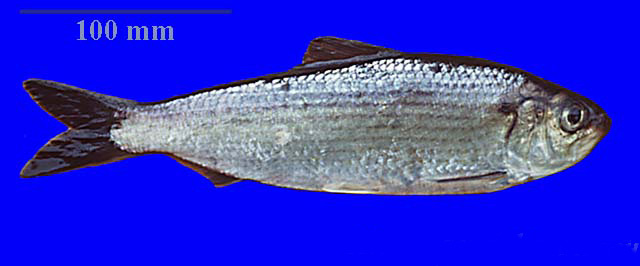 🇺🇸 United States and 1 moreAlewife
A small North American herring that migrates between sea and rivers.Herring · Coasts and shelves
 🇺🇸 United States and 1 moreYellow bullhead
A medium-sized North American catfish known for its bright yellow belly and scavenging habits.Catfish · Rivers and lakes · 1819
 🇺🇸 United StatesBlack bullhead
A small, hardy North American catfish that tolerates poor water conditions and feeds at night.Catfish · Rivers and lakes
 🇺🇸 United States and 1 moreGafftopsail catfish
Marine catfish with venomous spines and mouthbrooding malesCatfish · Coasts and shelves
 🇺🇸 United States and 3 moreKokanee salmon
A landlocked freshwater form of the sockeye salmon found in North America and Japan.Salmonid · Rivers and lakes
 🇺🇸 United States and 4 moreOncorhynchus
A genus of migratory fish native to the North Pacific basin.Salmonid · Rivers and lakes
 🇺🇸 United States and 1 moreBrook trout
A colorful freshwater char native to eastern North America, known for its spotted pattern and status as a popular game fSalmonid · Rivers and lakes · 1814
 🇺🇸 United States and 1 moreBull trout
A large char native to cold rivers of northwestern North America.Salmonid · Rivers and lakes · 1836
 🇺🇸 United States and 3 morePacific bonito
Striped marine fish of the Pacific coastTuna · Coasts and shelves
 🇺🇸 United States and 1 moreSummer flounder
A predatory flatfish of the US Atlantic coast.Flatfish · Coasts and shelves
 🇺🇸 United StatesFlorida pompano
A fast-growing marine fish prized for food and sport fishing.Other · Coasts and shelves
 🇺🇸 United StatesAtlantic menhaden
A silvery herring species found along the North American Atlantic coast.Herring · Coasts and shelves
 🇨🇳 China and 1 moreSilver carp
A filter-feeding freshwater fish native to Asia, now invasive in North America.Carp · Rivers and lakes · 1844
 🇺🇸 United States and 3 moreHalibut
Large flatfish species prized for food and sport in northern oceans.Flatfish · Coasts and shelves
 🇺🇸 United States and 1 moreKing mackerel
A large, fast-swimming predatory fish of the western Atlantic and Gulf of Mexico.Tuna · Coasts and shelves
 🇨🇳 China and 3 moreGrass carp
Large herbivorous freshwater fish used for weed control and food.Carp · Rivers and lakes
 🇳🇴 Norway and 4 moreAtlantic salmon
A large anadromous fish found in the northern Atlantic Ocean and its rivers.Salmonid · Rivers and lakes · 1758
 🇺🇸 United States and 3 moreChinook salmon
The largest Pacific salmon species, prized for size and food value.Salmonid · Rivers and lakes
 🇺🇸 United States and 2 moreSteelhead
Anadromous form of the rainbow trout that migrates between ocean and freshwater.Salmonid · Between sea and river
 🇺🇸 United States and 1 moreAtlantic Spanish mackerel
Migratory mackerel with yellow spots found in the Gulf and Atlantic.Tuna · Coasts and shelves
 🇨🇳 China and 4 moreBighead carp
A large Asian freshwater fish farmed globally and invasive in North America.Carp · Rivers and lakes
 🇺🇸 United States and 1 moreWhite sturgeon
Large North American sturgeon found in Pacific rivers and estuaries.Ancient · Rivers and lakes
 🇺🇸 United States and 4 moreSmelt
Small fish of the northern hemisphere known for spring runs and culinary traditions.Other · Rivers and lakes
Photo credits on this page
The small pictures above come from Wikimedia Commons under free licences. Some are cropped to fit.
- Smelt: Surf_Smelt,_Pond_smelt.jpg : Drawing by H. L. Todd, NOAA's Historic Fi, Public domain, source
- Sockeye salmon: Timothy Knepp of the Fish and Wildlife Service., Public domain, source
- Yellow perch: Robert Colletta, Public domain, source
- Cutthroat trout: Hazzard, Lloyde / U.S. Fish and Wildlife Service, Public domain, source
- Lake sturgeon: USFWS Mountain-Prairie, Public domain, source
- Guadalupe bass: Nick Loveland, CC0, source
- Sauger: Duane Raver, Public domain, source
- Bigmouth buffalo: Unknown author, Public domain, source
- American paddlefish: Timothy Knepp, Public domain, source
- Green sturgeon: Muséum d'histoire Naturelle, Public domain, source
- Bluegill: Fredlyfish4, CC BY-SA 3.0, source
- White bass: Nick Loveland, CC0, source
- Alewife: Unknown author, CC BY-SA 3.0, source
- Yellow bullhead: Eric Engbretson/U.S. Fish and Wildlife Service, Public domain, source
- Black bullhead: George Chernilevsky, CC BY-SA 4.0, source
- Gafftopsail catfish: Bobby McCabe, CC BY 4.0, source
- Kokanee salmon: self, CC0, source
- Oncorhynchus: David Menke, Public domain, source
- Brook trout: Engbretson, Eric, Public domain, source
- Bull trout: Oregon Department of Fish & Wildlife, CC BY-SA 2.0, source
- Pompano: H. L. Todd, Public domain, source
- Pacific bonito: nmoorhatch, CC BY 4.0, source
- Summer flounder: Arturodomiao, CC BY-SA 4.0, source
- Atlantic menhaden: ricofish, CC0, source
- Chum salmon: Focus Saranpat Ouilapan, CC0, source
- Halibut: Unknown author, Public domain, source
- King mackerel: Stephen Ewen, CC BY-SA 3.0, source
- Grass carp: Hagerty, Ryan/USFWS, Public domain, source
- Atlantic salmon: Hartley, William W., Public domain, source
- Chinook salmon: A. Hoen and Co., Public domain, source
- Steelhead: Tobin John, U.S. Fish and Wildlife Service, Public domain, source
- Atlantic Spanish mackerel: SEFSC Pascagoula Laboratory; Collection of Brandi Noble, NOAA/NMFS/SEF, Public domain, source
- Bighead carp: Invasive Carp Regional Coordinating Committee, CC BY 2.0, source
- White sturgeon: Oregon Department of Fish & Wildlife, CC BY-SA 2.0, source
- Silver carp: USFWS Mountain-Prairie, Public domain, source