
Yellow perch
Freshwater fish native to North America with distinctive vertical bars.
The yellow perch is a ray-finned fish from the Percidae family, native to central North America. It inhabits lakes and rivers, serving as a key prey species for walleye and bass while supporting sport and commercial fisheries.
- Distinctive vertical bars on yellow-green flanks
- Releases eggs in long gelatinous strands
- Primary prey species for walleye and bass
- World record weight of 1.9 kg set in 1865
- Thrives in littoral zones of lakes and rivers
What it is
This freshwater fish features an elongated body compressed from side to side. Its colour ranges from olive green to golden brown on the back, fading to white or yellow on the belly. Six to eight dark vertical bars mark its flanks. Two separate dorsal fins sit on its back, the first containing hard spines. The lower jaw extends slightly beyond the upper snout. Rough scales cover its skin, and fine teeth line its jaws. Adults usually measure between ten and twenty-five centimetres, though some reach fifty centimetres.
Where it lives
Native populations thrive in the Great Lakes and St Lawrence River basin. They also inhabit the Upper Mississippi River catchment and tributaries of the Atlantic Ocean and Hudson Bay. In Canada, their range extends from Nova Scotia to the Prairie provinces. In the United States, they are found from Maine to South Carolina and west to Missouri. Human activity has introduced them to western states, China, and Japan. They live in lakes, ponds, slow streams, and occasionally brackish estuaries.
How it lives
Schools of fifty to two hundred individuals form during the day, often arranged by size. These groups disperse at dusk and reform at dawn. Younger fish school more tightly than larger adults. They are weak swimmers, preferring shelter among weeds, snags, or pier posts. Larvae feed on zooplankton, while adults consume insects, crayfish, and smaller fish. Cannibalism occurs among adults. Predators include walleye, bass, pike, and cormorants. Water temperature strongly influences their distribution and activity levels.
Breeding and life cycle
Spawning occurs in spring when water temperatures rise between two and eighteen degrees Celsius. Fish gather in shallow areas or low-current tributaries at night. Females release long, gelatinous strands containing thousands of eggs. These strands drape over submerged vegetation or branches. Males fertilise the eggs externally, a process lasting only seconds. No parental care follows. Eggs hatch in one to four weeks depending on warmth. Fry enter a pelagic phase immediately after hatching.
Fish and people
Anglers prize this species for sport, with a longstanding weight record set in New Jersey. Commercial fisheries operate in the Great Lakes region. A small aquaculture industry in the US Midwest produces significant annual tonnage. The fish serves as a crucial forage base for walleye and largemouth bass. Indigenous and local communities have historically harvested them for food. Introductions were often managed by government commissions to support other game fish stocks.
Status and threats
Populations remain stable in many native ranges, though local extirpation has occurred in places like Arkansas. Overfishing and habitat changes can impact numbers. Cormorant predation on juvenile fish affects future angler harvests but does not significantly alter adult mortality rates. The species adapts well to various water conditions, including low oxygen levels. Conservation efforts focus on maintaining healthy forage bases for predatory game fish.


Questions people ask about Yellow perch
What do yellow perch eat?
Larval perch feed on zooplankton. As they grow, they shift to macroinvertebrates like midges and mosquito larvae. Adult perch consume aquatic insects, crayfish, fish eggs, and smaller fish, sometimes engaging in cannibalism.
How can you identify a yellow perch?
Look for six to eight dark vertical bars on a yellowish-green body. They have two separate dorsal fins, with the front one containing hard spines. The lower jaw is slightly longer than the upper snout.
Where do yellow perch spawn?
They spawn in shallow lake areas or slow-moving tributary streams during spring. Females attach gelatinous egg strands to submerged vegetation, branches, or other structures in the water.
Are yellow perch good to eat?
Yes, they are popular food fish supported by commercial fisheries and aquaculture. Their mild flavour makes them a favourite among anglers and consumers in North America.
Good reading and sources
The facts on this page come from the Wikipedia article "Yellow perch", written by its contributors and used under the CC BY-SA 4.0 licence, and from its Wikidata record (CC0). EveryFish rewrote the text in its own words, with AI assistance, and compares every page with the article to make sure no passage is copied. It may be reused under the same CC BY-SA 4.0 licence with a link back.
It may contain mistakes, and figures change over time. Nothing here is investment or buying advice. If something is wrong, tell us. Last refreshed 2026-11-15.
Like Yellow perch
All perches, basses and snappers 🇺🇸 United States and 1 moreSauger
A freshwater perch species native to North American rivers.Perch-like · Rivers and lakes · 1834
 🇺🇸 United States and 2 moreBluegill
A common North American sunfish known for its blue gill covers and popularity with anglers.Perch-like · Rivers and lakes · 1854
 🇨🇳 China and 1 moreMandarin fish
Freshwater predatory perch native to East AsiaPerch-like · Rivers and lakes · 1855
 🇷🇺 Russia and 4 moreEuropean perch
A greenish freshwater predator native to Europe and North Asia.Perch-like · Rivers and lakes · 1758
More from Percidae
All of them 🇩🇪 Germany and 4 moreZingel
A fast-water perch from southeastern Europe.Perch-like · Rivers and lakes · 1766
 🇷🇺 Russia and 1 moreRuffe
A small, aggressive freshwater fish native to Eurasia that has become a major invasive pest in North America.Perch-like · Rivers and lakes · 1758
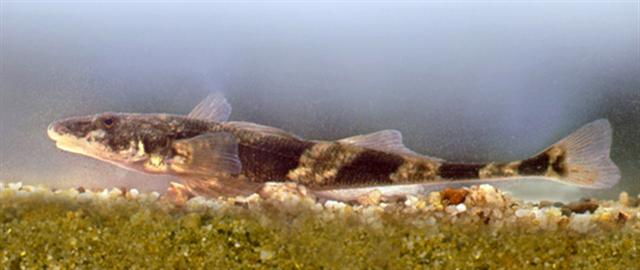 🇦🇹 Austria and 4 moreStreber
A small freshwater perch found in fast-flowing European rivers.Perch-like · Rivers and lakes