
Bluegill
A common North American sunfish known for its blue gill covers and popularity with anglers.
The bluegill is a freshwater fish native to eastern North America, belonging to the sunfish family. It is widely recognized by anglers for its distinctive coloring and aggressive feeding habits during spawning season.
- Maximum length reaches 41 cm with a weight of 2.2 kg.
- Males build nests in colonies known as leks during summer.
- Can tolerate up to 1.8% salinity in brackish waters.
- Hybridizes with green sunfish to produce greengills.
- Considered invasive in Japan and Germany.
What it is
The bluegill is a species of centrarchid fish native to North America. It features a deep, flattened body covered in ctenoid scales. The head and chin display dark blue markings, while the belly ranges from yellow to bright orange in breeding males. A distinctive black ear flap sits on the gill cover. Adults typically reach lengths between ten and thirty centimetres, with a maximum recorded size of forty-one centimetres. The fish possesses a terminal mouth and an arched lateral line that aids in sensing water pressure changes.
Where it lives
This species originates in waters east of the Rocky Mountains, extending from Virginia to Florida and north to Ontario. It has been introduced to Europe, South Africa, Asia, and Oceania. In some regions like Japan and Germany, it is considered invasive and trade is prohibited. The fish tolerates low salinity levels and inhabits shallow areas rich in aquatic plants, fallen logs, and weed beds. It prefers water temperatures between sixteen and twenty-seven degrees Celsius.
How it lives
Bluegills are omnivorous feeders that consume insects, crustaceans, small fish, and plant matter. They use suction to capture prey within close range. During summer, they often form schools near the surface to feed on plankton. Predators include bass, pike, herons, and turtles. The fish relies heavily on sight for hunting but uses its lateral line and inner ears to detect vibrations. It exhibits high maneuverability due to flexible fins, allowing quick acceleration and deceleration to escape threats or catch food.
Breeding and life cycle
Spawning occurs from late May to August when water temperatures rise. Males construct circular nests in gravel or sand colonies called leks. Larger parental males defend these nests aggressively, while smaller sneaker males attempt to fertilize eggs covertly. Females lay thousands of eggs in the nest, which the male guards until hatching. Young fish grow rapidly in their first three years before maturing slowly. Sexual maturity can occur as early as four months under optimal conditions.
Fish and people
Anglers prize the bluegill as a popular panfish due to its abundance and fighting spirit. It is frequently caught using light tackle and small hooks. The flesh is edible and considered good table fare. In culture, it holds significance in recreational fishing communities. However, its introduction outside its native range has led to ecological conflicts, with some nations banning its possession due to its impact on local ecosystems.
Status and threats
The International Union for Conservation of Nature lists the bluegill as Least Concern. Its widespread distribution and adaptability contribute to this stable status. While generally secure in its native range, introduced populations face management challenges in non-native habitats. Conservation efforts focus on maintaining healthy freshwater habitats and monitoring invasive spread in regions where it disrupts native biodiversity.


Questions people ask about Bluegill
What does a bluegill look like?
It has a deep, flat body with dark blue markings on the face and a bright orange or yellow belly. A black ear flap is visible on the gill cover, and vertical bars may appear on its sides when stressed.
Where do bluegills live?
They inhabit shallow lakes, ponds, and streams in eastern North America. They prefer areas with vegetation, logs, or weeds for shelter and feeding, thriving in warm water temperatures.
Are bluegills safe to eat?
Yes, they are a popular panfish for consumption. Their flesh is mild and suitable for various cooking methods, making them a favorite among anglers seeking table fare.
Why are they called bluegills?
The name comes from the deep blue coloration found on the operculum, or gill cover, which resembles a gill structure. This feature is prominent in most adult specimens.
Good reading and sources
The facts on this page come from the Wikipedia article "Bluegill", written by its contributors and used under the CC BY-SA 4.0 licence, and from its Wikidata record (CC0). EveryFish rewrote the text in its own words, with AI assistance, and compares every page with the article to make sure no passage is copied. It may be reused under the same CC BY-SA 4.0 licence with a link back.
It may contain mistakes, and figures change over time. Nothing here is investment or buying advice. If something is wrong, tell us. Last refreshed 2026-11-15.
Like Bluegill
All perches, basses and snappers 🇺🇸 United States and 3 moreBlack crappie
A spotted freshwater sunfish native to North America, prized by anglers for its sport and table fare.Perch-like · Rivers and lakes · 1856
 🇺🇸 United States and 1 moreSauger
A freshwater perch species native to North American rivers.Perch-like · Rivers and lakes · 1834
 🇺🇸 United States and 2 morePumpkinseed
A small freshwater fish native to eastern North America, known for its bright colours and red ear flap.Perch-like · Rivers and lakes · 1793
 🇺🇸 United States and 2 moreGreen sunfish
A small, aggressive freshwater fish native to North America, known for its blue-green colour and invasive potential in nPerch-like · Rivers and lakes
More from Centrarchidae
All of them 🇺🇸 United States and 4 moreLargemouth bass
A large freshwater predator native to North America, prized by anglers and invasive in many regions.Other · Rivers and lakes · 1802
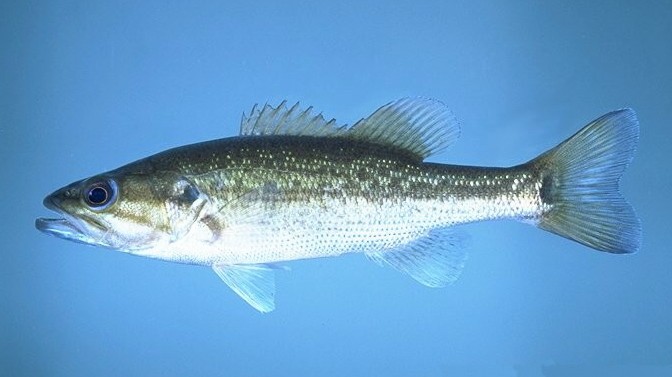 🇺🇸 United StatesSpotted bass
A North American freshwater fish known for dark spots below its lateral line.Other · Rivers and lakes
 🇺🇸 United StatesGuadalupe bass
A rare Texas endemic black bass prized by anglers for its fighting spirit.Other · Rivers and lakes
 🇺🇸 United States and 2 moreRock bass
A small, red-eyed freshwater sunfish native to North America.Perch-like · Rivers and lakes