
Sauger
A freshwater perch species native to North American rivers.
The sauger is a migratory freshwater fish found in rivers across the eastern United States and southern Canada. It resembles the walleye but prefers faster currents and higher turbidity, facing threats from dams and overfishing.
- Saugers migrate up to 600 km between home and spawning areas.
- They prefer rivers with high turbidity and deep pools.
- Hybrids with walleyes are called saugeyes.
- Fishing is banned in New York to protect declining populations.
- Dams block spawning routes and increase juvenile mortality.
What it is
The sauger is a freshwater fish belonging to the perch family Percidae. It has a streamlined fusiform body built for swimming in fast currents with minimal drag. Key features include two dorsal fins, a squared-off tail fin, and rough skin over the gills. Its scales are ctenoid, typical of advanced fish. The colour ranges from brassy to dark black. It often confuses observers with its close relative, the walleye, due to similar shapes.
Where it lives
Historically, saugers inhabited rivers east of the Appalachian Mountains and extended into central and western North America. Their range now shrinks due to habitat fragmentation. They prefer large rivers with deep pools and high turbidity, avoiding clear lakes where walleyes dominate. Summer water temperatures between 20 and 28 degrees Celsius define their northern limits. Populations exist in the United States and southern Canada.
How it lives
Saugers are highly migratory percid fish. They travel up to 600 km between home bases and spawning grounds. Adults hunt invertebrates and small fish, shifting diets by season and size. Young saugers drift downstream after hatching, developing in backwaters before returning upstream. They tolerate murky water better than walleyes. Predators include larger fish and humans. Juvenile mortality is high in diversion canals.
Breeding and life cycle
Spawning occurs upstream from March to May on rocky substrates. Females deposit eggs in pools, preferring larger females for better egg quality. Sexual maturity arrives at 250–300 mm length, usually between ages two and five. Larvae drift downstream immediately after hatching. Juveniles develop in calm backwaters until autumn, then migrate upstream for winter. Egg survival suffers during droughts when water levels drop.
Fish and people
Saugers are targeted by sport fishermen and consumed as food. They are valued for their fighting ability in rivers. In New York, fishing is prohibited statewide due to population declines. Hybrids with walleyes, called saugeyes, share traits of both parents. Conservation efforts include stocking programs in rivers like the Allegheny. Dams and irrigation canals cause significant mortality through entrainment and blocked migration routes.
Status and threats
Populations have declined due to dam construction, habitat loss, and overexploitation. Dams block spawning migrations and alter river flows essential for reproduction. Droughts strand eggs and prevent larval dispersal. Saugers are critically imperiled in New York, with extirpation recorded in Lake Erie and Lake Ontario. Stocking programmes attempt to restore numbers in fragmented systems like the upper Allegheny River. High autumn mortality relates to fishing pressure.

Questions people ask about Sauger
How do saugers differ from walleyes?
Saugers have spotted dorsal fins, lack white spots on their tails, and possess rougher gill skin. They prefer turbid rivers over clear lakes and tolerate warmer water. Walleyes are more common in lakes, while saugers dominate flowing river systems with higher sediment levels.
What do saugers eat?
Diet varies by size and season. Small saugers eat invertebrates and mayfly larvae. Larger adults consume channel catfish, freshwater drum, and gizzard shad. Fish make up over ninety-nine percent of their diet in autumn. Shiners appear in spring and summer diets but disappear in autumn.
Why are sauger populations declining?
Dams and diversions block migration and alter water flow, temperature, and turbidity. Irrigation canals trap juveniles. Droughts strand eggs during spawning. Overfishing adds pressure in autumn. Habitat fragmentation prevents access to historical spawning grounds, leading to local extinctions in areas like Lake Erie.
When and where do saugers spawn?
Spawning happens upstream from March to May on rocky substrates. Females choose pools for egg deposition. Larvae drift downstream immediately after hatching. Juveniles develop in backwaters until autumn, then migrate upstream. Water temperatures must remain between twenty and twenty-eight degrees Celsius for successful reproduction.
Good reading and sources
The facts on this page come from the Wikipedia article "Sauger", written by its contributors and used under the CC BY-SA 4.0 licence, and from its Wikidata record (CC0). EveryFish rewrote the text in its own words, with AI assistance, and compares every page with the article to make sure no passage is copied. It may be reused under the same CC BY-SA 4.0 licence with a link back.
It may contain mistakes, and figures change over time. Nothing here is investment or buying advice. If something is wrong, tell us. Last refreshed 2026-11-15.
Like Sauger
All perches, basses and snappers 🇺🇸 United States and 2 moreBluegill
A common North American sunfish known for its blue gill covers and popularity with anglers.Perch-like · Rivers and lakes · 1854
 🇨🇳 China and 1 moreMandarin fish
Freshwater predatory perch native to East AsiaPerch-like · Rivers and lakes · 1855
 🇺🇸 United States and 3 moreBlack crappie
A spotted freshwater sunfish native to North America, prized by anglers for its sport and table fare.Perch-like · Rivers and lakes · 1856
 🇺🇸 United States and 2 morePumpkinseed
A small freshwater fish native to eastern North America, known for its bright colours and red ear flap.Perch-like · Rivers and lakes · 1793
More from Percidae
All of them 🇩🇪 Germany and 4 moreZingel
A fast-water perch from southeastern Europe.Perch-like · Rivers and lakes · 1766
 🇷🇺 Russia and 1 moreRuffe
A small, aggressive freshwater fish native to Eurasia that has become a major invasive pest in North America.Perch-like · Rivers and lakes · 1758
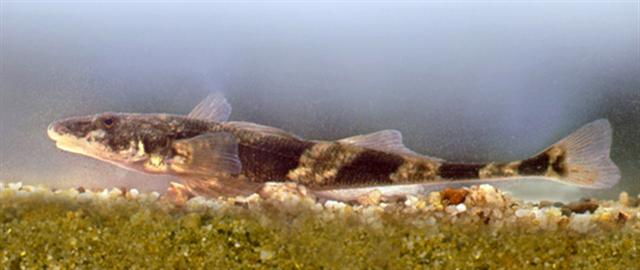 🇦🇹 Austria and 4 moreStreber
A small freshwater perch found in fast-flowing European rivers.Perch-like · Rivers and lakes