
Pumpkinseed
A small freshwater fish native to eastern North America, known for its bright colours and red ear flap.
The pumpkinseed is a vibrant sunfish species endemic to eastern North America. It has been introduced globally, becoming invasive in Europe where it faces strict controls due to its impact on native ecosystems.
- Named for its resemblance to a pumpkin seed.
- Features a bright red spot on the black gill cover.
- Introduced globally; invasive in the European Union.
- Males guard eggs and fry for about 11 days.
- Can crack hard-shelled molluscs with strong jaw muscles.
What it is
This small freshwater fish belongs to the sunfish family and is easily identified by its distinct appearance. Its body shape resembles a pumpkin seed, which gives the species its common name. Adults typically reach about 10 centimetres, though they can grow up to 28 centimetres. The skin displays vibrant hues of orange, green, yellow, or blue, covered in speckles and vertical bars. A defining feature is the bright red spot located at the tip of the black gill cover. Males often show more intense colouration than females.
Where it lives
Native to eastern North America, the range extends from New Brunswick in Canada down the Atlantic coast to South Carolina. It also inhabits inland river systems stretching from Pennsylvania to Iowa. Human activity has introduced the species across much of North America, reaching the Pacific Coast and southern regions. In Europe, it is considered an invasive alien species. Populations exist in the United Kingdom, particularly in Southern England and the West Country, where it is restricted by law.
How it lives
These fish prefer warm, calm waters in lakes, ponds, and slow-moving creeks with abundant vegetation. They stay near shorelines in shallow, protected areas and feed throughout the day, with peak activity in the afternoon. Their diet consists of insects, small molluscs, crustaceans, worms, and occasionally plant matter. They use camouflage that mimics sunlight patterns on water surfaces. Sharp spines on their fins provide defence against predators, and they detect movement through a lateral line system.
Breeding and life cycle
Spawning begins in late spring or early summer when water temperatures reach 13–17 °C. Males construct oval-shaped nests in shallow sand or gravel by sweeping debris away with their tails. These nests are often arranged in colonies. Females lay eggs in these nests, which stick to the substrate and hatch within three days. Males guard the eggs and young fry for approximately eleven days, retrieving stray offspring with their mouths. Young fish grow to about 5 centimetres in their first year.
Fish and people
The pumpkinseed is a popular target for young anglers due to its abundance and willingness to bite various baits like bread, worms, and insects. While some consider the meat tasty and low in fat, it is rarely sought as a primary game fish because of its small size. In Europe, it is classified as an invasive species, prohibiting its import, breeding, or release into the environment. It serves as a bioindicator for water quality due to its sensitivity to pollution and silt.
Status and threats
The International Union for Conservation of Nature lists the species as Least Concern due to its widespread presence and adaptability. However, local populations can suffer from shoreline development and erosion caused by heavy recreational lake use. Pollution and siltation negatively impact their health, making them useful indicators of ecosystem cleanliness. In European waters, strict regulations aim to prevent further spread and protect native fish communities from competition.


Questions people ask about Pumpkinseed
How can I tell a pumpkinseed apart from a bluegill?
Look at the black gill cover. The pumpkinseed has a distinct crimson half-moon spot at the rear edge. Bluegills lack this specific marking. Additionally, pumpkinseeds have duller vertical side bands compared to the brighter patterns of bluegills.
Is the pumpkinseed safe to eat?
Yes, the meat is considered good-tasting, low in fat, and high in protein. However, it is not a popular game fish due to its small size. Anglers often catch them incidentally while targeting other species using simple baits like bread or worms.
Why is it banned in parts of Europe?
It is listed as an Invasive Alien Species of Union concern since 2019. It outcompetes native fish for resources and habitat. Laws prohibit importing, breeding, transporting, or releasing them into the wild to protect local ecosystems.
What does a pumpkinseed eat?
They are carnivorous and feed on insects, small molluscs, crustaceans, worms, minnow fry, and tadpoles. Some individuals develop larger jaws to crack hard shells of gastropods. They may also consume aquatic vegetation and human food scraps.
Good reading and sources
The facts on this page come from the Wikipedia article "Pumpkinseed", written by its contributors and used under the CC BY-SA 4.0 licence, and from its Wikidata record (CC0). EveryFish rewrote the text in its own words, with AI assistance, and compares every page with the article to make sure no passage is copied. It may be reused under the same CC BY-SA 4.0 licence with a link back.
It may contain mistakes, and figures change over time. Nothing here is investment or buying advice. If something is wrong, tell us. Last refreshed 2026-11-15.
Like Pumpkinseed
All perches, basses and snappers 🇺🇸 United States and 2 moreBluegill
A common North American sunfish known for its blue gill covers and popularity with anglers.Perch-like · Rivers and lakes · 1854
 🇺🇸 United States and 3 moreBlack crappie
A spotted freshwater sunfish native to North America, prized by anglers for its sport and table fare.Perch-like · Rivers and lakes · 1856
 🇺🇸 United States and 2 moreGreen sunfish
A small, aggressive freshwater fish native to North America, known for its blue-green colour and invasive potential in nPerch-like · Rivers and lakes
 🇺🇸 United States and 2 moreRock bass
A small, red-eyed freshwater sunfish native to North America.Perch-like · Rivers and lakes
More from Centrarchidae
All of them 🇺🇸 United States and 4 moreLargemouth bass
A large freshwater predator native to North America, prized by anglers and invasive in many regions.Other · Rivers and lakes · 1802
 🇺🇸 United StatesSpotted bass
A North American freshwater fish known for dark spots below its lateral line.Other · Rivers and lakes
 🇺🇸 United StatesGuadalupe bass
A rare Texas endemic black bass prized by anglers for its fighting spirit.Other · Rivers and lakes
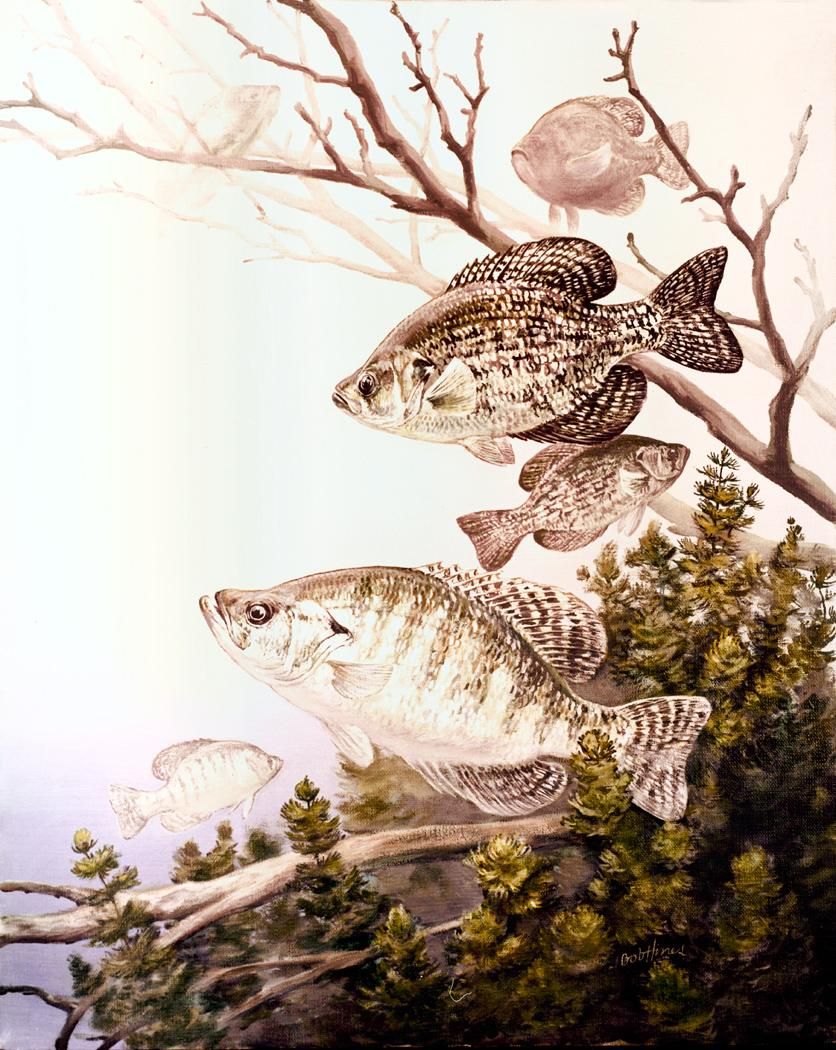 🇺🇸 United StatesCrappie
Two species of North American freshwater sunfish prized by anglers for sport and food.Perch-like · Rivers and lakes