
Rock bass
A small, red-eyed freshwater sunfish native to North America.
The rock bass is a freshwater fish in the sunfish family, native to east-central North America. It is distinguished by its red eyes and six anal fin spines, thriving in rocky habitats and serving as a popular sport fish.
- Distinguished by six anal fin spines, unlike other sunfish.
- Can rapidly change colour to match rocky surroundings.
- Males dig nests and aggressively guard eggs in shallow water.
- Introduced population in France has survived over 100 years.
What it is
The rock bass is a freshwater member of the sunfish family. It resembles the smallmouth bass but remains smaller in size. Key identifying features include two dorsal fins with united spinous and soft-rayed sections, a large terminal mouth with small conical teeth, and distinctive red eyes. The body displays rows of dark dots on its sides, with colouring ranging from golden brown to olive above and white to silver below. This fish can rapidly change its hue to match its surroundings, a trait that aids survival across its wide range. Most individuals measure between 15 and 25 centimetres, rarely exceeding one pound in weight.
Where it lives
Native to east-central North America, this species inhabits the St Lawrence River and Great Lakes system. Its range extends from Québec and Saskatchewan south through the Mississippi River basin to Missouri, Arkansas, and the Savannah River. Populations exist throughout the eastern United States, reaching northern Alabama, Georgia, and Florida, including the Nueces River system in Texas. An introduced population in the Loire River in France has remained self-sustaining for over a century without becoming invasive. They prefer clear waters with rocky bottoms and vegetation.
How it lives
Rock bass are carnivorous predators that feed on smaller fish, such as yellow perch and minnows, as well as insects and crustaceans. They occasionally consume their own young and may take food from the surface. Feeding activity peaks in the early morning and evening. Young rock bass face predation from larger species like northern pike, muskie, walleye, and large bass. They compete with smallmouth bass for resources. These fish often form groups near other sunfish and remain calm around human activity, frequently living under docks or near swimming areas.
Breeding and life cycle
Sexual maturity occurs at two to three years of age. Spawning takes place from April to early June when water temperatures reach 12–15 °C. Females lay between 2,000 and 11,000 eggs. Males dig nests in shallow waters and guard them aggressively, often clustering nests close together. Without courtship displays, females join males in circular behaviour to release gametes simultaneously. The male then fans and guards the eggs, raising the young for a short period. Growth rates are known to be quick.
Fish and people
Anglers value rock bass as a game fish throughout much of its range. The International Game Fish Association all-tackle world record stands at 1.36 kg, with tied catches from the York River in Ontario and Lake Erie in Pennsylvania. Regulations such as slot limits manage populations in some waters. Artificial nesting habitats can help improve numbers. While not a primary food source compared to larger bass, they are eaten locally. Their stability means no special conservation plans are currently required.
Status and threats
The International Union for Conservation of Nature lists the rock bass as least concern due to stable populations. No specific monitoring or management plans are needed for its survival. However, local fisheries manage them through regulations to maintain healthy numbers for sport fishing. Threats are minimal, and the species thrives in its native and introduced ranges.

Questions people ask about Rock bass
How can I identify a rock bass?
Look for red eyes, rows of dark dots on the sides, and six spines in the anal fin. Most other sunfish have only three anal spines. They also have two dorsal fins with united sections.
Where do rock bass live?
They prefer clear, rocky, and vegetated stream pools and lake margins. They are native to east-central North America, including the Great Lakes and Mississippi River basin.
What do rock bass eat?
They are carnivorous, feeding on smaller fish like minnows and yellow perch, as well as insects and crustaceans. They sometimes eat their own young and feed near the surface.
Good reading and sources
The facts on this page come from the Wikipedia article "Rock bass", written by its contributors and used under the CC BY-SA 4.0 licence, and from its Wikidata record (CC0). EveryFish rewrote the text in its own words, with AI assistance, and compares every page with the article to make sure no passage is copied. It may be reused under the same CC BY-SA 4.0 licence with a link back.
It may contain mistakes, and figures change over time. Nothing here is investment or buying advice. If something is wrong, tell us. Last refreshed 2026-11-15.
Like Rock bass
All perches, basses and snappers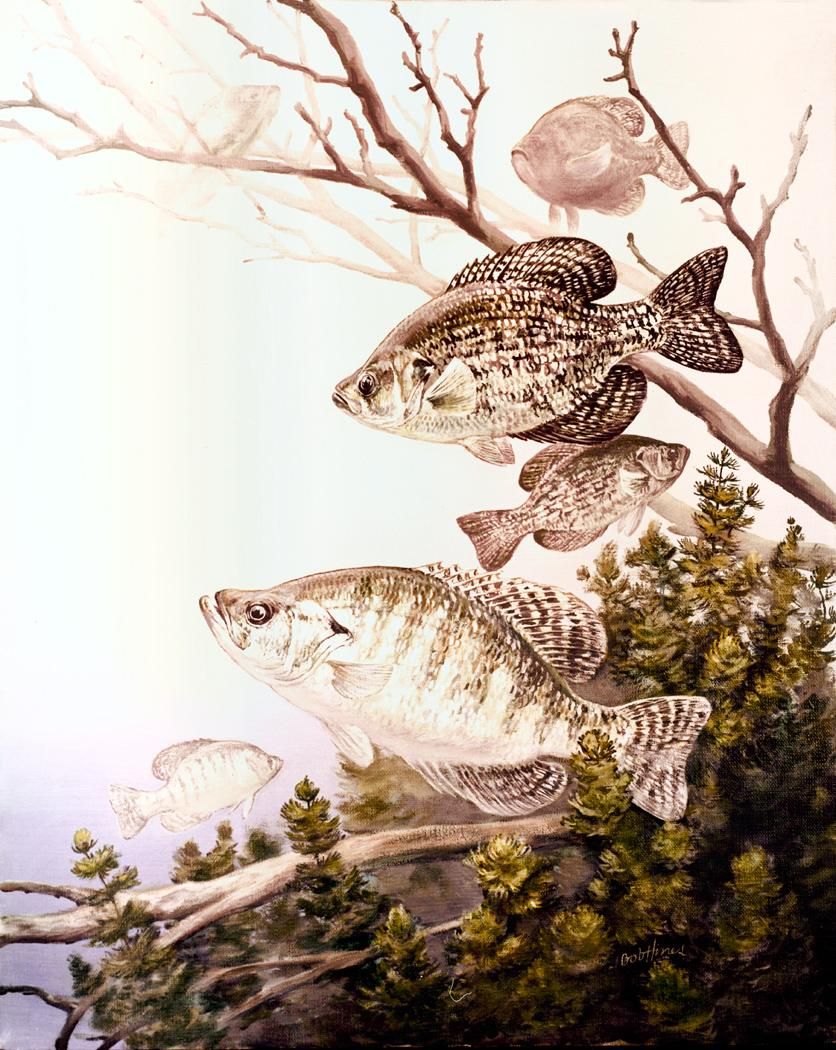 🇺🇸 United StatesCrappie
Two species of North American freshwater sunfish prized by anglers for sport and food.Perch-like · Rivers and lakes
 🇺🇸 United States and 2 morePumpkinseed
A small freshwater fish native to eastern North America, known for its bright colours and red ear flap.Perch-like · Rivers and lakes · 1793
 🇺🇸 United States and 2 moreBluegill
A common North American sunfish known for its blue gill covers and popularity with anglers.Perch-like · Rivers and lakes · 1854
 🇺🇸 United States and 3 moreBlack crappie
A spotted freshwater sunfish native to North America, prized by anglers for its sport and table fare.Perch-like · Rivers and lakes · 1856
More from Centrarchidae
All of them 🇺🇸 United StatesSpotted bass
A North American freshwater fish known for dark spots below its lateral line.Other · Rivers and lakes
 🇺🇸 United StatesGuadalupe bass
A rare Texas endemic black bass prized by anglers for its fighting spirit.Other · Rivers and lakes
 🇺🇸 United States and 2 moreGreen sunfish
A small, aggressive freshwater fish native to North America, known for its blue-green colour and invasive potential in nPerch-like · Rivers and lakes
 🇺🇸 United States and 4 moreLargemouth bass
A large freshwater predator native to North America, prized by anglers and invasive in many regions.Other · Rivers and lakes · 1802