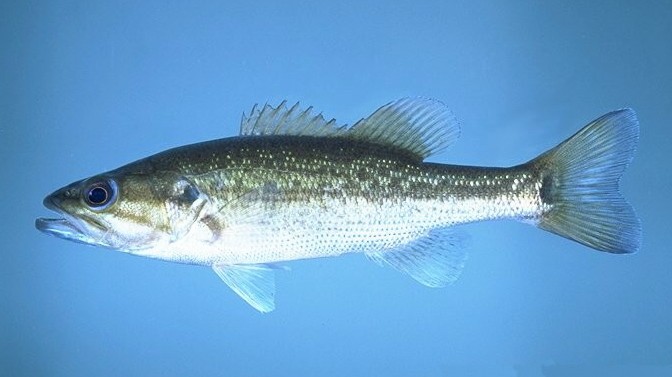
Spotted bass
A North American freshwater fish known for dark spots below its lateral line.
The spotted bass is a black bass species native to the Mississippi River basin and Gulf states. It is prized by anglers for sport and food, though it has been introduced elsewhere with mixed ecological results.
- Reaches up to 64 cm and 5.2 kg.
- Native to Mississippi River basin and Gulf states.
- Introduced to South Africa where it became invasive.
- Often mistaken for largemouth bass due to colour.
- Spawns in April and May in gravel nests.
What it is
This fish belongs to the sunfish family and is one of the black basses. It gets its name from rows of dark spots located under its side line. Adults reach about sixty-four centimetres long and weigh over five kilograms. Anglers often confuse it with the largemouth bass because of similar colours. Key differences include a smaller mouth and scales on the second dorsal fin base. The upper jaw does not extend past the eye rear edge. It also lacks the vertical bars seen on smallmouth bass.
Where it lives
Native populations live in the Mississippi River basin and across Gulf states from Texas to Florida. They are found in the Ohio River basin and parts of the Mid-Atlantic. Introduced ranges include western North Carolina, Virginia, and South Africa. In South Africa, they inhabit the Olifants-Doring River system. They prefer habitats with more current than largemouth bass but tolerate warmer water than smallmouth bass.
How it lives
These fish eat insects, crayfish, frogs, worms, and small fish. Young individuals start with copepods before moving to larger prey. They hunt by creating suction with their mouths. Spotted bass can be found deeper than smallmouth bass, down to thirty metres. They hide near aquatic plants, submerged logs, and rock walls. Hybridization with smallmouth bass occurs occasionally, complicating identification.
Breeding and life cycle
Spawning happens between April and May. Males construct nests in gravel or similar substrate. Females lay eggs in these nests, which males then protect until the young disperse. Competition for spawning sites with smallmouth bass has been observed. This interaction sometimes leads to hybrid offspring in reservoir areas.
Fish and people
The spotted bass is a popular target for sport fishing. It is also considered good eating for human consumption. Records show catches exceeding ten pounds in California waters. In South Africa, it was introduced as a game fish before becoming invasive. Conservation efforts there used nets and electrofishing to remove the population due to threats to native species.
Status and threats
The species is listed as least concern globally. However, introduced populations face management challenges. In South Africa, the species caused declines in native fiery redfin and Cape galaxias. Authorities successfully eradicated the invasive group in 2014 using various removal techniques. Native ranges remain stable within their historical distribution.

Questions people ask about Spotted bass
How do I tell a spotted bass from a largemouth bass?
Look at the mouth size and the upper jaw bone. The spotted bass has a smaller mouth that does not extend past the rear edge of the eye. It also has scales on the base of the second dorsal fin, which the largemouth lacks.
What does the spotted bass eat?
They feed on small fish, crayfish, and aquatic insects. Younger bass start with copepods and other small crustaceans. They use suction to capture prey, consuming less fish than largemouth bass but more than smallmouth bass.
Is the spotted bass dangerous to humans?
No, it is not dangerous to people. It is a freshwater fish valued for sport fishing and as a food source. While it can harm native fish in introduced ranges, it poses no physical threat to humans.
Where can I find spotted bass in the wild?
They are native to the Mississippi River basin, Ohio River basin, and Gulf Coast states from Texas to Florida. They have also been introduced to parts of the Mid-Atlantic and South Africa.
Good reading and sources
The facts on this page come from the Wikipedia article "Spotted bass", written by its contributors and used under the CC BY-SA 4.0 licence, and from its Wikidata record (CC0). EveryFish rewrote the text in its own words, with AI assistance, and compares every page with the article to make sure no passage is copied. It may be reused under the same CC BY-SA 4.0 licence with a link back.
It may contain mistakes, and figures change over time. Nothing here is investment or buying advice. If something is wrong, tell us. Last refreshed 2026-11-15.
Like Spotted bass
All other fish 🇧🇷 BrazilBanded leporinus
A striped freshwater fish from the Amazon kept in home tanks and occasionally caught by anglers.Other · Rivers and lakes
 🇺🇸 United StatesWhite bass
A silver-striped freshwater fish native to North American rivers and lakes.Other · Rivers and lakes
 WorldNile perch
Large freshwater predator native to Africa, now invasive in many lakes.Other · Rivers and lakes
 🇺🇸 United States and 2 moreGar
Ancient armored fish with lung-like swim bladders found in North American waters.Ancient · Rivers and lakes · 1758
More from Centrarchidae
All of them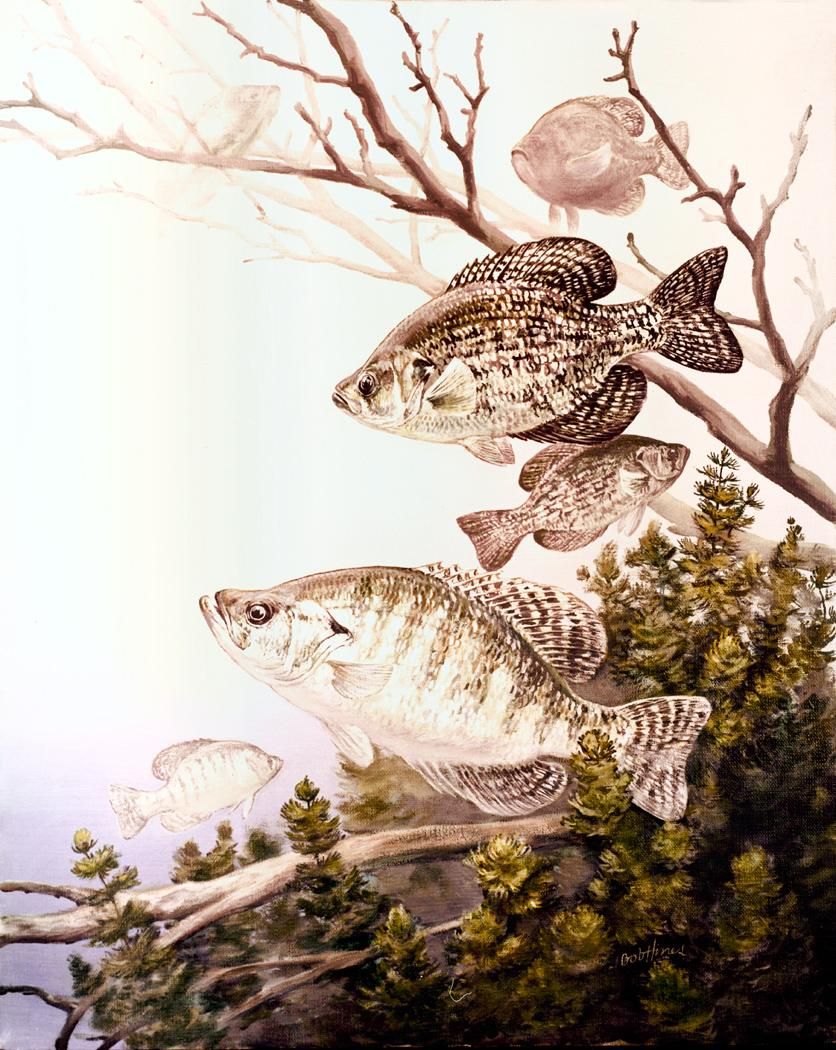 🇺🇸 United StatesCrappie
Two species of North American freshwater sunfish prized by anglers for sport and food.Perch-like · Rivers and lakes
 🇺🇸 United StatesGuadalupe bass
A rare Texas endemic black bass prized by anglers for its fighting spirit.Other · Rivers and lakes
 🇺🇸 United States and 2 moreGreen sunfish
A small, aggressive freshwater fish native to North America, known for its blue-green colour and invasive potential in nPerch-like · Rivers and lakes
 🇺🇸 United States and 2 moreRock bass
A small, red-eyed freshwater sunfish native to North America.Perch-like · Rivers and lakes