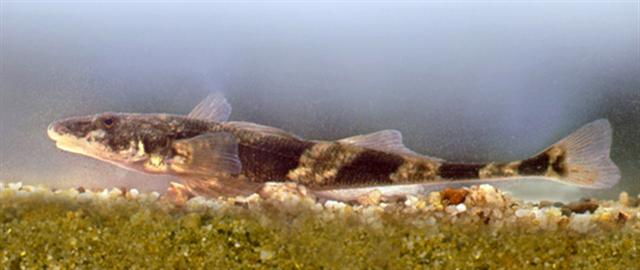
Streber
A small freshwater perch found in fast-flowing European rivers.
The streber is a ray-finned fish belonging to the perch family. It inhabits rapid waters within the Danube and Dniester river systems across central and eastern Europe. This species spawns in spring by scattering eggs on gravel beds.
- Found in strongly flowing waters of Danube and Dniester
- Spawns between March and May on clean gravel
- Males develop pointed tubercles on head scales
- Present in fifteen European countries
- Member of the perch family Percidae
What it is
The streber is a species of ray-finned fish classified within the perch family. It lives exclusively in fresh water that moves with significant force. The fish is native to specific river basins in Europe. Its body adapts to life in currents rather than still pools. This member of the Percidae family is distinct from other perches due to its habitat preferences. It does not inhabit marine environments or stagnant lakes. The scientific name identifies it clearly within taxonomic records. Anglers and biologists recognise it by its preference for rapid flow.
Where it lives
This fish occupies the drainage basins of two major European rivers. The Danube system supports populations across many nations. These include Austria, Germany, Hungary, Slovakia, and Croatia. The Dniester basin holds groups in Ukraine and Moldova. Other countries with recorded presence include Bulgaria, Greece, and Serbia. Bosnia and Herzegovina, Slovenia, Switzerland, Italy, and the Czech Republic also host this species. It requires water with strong current velocity. Still waters do not support its lifestyle. The range covers central and south-eastern parts of the continent.
How it lives
Information regarding daily behaviour and diet is limited in the provided records. The species is adapted to high-energy aquatic environments. It likely feeds on organisms available in fast-moving streams. The fish remains in freshwater systems throughout its life cycle. It does not migrate between salt and fresh water. The primary ecological focus is its reliance on clean, oxygenated water with substantial flow.
Breeding and life cycle
Reproduction occurs during the spring months. Spawning takes place from March through May. Adults scatter their eggs over substrate composed of clean gravel. This method ensures the eggs remain oxygenated by the current. Both male and female fish develop physical changes for breeding. These are called nuptial tubercles. Males grow pointed structures on head scales and form ridges along the body. Females lack the head ornaments but display less prominent body ridges. These features help distinguish the sexes during the breeding season.
Fish and people
It does not appear in aquarium trade literature based on the provided text. No cultural or religious significance is noted. The fish is primarily of interest to ichthyologists studying riverine ecosystems. It serves as an indicator of healthy, fast-flowing water conditions. Conservation efforts may focus on maintaining water quality and flow regimes.
Status and threats
Threats such as pollution or dam construction are not explicitly mentioned. However, its dependence on strongly flowing water suggests vulnerability to habitat alteration. Changes in river flow could impact spawning success. Protection measures would need to address water management practices. Without specific data on population trends, the exact level of risk remains unclear. Further assessment would be required to determine if it faces endangerment.
Questions people ask about Streber
Where does the streber live?
It lives in strongly flowing freshwater within the Danube and Dniester river drainages. Its range extends across fifteen countries in central and eastern Europe, including Austria, Ukraine, and Germany.
When does the streber spawn?
Spawning occurs between March and May. The fish scatter their eggs on clean gravel substrates, relying on the current to keep them oxygenated during development.
What are nuptial tubercles?
These are temporary breeding ornaments. Male strebers develop pointed tubercles on their heads and ridges on their bodies. Females have less prominent ridges but lack the head structures.
Good reading and sources
The facts on this page come from the Wikipedia article "Streber", written by its contributors and used under the CC BY-SA 4.0 licence, and from its Wikidata record (CC0). EveryFish rewrote the text in its own words, with AI assistance, and compares every page with the article to make sure no passage is copied. It may be reused under the same CC BY-SA 4.0 licence with a link back.
It may contain mistakes, and figures change over time. Nothing here is investment or buying advice. If something is wrong, tell us. Last refreshed 2026-11-15.
Like Streber
All perches, basses and snappers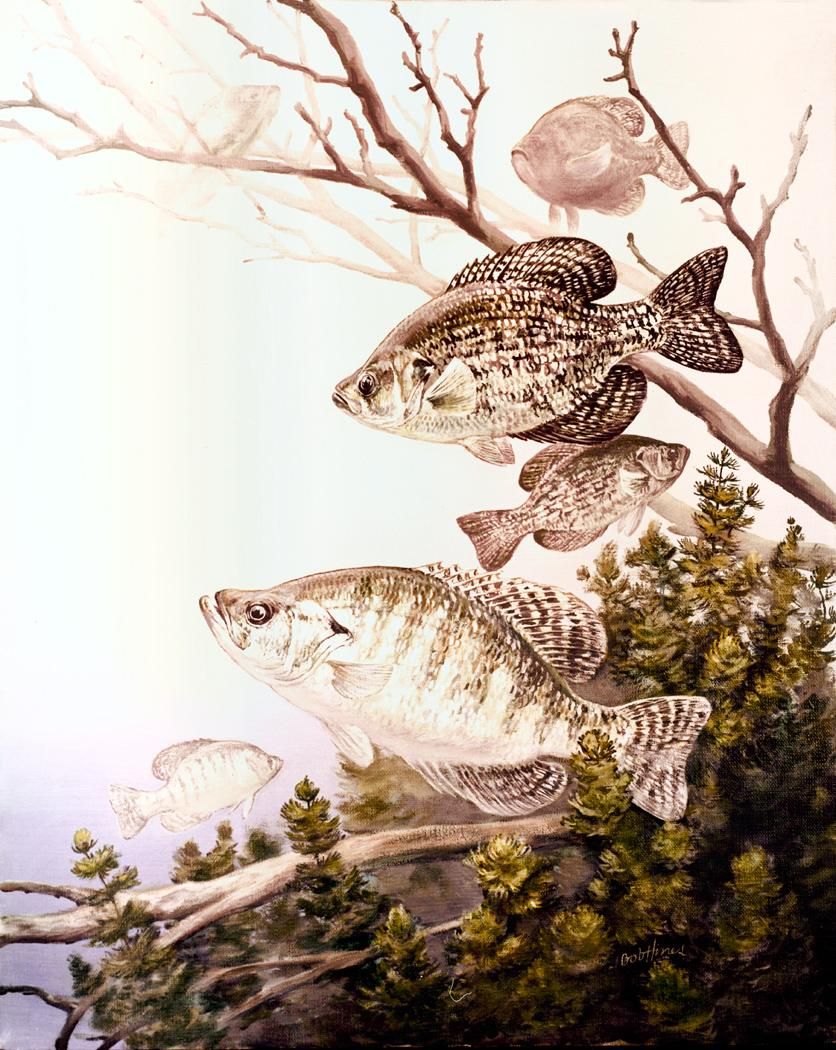 🇺🇸 United StatesCrappie
Two species of North American freshwater sunfish prized by anglers for sport and food.Perch-like · Rivers and lakes
 🇺🇸 United States and 2 moreGreen sunfish
A small, aggressive freshwater fish native to North America, known for its blue-green colour and invasive potential in nPerch-like · Rivers and lakes
 🇺🇸 United States and 2 moreRock bass
A small, red-eyed freshwater sunfish native to North America.Perch-like · Rivers and lakes
 🇷🇺 Russia and 1 moreRuffe
A small, aggressive freshwater fish native to Eurasia that has become a major invasive pest in North America.Perch-like · Rivers and lakes · 1758

