
European perch
A greenish freshwater predator native to Europe and North Asia.
The European perch is a widespread predatory fish found in fresh and brackish waters across Eurasia. First described scientifically in the eighteenth century, it serves as a popular game fish and food source while posing ecological threats where introduced outside its native range.
- National fish of Finland
- Max length 60 cm
- Invasive in Australia
- Spawns egg ribbons on plants
- Lives up to 22 years
What it is
This fish displays a greenish body marked by five to eight dark vertical bars along its sides. Its pelvic, anal, and tail fins carry a distinct red hue. As the animal ages, a hump often develops between the head and the dorsal fin. Adults can reach lengths of sixty centimetres, though size varies significantly by location. It belongs to the genus Perca and serves as the type species for this group.
Where it lives
Native waters span almost all of Europe, except the Iberian Peninsula, extending east to Siberia’s Kolyma River. The species thrives in slow-moving rivers, ponds, and deep lakes with good light penetration. It also inhabits brackish zones of the Baltic Sea, particularly around Finland, where low salinity supports large populations. The fish generally avoids fast currents and very cold water, although it may enter such areas without breeding there.
How it lives
Young perch feed on zooplankton and small invertebrates before switching to other fish at about twelve centimetres long. Adults consume sticklebacks, minnows, roach, and even their own kind. They fall prey to birds like ospreys and cormorants, as well as pike and otters. Parasitic worms, including nematodes and tapeworms, commonly infect juvenile specimens. The fish can live for up to twenty-two years, growing larger in older age.
Breeding and life cycle
Males mature within two years, while females take up to four. Spawning occurs from February to July in the Northern Hemisphere. Males arrive first at spawning grounds, chasing mates through underwater vegetation. Females deposit long white ribbons of eggs on submerged plants or branches. These eggs hatch after eight to sixteen days. The tiny larvae drift in open water feeding on plankton before moving to shorelines during their first summer.
Fish and people
Anglers value this species for sport, using worms, small fish, or artificial lures to catch them. Its white, firm flesh is considered good eating and is widely consumed in Europe. Russia and Finland lead global catch statistics. However, introductions to Australia and New Zealand have harmed native fish, leading to its classification as a noxious species in some regions. It is the national fish of Finland and appears in municipal emblems.
Status and threats
While abundant in its native range, the perch is considered an invasive threat in places like Australia. There, it contributes to the decline of native species such as the Macquarie perch. New South Wales has proclaimed it a noxious species due to these ecological impacts. In its home waters, it remains a staple of commercial and recreational fisheries without reported conservation concerns.


Questions people ask about European perch
Is the European perch good to eat?
Yes, its flesh is white, firm, and mild in flavour. It is widely consumed in Europe and suits frying or grilling. FAO statistics show tens of thousands of tonnes are caught annually for food.
Why is it called redfin in Australia?
The name refers to its red pelvic and anal fins. In Australia, it is an introduced species that harms native fish populations, leading to its label as a noxious pest in New South Wales.
How big do European perch get?
They can grow up to sixty centimetres long. The world record weight is nearly three kilograms, caught in Finland. Older fish tend to be much larger than average specimens.
Where does the European perch live?
It inhabits fresh waters across Europe and North Asia, including slow rivers and lakes. It also lives in the brackish waters of the Baltic Sea but avoids the Iberian Peninsula.
Good reading and sources
- European perch on WikipediaEncyclopedia
- More photos on Wikimedia CommonsPhotos
- Wikidata recordOpen data
The facts on this page come from the Wikipedia article "European perch", written by its contributors and used under the CC BY-SA 4.0 licence, and from its Wikidata record (CC0). EveryFish rewrote the text in its own words, with AI assistance, and compares every page with the article to make sure no passage is copied. It may be reused under the same CC BY-SA 4.0 licence with a link back.
It may contain mistakes, and figures change over time. Nothing here is investment or buying advice. If something is wrong, tell us. Last refreshed 2026-11-15.
Like European perch
All perches, basses and snappers 🇺🇸 United States and 2 morePumpkinseed
A small freshwater fish native to eastern North America, known for its bright colours and red ear flap.Perch-like · Rivers and lakes · 1793
 🇺🇸 United States and 1 moreYellow perch
Freshwater fish native to North America with distinctive vertical bars.Perch-like · Rivers and lakes · 1814
 🇷🇺 Russia and 1 moreRuffe
A small, aggressive freshwater fish native to Eurasia that has become a major invasive pest in North America.Perch-like · Rivers and lakes · 1758
 OceaniaBanded archerfish
A silvery fish that spits water jets to catch prey.Perch-like · Estuaries and mangroves · 1767
More from Percidae
All of them 🇩🇪 Germany and 4 moreZingel
A fast-water perch from southeastern Europe.Perch-like · Rivers and lakes · 1766
 🇺🇸 United States and 1 moreSauger
A freshwater perch species native to North American rivers.Perch-like · Rivers and lakes · 1834
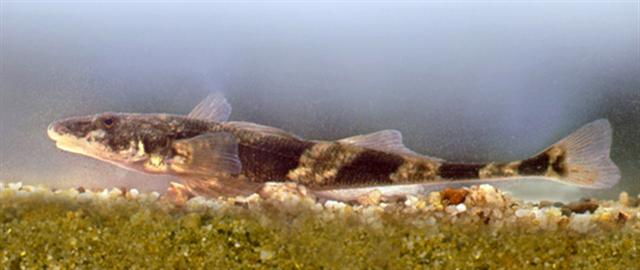 🇦🇹 Austria and 4 moreStreber
A small freshwater perch found in fast-flowing European rivers.Perch-like · Rivers and lakes