
Black bullhead
A small, hardy North American catfish that tolerates poor water conditions and feeds at night.
The black bullhead (Ameiurus melas) is a freshwater catfish native to central and southern United States river basins. It thrives in warm, low-oxygen environments and is known for its nocturnal feeding habits and tolerance of pollution.
- Squared tail fin distinguishes it from forked-tailed channel catfish.
- Tolerates low oxygen, turbid, and warm water better than other bullheads.
- Nocturnal feeder with up to 100,000 taste receptors on its body.
- Parents guard eggs and young fry in mud nests until juveniles leave.
- Invasive in Europe; banned from trade and release by EU regulations.
What it is
This species is a bottom-dwelling catfish characterized by a broad head, spiny fins, and a lack of scales. Its body is typically dark brown or black on the upper side and yellow or white underneath. Key identification features include black barbels near the mouth, a squared-off caudal fin, and a tan crescent marking around the tail base. Adults usually weigh between one and two pounds, rarely exceeding four pounds. The fish possesses approximately one hundred thousand taste receptors distributed across its body, aiding in food detection within dark or murky habitats.
Where it lives
Native populations inhabit the Mississippi and Ohio river basins across the central and southern United States. They are notably absent from Atlantic coastal drainages in the eastern US. The species prefers stagnant or slow-moving waters with soft substrates, such as lakes, ponds, oxbows, and low-gradient streams. Introduced ranges extend into large parts of Europe, where it is classified as an invasive alien species of Union concern. In the United Kingdom, specific populations have been eradicated due to ecological impacts.
How it lives
Black bullheads are gregarious and often move in schools. They remain inactive in vegetation beds during daylight hours and become active foragers at night. Their diet is omnivorous, consisting of midge larvae, insects, crustaceans, small fish, and plant matter. During winter, they reduce food intake significantly, burying themselves in shoreline debris with only their gills exposed to survive cold and low-oxygen conditions. They exhibit high tolerance for warm temperatures, high siltation, and pollution, which reduces competition from other fish species.
Breeding and life cycle
Spawning occurs from April through June, occasionally extending to August in northern latitudes. Females create depressions in mud or sand, often beneath vegetation or woody debris, at depths of 0.6 to 1.2 metres. Eggs are deposited in a gelatinous mass and guarded by both parents, who fan the spawn with their tails. Incubation lasts five to ten days depending on water temperature. After hatching, fry retain yolk sacs and form compact schools protected by parents until they reach approximately 25 millimetres in length.
Fish and people
Considered rough fish, black bullheads are less popular for sport fishing than larger relatives like channel catfish. However, they provide excellent table fare when caught in clean water. Flesh quality can be compromised by strong flavors from yellow fat in larger specimens, which can be removed during cleaning. Fisheries experts generally do not recommend them for active stocking programs due to competition with bluegill and slower growth rates. They are useful in mixed-species ponds with bass, as they reproduce effectively without restocking.
Status and threats
The species is widespread and abundant in its native range, facing no major global threats. Conservation concerns arise primarily in introduced regions like Europe, where it disrupts local ecosystems. The European Union prohibits its import, breeding, transport, commercialization, or intentional release. In the UK, targeted eradication using rotenone biocide successfully removed the species from Lake Meadows in Essex. Native populations remain stable due to their adaptability to degraded water conditions.

Questions people ask about Black bullhead
How can I tell a black bullhead apart from a brown bullhead?
Check the barbels under the mouth; black bullheads have black barbels while yellow bullheads have white ones. Brown bullheads are typically mottled gray-green dorsally, whereas black bullheads are darker. Additionally, the black bullhead has weaker serration on its pectoral spine compared to the strongly barbed spine of the brown bullhead.
Is the black bullhead safe to eat?
Yes, they make excellent table fare if caught in clean water. Larger individuals may have strong-tasting yellow fat around the belly and gills, which should be removed during cleaning. Smaller fish generally have pale flesh with fewer flavor issues.
Where does the black bullhead live?
It is native to the Mississippi and Ohio river basins in the central and southern United States. It prefers stagnant or slow-moving waters with soft bottoms, such as lakes, ponds, and low-gradient streams. It avoids Atlantic coastal drainages in the east.
Why is it called a mud catfish?
It is informally referred to as a mud catfish because it is a bottom-rover that lives in muddy, silty environments. It thrives in turbid water and often buries itself in shoreline debris during winter, remaining partially covered in sediment.
Good reading and sources
- Black bullhead on WikipediaEncyclopedia
- More photos on Wikimedia CommonsPhotos
- Wikidata recordOpen data
The facts on this page come from the Wikipedia article "Black bullhead", written by its contributors and used under the CC BY-SA 4.0 licence, and from its Wikidata record (CC0). EveryFish rewrote the text in its own words, with AI assistance, and compares every page with the article to make sure no passage is copied. It may be reused under the same CC BY-SA 4.0 licence with a link back.
It may contain mistakes, and figures change over time. Nothing here is investment or buying advice. If something is wrong, tell us. Last refreshed 2026-11-15.
Like Black bullhead
All catfishes 🇺🇸 United States and 1 moreYellow bullhead
A medium-sized North American catfish known for its bright yellow belly and scavenging habits.Catfish · Rivers and lakes · 1819
 🇨🇦 Canada and 1 moreBigmouth buffalo
A long-lived North American freshwater fish known for its terminal mouth and exceptional lifespan.Catfish · Rivers and lakes
 🇧🇷 Brazil and 4 moreRedtail catfish
A large South American catfish known for its red tail and popularity in the aquarium trade.Catfish · Rivers and lakes
 🇧🇴 Bolivia and 4 moreRipsaw catfish
Large thorny catfish native to South American rivers.Catfish · Rivers and lakes
More from Ictaluridae
All of them 🇺🇸 United StatesWidemouth blindcat
A pale, eyeless catfish from Texas aquifersCatfish · Rivers and lakes
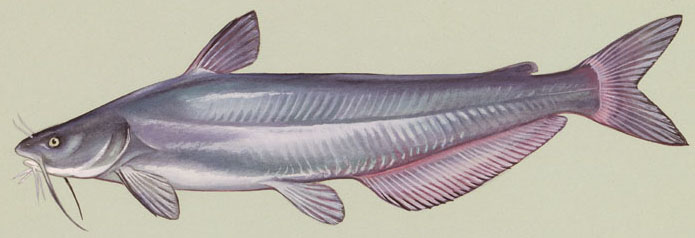 🇺🇸 United StatesBlue catfish
A large North American catfish known for its size and invasive spread in eastern US waters.Catfish · Rivers and lakes
 🇺🇸 United States and 2 moreFlathead catfish
A large North American freshwater predator known for its broad head and carnivorous diet.Catfish · Rivers and lakes
 🇺🇸 United StatesBrown bullhead
A hardy North American catfish known for surviving poor water conditions.Catfish · Rivers and lakes · 1819