
Yellow bullhead
A medium-sized North American catfish known for its bright yellow belly and scavenging habits.
The yellow bullhead is a ray-finned fish found across central and eastern North America. It lives in slow-moving waters and feeds on almost anything it finds on the stream bottom.
- Distinguished by white barbels under the chin.
- Maximum length reaches 60 centimetres.
- Lives up to 12 years in freshwater habitats.
- Male parents fan and protect the egg nest.
- Feeds on worms, insects, and plant matter at night.
What it is
This catfish has a medium build and lacks scales. Its back ranges from yellow-olive to slate black, often with mottling that is less intense than related species. The sides are lighter and yellowish, while the underside of the head and body shines with bright yellow or white tones. A key feature is the group of white barbels under its chin, which distinguishes it from other bullheads. The rear edge of its tail fin is rounded, and its anal fin contains between 24 and 27 rays. Unlike some flathead catfish, it lacks lateral extensions on its upper tooth patch. Its eyes are generally smaller than those of the snail bullhead or flat bullhead, and there is no dark blotch at the base of its dorsal fin.
Where it lives
These fish inhabit a broad area across central and eastern North America. Their natural range extends from the Rio Grande River northward to North Dakota and southeastern Canada. They spread east through the Great Lakes region to the East Coast. Populations have also been introduced to the western United States, where they can be caught as far north as northern Washington state. They thrive in various freshwater environments, including sluggish creeks, small to large rivers, and shallow parts of lakes and ponds. They prefer substrates of muck, rock, sand, or clay.
How it lives
Yellow bullheads are voracious scavengers that feed primarily at night. They locate food by brushing their barbels along the stream bottom, using taste buds on these whiskers to identify edible items. Their diet includes worms, insects, snails, minnows, clams, crayfish, and other small aquatic organisms. They also consume significant amounts of plant matter and decaying animal material compared to other bullheads. These fish live as bottom dwellers in areas with varying current speeds and water clarity. They can tolerate poorly oxygenated, silted, or polluted water, though they are also found in cleaner, swift currents with vegetation. They serve as hosts for mussel larvae and may carry leeches.
Breeding and life cycle
Breeding begins in mid-May or early June, involving a monogamous relationship where both parents participate in nest building. They typically use natural cavities or create saucer-shaped depressions near submerged cover like tree roots or logs. The female deposits between 300 and 700 eggs in a gelatinous mass, totaling up to 4300 eggs. The male fertilizes and then protects the nest, continually fanning the eggs. Hatching occurs within five to seven days. The male herds the young fry into tight schools, and both parents protect them until they reach approximately two inches in length. By one year of age, juveniles grow to about three inches. Sexual maturity is reached after two to three years, when the fish are around 140 millimetres long.
Fish and people
Anglers consider this species a minor game fish. It is caught using natural baits such as worms, crickets, or chicken liver, typically fished on the bottom at night. The meat is described as sweet with good flavour, although it can become soft during summer months. It is not as highly sought after as other catfish varieties. Historically, Charles Alexandre Lesueur named the species in 1819, initially coining the name Pimelode Noël, possibly to honour the naturalist Simon Barthélemy Joseph Noël de la Morinière. The scientific name reflects Greek and Latin roots describing its appearance and origin.
Status and threats
No specific conservation threats are detailed in the provided text. The species has a wide distribution across North America and is adaptable to various water conditions, including polluted environments.
Questions people ask about Yellow bullhead
How can you tell a yellow bullhead apart from other bullheads?
Look for the group of white barbels under its chin. It also has more anal fin rays (24 to 27) than other bullheads, a rounded tail fin edge, and lacks a dark blotch at the base of its dorsal fin.
What does the yellow bullhead eat?
It is a scavenger that eats almost anything. Its diet includes worms, insects, snails, minnows, clams, crayfish, plant matter, and decaying animal material. It uses its whiskers to taste food on the stream bottom.
Where do yellow bullheads live?
They inhabit central and eastern North America, from the Rio Grande to Canada and the Atlantic coast. They live in slow-moving creeks, rivers, lakes, and ponds with soft or rocky substrates.
Is the yellow bullhead good to eat?
Yes, its meat is considered sweet and flavorful. However, the texture can become soft during the summer months. Anglers catch them using baits like worms or chicken liver.
How do yellow bullheads reproduce?
Pairs build nests in cavities or depressions near cover. The female lays hundreds of eggs, and the male fans and protects them. Both parents guard the young fry until they grow to about two inches long.
Good reading and sources
- Yellow bullhead on WikipediaEncyclopedia
- More photos on Wikimedia CommonsPhotos
- Wikidata recordOpen data
The facts on this page come from the Wikipedia article "Yellow bullhead", written by its contributors and used under the CC BY-SA 4.0 licence, and from its Wikidata record (CC0). EveryFish rewrote the text in its own words, with AI assistance, and compares every page with the article to make sure no passage is copied. It may be reused under the same CC BY-SA 4.0 licence with a link back.
It may contain mistakes, and figures change over time. Nothing here is investment or buying advice. If something is wrong, tell us. Last refreshed 2026-11-15.
Like Yellow bullhead
All catfishes 🇺🇸 United StatesBlack bullhead
A small, hardy North American catfish that tolerates poor water conditions and feeds at night.Catfish · Rivers and lakes
 🇺🇸 United StatesBrown bullhead
A hardy North American catfish known for surviving poor water conditions.Catfish · Rivers and lakes · 1819
 🇺🇦 Ukraine and 4 moreWels catfish
A large freshwater catfish native to Europe and Western Asia, known for its size and bottom-feeding habits.Catfish · Rivers and lakes · 1758
 🇹🇭 Thailand and 2 moreGiant pangasius
A large freshwater catfish from Southeast Asia, now critically endangered due to overfishing and habitat loss.Catfish · Rivers and lakes · 1931
More from Ictaluridae
All of them 🇺🇸 United StatesWidemouth blindcat
A pale, eyeless catfish from Texas aquifersCatfish · Rivers and lakes
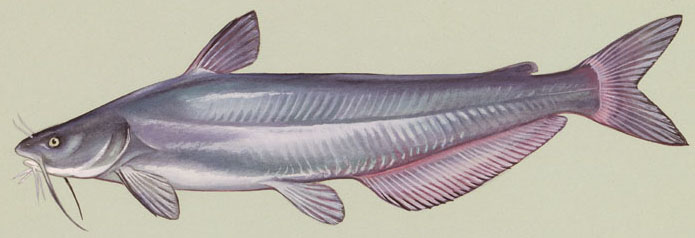 🇺🇸 United StatesBlue catfish
A large North American catfish known for its size and invasive spread in eastern US waters.Catfish · Rivers and lakes
 🇺🇸 United States and 2 moreFlathead catfish
A large North American freshwater predator known for its broad head and carnivorous diet.Catfish · Rivers and lakes