
Widemouth blindcat
A pale, eyeless catfish from Texas aquifers
The widemouth blindcat is a small, pale catfish found only in underground wells near San Antonio, Texas. Adapted to total darkness, it lacks eyes and pigment. Groundwater pollution threatens its survival, leading to a proposed endangered listing in 2023.
- Only species in the genus Satan
- Lacks eyes and skin pigment
- Found in five artesian wells in Texas
- Proposed for endangered listing in 2023
- Grows to about 13.7 cm in length
What it is
This fish is a small catfish adapted to life in complete darkness. It belongs to the genus Satan and is the only member of this group. The body lacks pigment, giving it a pale appearance. External eyes are absent, with only tiny remnants remaining inside the head. These remnants have no functional retina or lens. The skeleton is mostly cartilage rather than hard bone, which is unusual for adult catfish of this size. A fragmentary lateral line helps it sense movement in the water.
Where it lives
The species lives exclusively in underground water sources. It is found in five artesian wells that tap into the San Antonio Pool of the Edwards Aquifer. These wells are located in and near San Antonio, Texas. The fish shares this limited habitat with the toothless blindcat. No other populations exist outside this specific aquifer system in the United States.
How it lives
Little is known about its daily behaviour due to its hidden habitat. Stomach contents contain crustacean exoskeletons, suggesting it eats small invertebrates. It may act as the top predator in its dark ecosystem. The fish shows paedomorphic traits, meaning it retains some juvenile features like weak bone formation and small size into adulthood. Its swim bladder is reduced, reflecting its stationary life in deep water.
Fish and people
Scientists study this rare fish to understand adaptation to extreme environments. It was first discovered in a well, highlighting how little we know about underground ecosystems. There is no commercial fishing or aquarium trade for this species. Its existence is primarily of interest to researchers and conservationists focused on subterranean biodiversity.
Status and threats
The International Union for Conservation of Nature lists it as Vulnerable. Groundwater pollution poses a serious threat to its survival. In 2023, the U.S. Fish and Wildlife Service proposed listing it as endangered under federal law. This proposal also included the toothless blindcat, which lives in the same wells. Protection efforts focus on maintaining water quality in the Edwards Aquifer.

Questions people ask about Widemouth blindcat
Where does the widemouth blindcat live?
It lives in five artesian wells within the Edwards Aquifer near San Antonio, Texas. It is endemic to this underground freshwater system and is not found anywhere else in the world.
Why does it have no eyes?
The fish evolved in a lightless underground environment where vision is unnecessary. Over time, its eyes regressed, leaving only tiny internal remnants with no functional retina or lens.
What is its conservation status?
It is currently listed as Vulnerable. In 2023, U.S. authorities proposed listing it as endangered due to threats from groundwater pollution affecting its limited habitat in the Edwards Aquifer.
Good reading and sources
The facts on this page come from the Wikipedia article "Widemouth blindcat", written by its contributors and used under the CC BY-SA 4.0 licence, and from its Wikidata record (CC0). EveryFish rewrote the text in its own words, with AI assistance, and compares every page with the article to make sure no passage is copied. It may be reused under the same CC BY-SA 4.0 licence with a link back.
It may contain mistakes, and figures change over time. Nothing here is investment or buying advice. If something is wrong, tell us. Last refreshed 2026-11-15.
Like Widemouth blindcat
All catfishes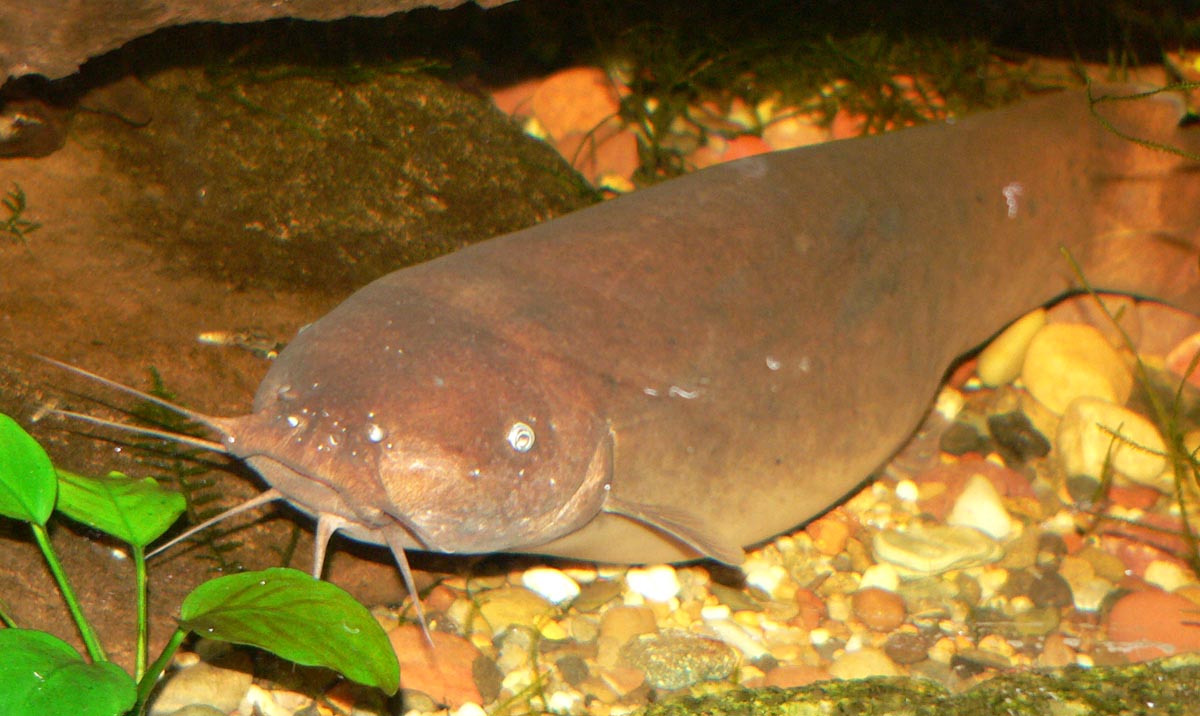 🇳🇬 Nigeria and 1 moreElectric catfish
African catfish that generates strong electric shocksCatfish · Rivers and lakes
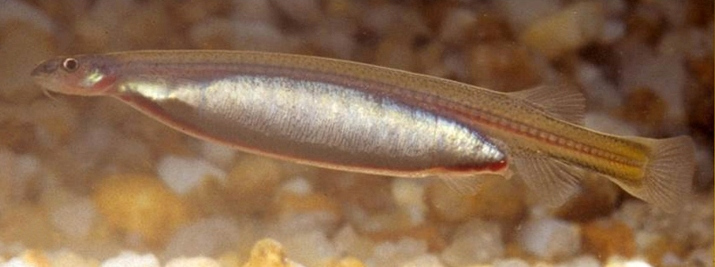 🇧🇷 Brazil and 4 moreCandiru
A tiny parasitic catfish from the Amazon that feeds on blood.Catfish · Rivers and lakes
 🇹🇭 Thailand and 4 moreMekong giant catfish
A massive freshwater fish native to the Mekong basin, now critically endangered.Catfish · Rivers and lakes
 🇧🇷 Brazil and 1 moreAncistrus
A genus of small, nocturnal freshwater catfish native to South America and Panama.Catfish · Rivers and lakes
More from Ictaluridae
All of them 🇺🇸 United StatesBlack bullhead
A small, hardy North American catfish that tolerates poor water conditions and feeds at night.Catfish · Rivers and lakes
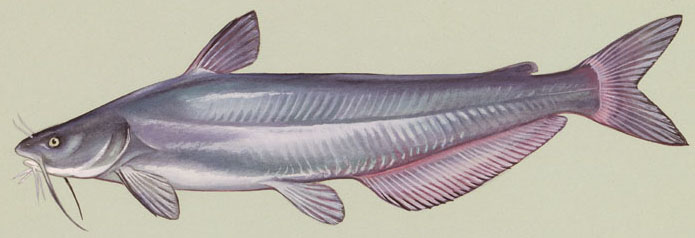 🇺🇸 United StatesBlue catfish
A large North American catfish known for its size and invasive spread in eastern US waters.Catfish · Rivers and lakes
 🇺🇸 United States and 2 moreFlathead catfish
A large North American freshwater predator known for its broad head and carnivorous diet.Catfish · Rivers and lakes
 🇺🇸 United StatesBrown bullhead
A hardy North American catfish known for surviving poor water conditions.Catfish · Rivers and lakes · 1819