Candiru
A tiny parasitic catfish from the Amazon that feeds on blood.
Vandellia cirrhosa is a small freshwater catfish native to South America. It lives in rivers like the Amazon and Orinoco basins. The species is famous for its habit of feeding on the blood of other fish.
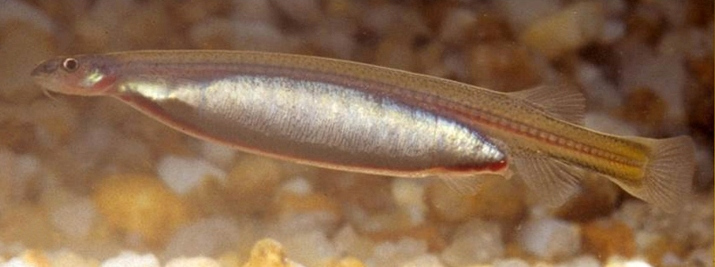
- Body is translucent, revealing ingested blood.
- Feeds by attaching to gills of larger fish.
- Spines on gill covers fan out to lodge in host.
- Only one disputed case of human urethra invasion exists.
- Native to Amazon and Orinoco river basins.
What it is
The candiru is a very small catfish with a long, thin body. Its skin is clear, which helps it hide in murky river water. You can often see red blood inside its belly after it has eaten. It has a small head, short whiskers near its mouth, and sharp spines on its gill covers. These spines can fan out like an umbrella to help the fish stay attached to a host. Adults typically reach about seventeen centimetres in length, though some individuals may grow slightly larger.
Where it lives
This fish lives in the Amazon and Orinoco river systems across several South American nations. It prefers shallow areas with muddy, sandy, or rocky floors. The species tends to stay close to where it was born rather than travelling far. One well-known location for this catfish is the Purus River in Brazil. These habitats are often remote and hard to access, making detailed study difficult.
How it lives
Candiru are blood feeders that attach themselves to larger fish. They swim alongside their hosts until they reach the gill cover. Then they force their way into the gill chamber using their sharp teeth. Once inside, they go limp and swell up as blood flows into their mouths. This process relies on the host's blood pressure rather than suction. The feeding usually takes less than two minutes. The host fish rarely suffers serious damage to its gills during these encounters.
Fish and people
Stories exist about this fish entering human bodies through various openings. However, documented cases are extremely rare and often disputed. Scientific evidence shows the fish primarily targets other fish species. In local communities, the candiru is sometimes viewed with fear due to these legends. The fish itself poses little direct danger to humans compared to its reputation in folklore.
Status and threats
No specific conservation programmes protect the candiru. Its population numbers remain unknown due to the difficulty of studying remote rivers. Fishing pressure in areas like the Purus River may indirectly harm the species. Depletion of potential host fish could reduce food availability for the candiru. Lack of data makes it hard to assess the overall health of wild populations.


Questions people ask about Candiru
Does the candiru really enter human urethras?
Alleged incidents are rare and controversial. Only one case from 1997 has documentation, and even that is disputed. The fish primarily parasitizes other fish species in its natural habitat.
What does the candiru eat?
It is a hematophagous parasite that feeds exclusively on blood. It attaches to the gills of larger fish, such as catfish and characids, and ingests blood directly from vessels.
How big does a candiru get?
Most members of the genus reach a standard length of about seventeen centimetres. Some individuals have been recorded growing up to forty centimetres in total length.
Good reading and sources
- Vandellia cirrhosa on WikipediaEncyclopedia
- More photos on Wikimedia CommonsPhotos
- Wikidata recordOpen data
The facts on this page come from the Wikipedia article "Vandellia cirrhosa", written by its contributors and used under the CC BY-SA 4.0 licence, and from its Wikidata record (CC0). EveryFish rewrote the text in its own words, with AI assistance, and compares every page with the article to make sure no passage is copied. It may be reused under the same CC BY-SA 4.0 licence with a link back.
It may contain mistakes, and figures change over time. Nothing here is investment or buying advice. If something is wrong, tell us. Last refreshed 2026-11-15.
Like Candiru
All catfishes 🇹🇭 Thailand and 4 moreMekong giant catfish
A massive freshwater fish native to the Mekong basin, now critically endangered.Catfish · Rivers and lakes
 🇺🇸 United StatesWidemouth blindcat
A pale, eyeless catfish from Texas aquifersCatfish · Rivers and lakes
 🇻🇪 Venezuela and 1 moreOtocinclus
Small South American armored catfishes known for algae eating and air breathing.Catfish · Rivers and lakes
 🇧🇷 BrazilPiraíba
A massive Amazonian catfish known for its long barbels and role as an apex predator.Catfish · Rivers and lakes