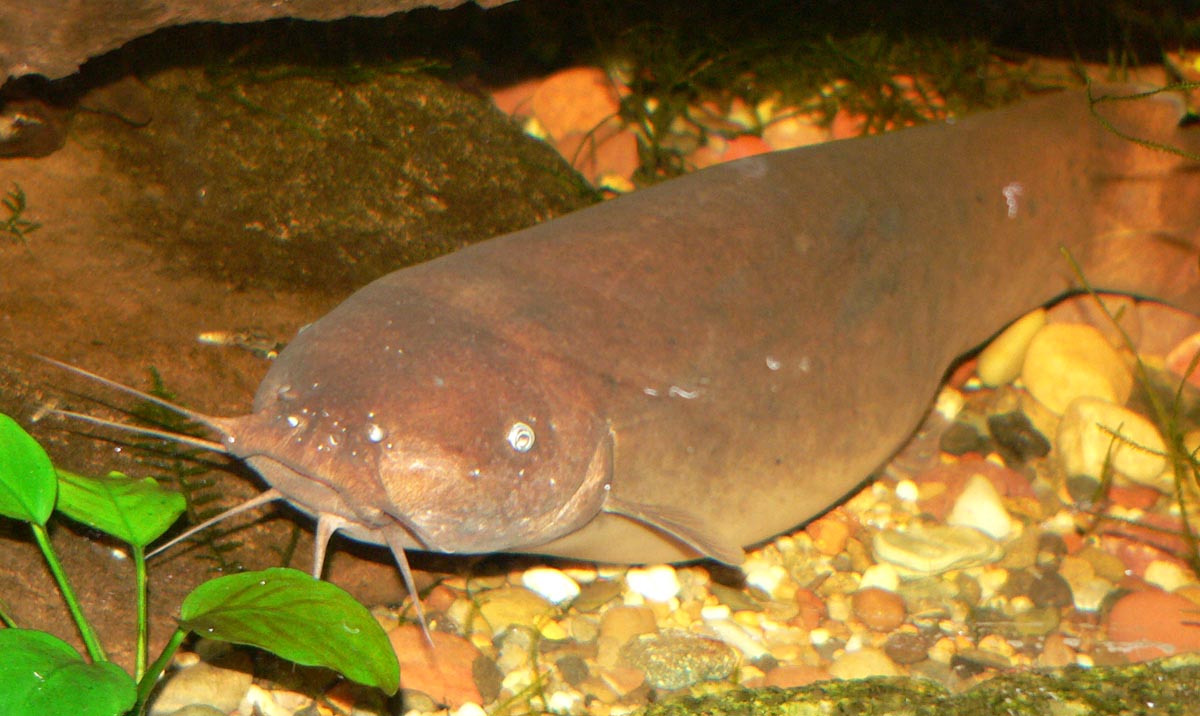
Electric catfish
African catfish that generates strong electric shocks
The electric catfish is a thickset African species known for its ability to discharge up to 450 volts. It lives in rivers and lakes across tropical Africa and the Nile basin. People have used its shocks for pain relief since ancient times, and it remains a food source and aquarium subject today.
- Generates electric shocks up to 450 volts
- Depicted in ancient Egyptian tombs 5,000 years ago
- Used traditionally to treat arthritis pain
- Males may brood eggs in their mouths
- Grows up to 1.2 metres in the wild
What it is
This thickset catfish has six barbels around its mouth and a single dorsal fin positioned just before its rounded tail. Its skin is brownish or grey with irregular black spots. Adults can grow to about 1.2 metres in length and weigh up to 23 kilograms. The most distinctive feature is its electric organ, which surrounds almost the entire body and derives from pectoral muscle tissue. This organ allows the fish to generate and control powerful electrical discharges.
Where it lives
The species inhabits freshwater systems across tropical Africa. Its range includes the Nile River, the Senegal River basin, Lake Turkana, and Lake Chad. Specific populations are found in Nigeria, such as in Lafia within Nasarawa state. These fish prefer standing water environments where they can hide among rocks. They are active during the night, using the cover of darkness to hunt and navigate their murky habitats.
How it lives
Active at night, this predator hunts by stunning other fish with electric shocks. The discharge can reach between 300 and 450 volts, serving both to capture prey and defend against threats. It is an Old World catfish that relies on its electrical sense rather than sight in dark waters. The electric organ is highly developed, wrapping around the body to maximise the impact of each shock delivered to targets.
Breeding and life cycle
In the wild, these fish form pairs to reproduce. They lay their eggs in excavated cavities or holes within the riverbed or lake bottom. There are reports that the male takes the eggs into his mouth for protection, suggesting mouth-brooding behaviour. It remains unclear how the young fry survive without being harmed by the electric shocks produced by their parents during this vulnerable stage.
Fish and people
Ancient Egyptian hieroglyphs depict this fish, dating back some 5,000 years. Doctors in that era reportedly used its shocks to alleviate arthritis pain, a practice that continues in some regions today. It is consumed as food in parts of Africa and appears in the aquarium trade. Scientists also study its electric organs to understand neuronal metabolism and axonal transport. In captivity, it requires large tanks with hiding spots and compatible only with snails.
Questions people ask about Electric catfish
How strong is the electric shock?
The electric catfish can generate and control discharges of up to 450 volts. This power is derived from an organ that surrounds almost the entire body and is used for both hunting prey and self-defence against predators.
Is it safe to keep in an aquarium?
It requires a minimum tank size of 55 US gallons with hiding places like bogwood. It is hardy but predatory, so only snails are compatible tank mates. Possession is illegal in Florida for personal or commercial use.
What did ancient Egyptians use it for?
Hieroglyphs from 5,000 years ago show the fish. Ancient Egyptian doctors reportedly used its electric shocks to reduce the pain of arthritis. This traditional medical application is still practised in some areas today.
Good reading and sources
- Malapterurus electricus on WikipediaEncyclopedia
- More photos on Wikimedia CommonsPhotos
- Wikidata recordOpen data
The facts on this page come from the Wikipedia article "Malapterurus electricus", written by its contributors and used under the CC BY-SA 4.0 licence, and from its Wikidata record (CC0). EveryFish rewrote the text in its own words, with AI assistance, and compares every page with the article to make sure no passage is copied. It may be reused under the same CC BY-SA 4.0 licence with a link back.
It may contain mistakes, and figures change over time. Nothing here is investment or buying advice. If something is wrong, tell us. Last refreshed 2026-11-15.
Like Electric catfish
All catfishes Sub-Saharan AfricaSynodontis
A large African genus of spotted catfish known for squeaking sounds and belly-up swimming.Catfish · Rivers and lakes
🇹🇭 Thailand and 1 moreAsian redtail catfish
Large Asian bagrid catfish with a bright red tail.Catfish · Rivers and lakes
 🇧🇷 Brazil and 4 moreRedtail catfish
A large South American catfish known for its red tail and popularity in the aquarium trade.Catfish · Rivers and lakes
 Sub-Saharan AfricaCuckoo catfish
A brood-parasitic catfish from Lake TanganyikaCatfish · Rivers and lakes