
Redtail catfish
A large South American catfish known for its red tail and popularity in the aquarium trade.
The redtail catfish is a massive freshwater species native to major South American river basins. It is widely traded globally as an aquarium fish, often leading to invasive populations when released by owners unaware of its adult size.
- Can reach 1.8 m in length and 80 kg in weight.
- Native to Amazon, Orinoco, and Essequibo river basins.
- Popular aquarium fish often sold as small juveniles.
- Invasive species in Malaysia's Perak and Pahang rivers.
- Feeds on fish, crustaceans, frogs, fruits, and seeds.
What it is
This large catfish features a brown back, yellow sides, and a distinctive orange-red dorsal and caudal fin. Adults can reach nearly two meters in length and weigh over eighty kilograms, though most are smaller. They possess a broad head with long whiskers that detect chemicals in the water. The body is dark above with a white underside extending from the mouth to the tail.
Where it lives
Native to the Amazon, Orinoco, and Essequibo river basins across Ecuador, Venezuela, Guyana, Colombia, Peru, Suriname, Bolivia, and Brazil. It inhabits fresh water in larger rivers, streams, and lakes. The species has also become invasive in Malaysia, particularly in the Perak and Pahang rivers, due to human release.
How it lives
These fish are active swimmers rather than bottom-dwelling ambush predators. They hunt during the evening and night, consuming anything that fits in their mouths, including other fish, crustaceans, worms, amphibians, and plant matter like fallen fruits and nuts. Adults communicate by making clicking sounds to warn off dangers or rivals.
Breeding and life cycle
The species reproduces through external fertilization after the female lays eggs. Hatchlings and juveniles face high predation risks from aquatic and terrestrial animals. As they grow larger, they become voracious hunters themselves, with few natural predators remaining except for large crocodilians, jaguars, and otters.
Fish and people
Anglers consider it a game fish, with a recorded IGFA weight record of fifty-six kilograms. In some regions, local tribes avoid eating it due to its black meat coloration. It is highly popular in the aquarium trade, often sold as small juveniles. Many buyers underestimate its eventual size, leading to releases into local waterways where it becomes an invasive threat.
Status and threats
The International Union for Conservation of Nature lists this species as Least Concern. However, its status in non-native areas is problematic. Human activity has directly contributed to its spread outside its natural range through aquarium releases. These introductions pose risks to local ecosystems and have been linked to concerns about safety in certain waterways.


Questions people ask about Redtail catfish
How big does a redtail catfish get?
Adults can reach up to 1.8 meters in length and weigh around 80 kilograms. However, such sizes are exceptionally rare. Most individuals average between 1.1 and 1.4 meters in length.
Is it safe to keep in a home aquarium?
Only in very large tanks. Mature fish require at least 10,000 liters of water. They are aggressive eaters and will consume smaller tank mates. They are generally unsuitable for standard home aquaria.
What do redtail catfish eat?
They are opportunistic omnivores. Their diet includes other fish, crustaceans, aquatic worms, frogs, and plant matter like fallen fruits, seeds, and tree nuts.
Where is this fish native to?
It is native to South America, specifically the Amazon, Orinoco, and Essequibo river basins. Countries include Brazil, Venezuela, Guyana, Colombia, Peru, Suriname, Bolivia, and Ecuador.
Good reading and sources
- Redtail catfish on WikipediaEncyclopedia
- More photos on Wikimedia CommonsPhotos
- Wikidata recordOpen data
The facts on this page come from the Wikipedia article "Redtail catfish", written by its contributors and used under the CC BY-SA 4.0 licence, and from its Wikidata record (CC0). EveryFish rewrote the text in its own words, with AI assistance, and compares every page with the article to make sure no passage is copied. It may be reused under the same CC BY-SA 4.0 licence with a link back.
It may contain mistakes, and figures change over time. Nothing here is investment or buying advice. If something is wrong, tell us. Last refreshed 2026-11-15.
Like Redtail catfish
All catfishes 🇺🇸 United StatesBlack bullhead
A small, hardy North American catfish that tolerates poor water conditions and feeds at night.Catfish · Rivers and lakes
 🇧🇴 Bolivia and 4 moreRipsaw catfish
Large thorny catfish native to South American rivers.Catfish · Rivers and lakes
 Sub-Saharan AfricaSynodontis
A large African genus of spotted catfish known for squeaking sounds and belly-up swimming.Catfish · Rivers and lakes
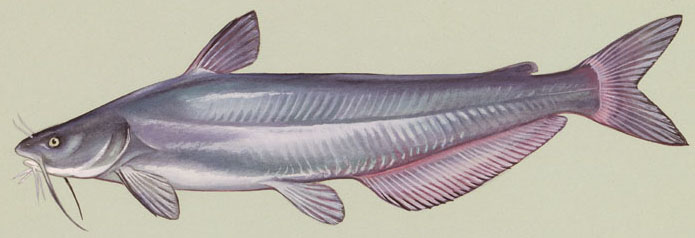 🇺🇸 United StatesBlue catfish
A large North American catfish known for its size and invasive spread in eastern US waters.Catfish · Rivers and lakes
More from Pimelodidae
All of them 🇧🇷 BrazilGilded catfish
A large South American catfish found in the Amazon and Orinoco basins.Catfish · Rivers and lakes
 🇧🇷 BrazilPiraíba
A massive Amazonian catfish known for its long barbels and role as an apex predator.Catfish · Rivers and lakes
 🇧🇷 Brazil and 3 moreSpotted sorubim
A large South American catfish known for its spotted pattern and commercial value.Catfish · Rivers and lakes · 1829
 🇧🇷 Brazil and 4 moreTiger shovelnose catfish
Large striped South American river catfishCatfish · Rivers and lakes · 1862