
Atlantic salmon
A large anadromous fish found in the northern Atlantic Ocean and its rivers.
The Atlantic salmon is a ray-finned fish in the Salmonidae family, scientifically named by Carl Linnaeus in 1758. It migrates between freshwater streams and the ocean, serving as a major food source and sport fish for humans.
- Record length was 160.65 cm caught in Norway in 1925.
- Record weight was 49.44 kg caught in Scotland in 1960.
- Norway produces over 50% of the global farmed supply.
- Fish can return to sea after spawning, unlike Pacific salmon.
- Young fish use Earth's magnetic field to navigate via lateral line.
What it is
The Atlantic salmon is a prominent member of the Salmonidae family, recognized as the third largest within its group. Adults typically display a silver-blue sheen with black spots above the lateral line, though breeding males may show green or red hues. Young fish feature blue and red spots before developing their adult coloration. They possess a fusiform body shape and well-developed teeth. The species can reach exceptional sizes, with records indicating lengths over 1.6 meters and weights nearing 50 kilograms, although average mature fish are smaller.
Where it lives
This fish inhabits the northern Atlantic Ocean and associated river systems. In Europe, its range extends from Spain northward to Russia and Iceland. In North America, it is found along the eastern coast from Connecticut to Arctic Canada. Historically, populations existed further south in the United States, such as in New Jersey and the Hudson River, though many have disappeared. Climate warming has allowed colonization of Svalbard since 2002. The species prefers cold water and is sensitive to temperature changes, limiting its distribution to suitable thermal environments.
How it lives
Most populations follow an anadromous pattern, hatching in freshwater streams before migrating to the ocean to grow. During the marine phase, they feed on plankton, capelin, herring, and small fish. They utilize sea surface currents for travel rather than swimming vast distances directly. Upon reaching maturity, adults return to their natal rivers to spawn, guided potentially by scent. Some populations remain landlocked in lakes throughout their lives. Predators include seals, sharks, and birds, while juveniles face threats from trout and other aquatic animals.
Breeding and life cycle
Atlantic salmon construct gravel nests called redds in stream beds. Females use their tails to excavate depressions, deposit eggs, and cover them with gravel after fertilization by males. Unlike Pacific salmon, which die after spawning, Atlantic salmon are iteroparous and can survive to spawn again in subsequent years. This process imposes significant physiological stress, making repeat spawning less common. The freshwater phase lasts one to eight years depending on latitude, with young fish transitioning through alevin, fry, parr, and smolt stages before entering the sea.
Fish and people
The meat of this fish is highly valued for its nutritional content and refined texture, commanding high prices in traditional cuisines. It supports both commercial fisheries and recreational sport fishing globally. Aquaculture farming has become a major industry, with Norway producing over half of the world's farmed supply. While farming offers an alternative to wild capture, it faces environmental criticism. Conservation efforts in various countries have helped stabilize populations since the 2000s, countering declines caused by historical overfishing, dam construction, and habitat degradation.
Status and threats
Populations have faced severe declines due to overfishing, habitat destruction from logging and agriculture, and dam construction blocking migration routes. Many southern populations disappeared early due to these pressures. However, conservation programs implemented in several nations have shown success in recent decades. The species is currently classified as Least Concern overall, though local stocks vary. Threats include pollution, climate change affecting water temperatures, and competition with farmed fish, requiring ongoing management to maintain healthy wild and farmed populations.


Questions people ask about Atlantic salmon
What is the difference between Atlantic and Pacific salmon?
Atlantic salmon are iteroparous, meaning they can survive spawning and return to the sea to reproduce again. Pacific salmon are semelparous and die after their first spawning event. Additionally, Atlantic salmon belong to the genus Salmo, while Pacific species are in different genera.
Where do Atlantic salmon live?
They are found in the northern Atlantic Ocean and rivers flowing into it. In Europe, this includes areas from Spain to Russia. In North America, they inhabit the east coast from Connecticut to Arctic Canada. Some populations live entirely in freshwater lakes.
How big can an Atlantic salmon get?
Average adults measure 71 to 76 cm and weigh 3.6 to 5.4 kg. However, exceptional specimens can be much larger. The longest recorded was 160.65 cm, and the heaviest was 49.44 kg, both caught in the mid-twentieth century.
Is Atlantic salmon farmed?
Yes, aquacultural methods are widely used to farm this species. Norway is the leading producer, supplying more than half of the world's farmed Atlantic salmon. This industry provides a significant alternative to wild-caught fish for consumption.
Good reading and sources
- BBC NEWS | Science/NatureBBC, Article
- Shiny Patches in Maine’s Streambeds Are Bright Sign for Salmon (Published 2011)The New York Times, Article
- Atlantic salmon on WikipediaEncyclopedia
- More photos on Wikimedia CommonsPhotos
- Wikidata recordOpen data
The facts on this page come from the Wikipedia article "Atlantic salmon", written by its contributors and used under the CC BY-SA 4.0 licence, and from its Wikidata record (CC0). EveryFish rewrote the text in its own words, with AI assistance, and compares every page with the article to make sure no passage is copied. It may be reused under the same CC BY-SA 4.0 licence with a link back.
It may contain mistakes, and figures change over time. Nothing here is investment or buying advice. If something is wrong, tell us. Last refreshed 2026-11-15.
Like Atlantic salmon
All salmon and trout 🇺🇸 United States and 3 moreChinook salmon
The largest Pacific salmon species, prized for size and food value.Salmonid · Rivers and lakes
 WorldBrown trout
A widespread salmonid with river, lake and sea forms.Salmonid · Rivers and lakes · 1758
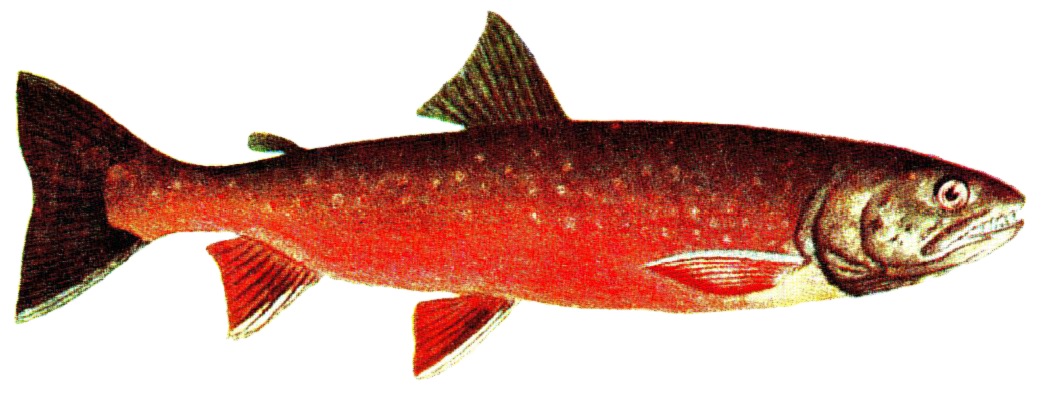 WorldArctic char
Cold-water salmonid native to Arctic and alpine waters.Salmonid · Rivers and lakes · 1758
 🇷🇺 Russia and 3 moreChum salmon
A Pacific salmon species known for its large size and wide distribution across the North Pacific.Salmonid · Rivers and lakes · 1836
More from Salmonidae
All of them 🇨🇦 Canada and 1 moreArctic grayling
A cold-water salmon relative with a large, colourful dorsal fin.Salmonid · Rivers and lakes · 1776
 🇺🇸 United States and 3 moreSockeye salmon
Anadromous Pacific salmon known for red spawning colour and zooplankton diet.Salmonid · Rivers and lakes · 1792
 🇺🇸 United States and 3 moreDolly Varden trout
A cold-water char native to the North Pacific rim.Salmonid · Rivers and lakes · 1792