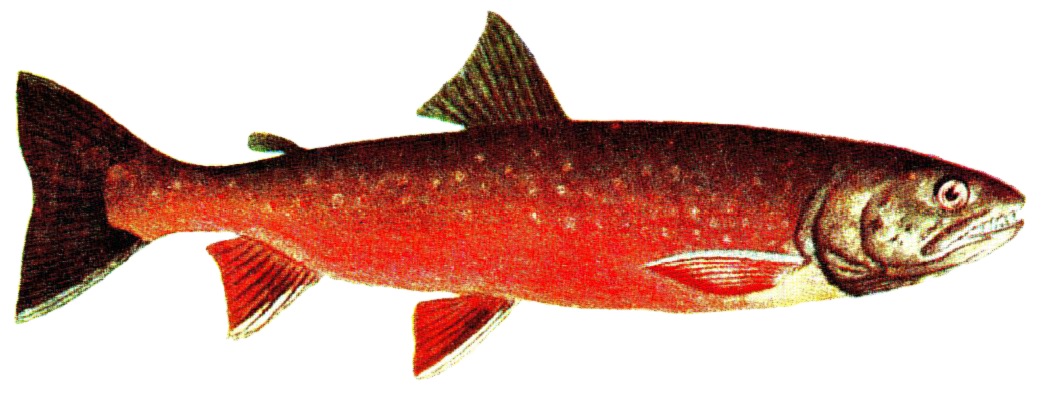
Arctic char
Cold-water salmonid native to Arctic and alpine waters.
The Arctic char is a cold-water fish in the salmon family, native to Arctic and subarctic coastal waters and alpine lakes. It is the most northerly freshwater fish, exhibiting high variability in form and colour across its circumpolar range.
- World's most northerly freshwater fish species
- Exhibits extreme physical and behavioural variation
- Survives spawning and reproduces multiple times
- Farmed in land-based sustainable systems
- Hybridizes with brook and lake trout
What it is
The Arctic char is a member of the salmon family, sharing traits with both salmon and trout. Its appearance varies widely by location and season, with a dark back and a belly ranging from red to white. The flesh can be bright red or pale pink. Two main size forms exist: dwarf chars average 8 cm, while giants average 40 cm. Males and females are similar in size. This species is highly variable, leading some to call it the most diverse vertebrate on Earth.
Where it lives
This fish has a circumpolar distribution, inhabiting Arctic and subarctic coasts and high-altitude lakes. It is found in Canada, Greenland, Iceland, Scandinavia, Siberia, and Alaska. It is the only fish in Lake Hazen on Ellesmere Island and Lake Pingualuit in Quebec. In Great Britain and Ireland, it is rare and confined to deep glacial lakes. Anadromous populations migrate to the sea in summer, while landlocked groups stay in fresh water year-round.
How it lives
Arctic char are opportunistic feeders, eating insects, snails, crustaceans, and smaller fish. Marine diets include copepods and krill. They exhibit crypsis, changing colour to match their environment for protection. Predators include polar bears, sea otters, and larger fish. Giant chars may eat dwarf chars. Juveniles detect predator scents chemically. In lakes, different morphs may occupy distinct niches, such as bottom-dwelling or open-water zones, reducing competition.
Breeding and life cycle
Spawning takes place in autumn over rocky shoals or gravel riverbeds. Males develop hooked jaws and bright red colours, while females remain silver. Females build nests called redds and lay thousands of eggs. Unlike Pacific salmon, Arctic char survive spawning and may reproduce every few years. Eggs hatch in two to five months. Young fish stay in gravel until they reach 15 cm, then move to deeper water or the sea.
Fish and people
Commercial and subsistence fisheries operate in the Canadian Arctic, using gill nets. The fish is vital to Inuit communities. Farming began in the late 1970s in Canada and now occurs in Iceland, Norway, and other countries. Land-based systems recycle waste for crop fertilizer. The Monterey Bay Aquarium rates farmed char as a sustainable choice. Hybrids with brook trout, known as sparctic char, are popular in sport fishing due to their fast growth.
Status and threats
The species is common in Nordic countries but rare in Great Britain and Ireland, where acidification poses a threat. In Siberia, introduced chars threaten endemic species like the small-mouth char. Conservation efforts focus on managing fisheries and protecting habitat from pollution and climate change. Data on global population trends is limited due to its vast and remote range.


Questions people ask about Arctic char
Is Arctic char the same as salmon or trout?
It belongs to the same family, Salmonidae, and shares characteristics with both. It is in the genus Salvelinus, making it a char, which is distinct from true salmon and trout genera.
Why does Arctic char look different in various lakes?
The species exhibits many morphs adapted to local conditions. These variants differ in size, colour, and diet, often evolving within isolated lakes to exploit specific food sources and habitats.
Can you farm Arctic char sustainably?
Yes, land-based farming systems are considered environmentally responsible. They filter waste water for crop fertilizer and use feed from small forage fish, earning high sustainability ratings.
Do Arctic char die after spawning?
No, unlike Pacific salmon, Arctic char are iteroparous. They survive the spawning process and can return to reproduce several times throughout their lives, typically every second or third year.
Good reading and sources
The facts on this page come from the Wikipedia article "Arctic char", written by its contributors and used under the CC BY-SA 4.0 licence, and from its Wikidata record (CC0). EveryFish rewrote the text in its own words, with AI assistance, and compares every page with the article to make sure no passage is copied. It may be reused under the same CC BY-SA 4.0 licence with a link back.
It may contain mistakes, and figures change over time. Nothing here is investment or buying advice. If something is wrong, tell us. Last refreshed 2026-11-15.
Like Arctic char
All salmon and trout 🇳🇴 Norway and 4 moreAtlantic salmon
A large anadromous fish found in the northern Atlantic Ocean and its rivers.Salmonid · Rivers and lakes · 1758
 🇷🇺 Russia and 2 moreMasu salmon
Pacific salmonid native to East Asian coasts and rivers.Salmonid · Rivers and lakes
 🇺🇸 United States and 3 moreChinook salmon
The largest Pacific salmon species, prized for size and food value.Salmonid · Rivers and lakes
 WorldBrown trout
A widespread salmonid with river, lake and sea forms.Salmonid · Rivers and lakes · 1758
More from Salmonidae
All of them 🇨🇦 Canada and 1 moreArctic grayling
A cold-water salmon relative with a large, colourful dorsal fin.Salmonid · Rivers and lakes · 1776
 🇺🇸 United States and 3 moreSockeye salmon
Anadromous Pacific salmon known for red spawning colour and zooplankton diet.Salmonid · Rivers and lakes · 1792
 🇺🇸 United States and 3 moreDolly Varden trout
A cold-water char native to the North Pacific rim.Salmonid · Rivers and lakes · 1792