
Brook trout
A colorful freshwater char native to eastern North America, known for its spotted pattern and status as a popular game f
The brook trout is a salmonid fish indigenous to cold streams in eastern North America. It has been widely introduced globally for sport fishing but often harms local ecosystems by outcompeting native species.
- Maximum recorded length reaches 86 centimetres.
- World record weight stands at approximately 6.6 kilograms.
- Two ecological forms exist: coasters and salters.
- Classified among the top 100 global invasive species.
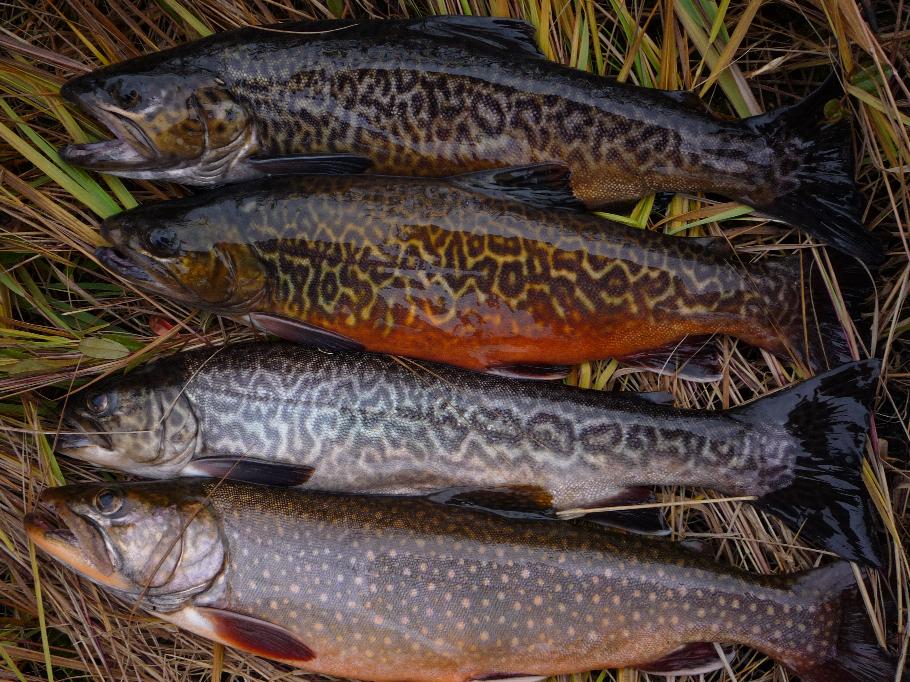
- Hybrids include splake and tiger trout varieties.
What it is
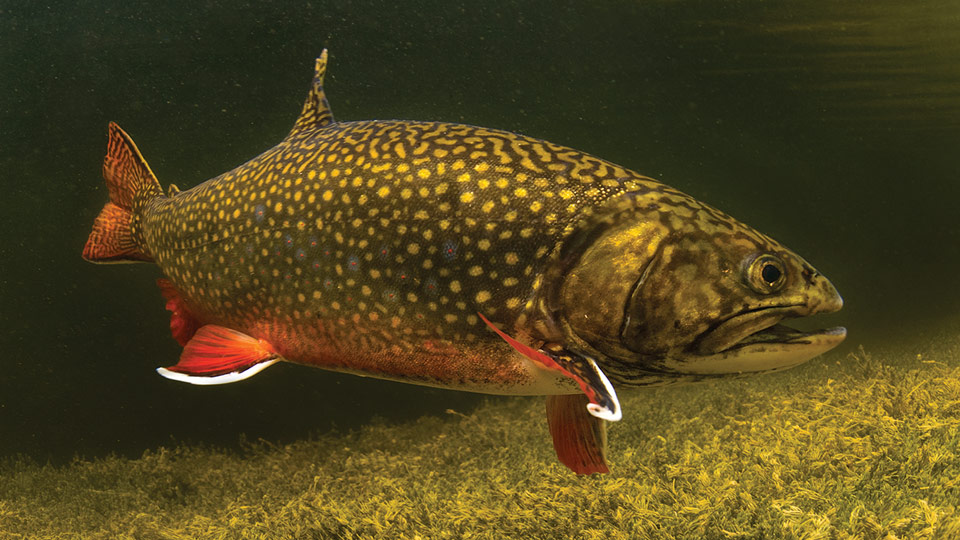
This fish belongs to the char genus within the salmon family. Adults display an olive-green back with wavy dark patterns called vermiculation. Their sides feature red spots surrounded by blue halos. The belly turns bright orange or red during spawning seasons. Fins are edged in white and black. They typically grow between twenty-five and sixty-five centimetres long. Some large lake populations exceed two feet in length.
Where it lives
Native ranges cover eastern North America from Hudson Bay to Georgia. Historical limits extended west to Iowa. Populations have shrunk due to habitat loss and competition from introduced trout. Humans have moved them to western US states, Europe, South America, and Oceania. These introductions created self-sustaining wild groups outside their original home.
How it lives
They eat aquatic insects, terrestrial bugs falling into water, crustaceans, and small fish. Growth depends on water temperature and flow rates. Larger fish struggle in warm summer waters. Two distinct forms exist: coasters live longer and grow larger in lakes, while salters migrate to the sea briefly before returning to spawn.
Breeding and life cycle
Females dig nests called redds in gravel beds where groundwater flows upward. Males fertilize eggs as they are released. Eggs hatch after four to six weeks of incubation. Young fry hide in rock crevices to avoid predators. They develop camouflage markings known as parr marks as they mature into fingerlings.
Fish and people
Anglers prize this species for fly fishing and catch-and-release practices. A world record specimen weighed over fourteen pounds caught in Ontario. Fisheries organizations work to protect water quality and restore stream habitats. Artificial breeding programs create hybrids like splake and tiger trout for stocking purposes.
Status and threats
Native stocks face threats from pollution, dams, and invasive competitors. Non-native introductions harm local biodiversity through hybridization and predation. The species remains listed as least concern globally. However, specific isolated populations have declined significantly. Conservation efforts focus on maintaining cold, clean water conditions.


Questions people ask about Brook trout
What does the brook trout look like?
It features an olive-green back with wavy dark vermiculation. Red spots ringed in blue appear on the sides. The belly becomes bright orange during spawning. Fins show white and black edges against an orange background.
Where is the brook trout originally from?
It is native to eastern North America. This includes Canada from Hudson Bay eastward and the United States from Maine to Georgia. It also inhabits the Great Lakes and Saint Lawrence system.
Is the brook trout dangerous to humans?
No, it poses no danger to people. It is a small freshwater fish. It is primarily valued as a game fish for anglers. There are no venomous traits or aggressive behaviors toward humans.
Why are brook trout considered invasive?
Humans introduced them worldwide for sport fishing. They outcompete native fish for resources. They also prey on smaller species and hybridize with local trout. This disrupts existing aquatic ecosystems significantly.
Good reading and sources
The facts on this page come from the Wikipedia article "Brook trout", written by its contributors and used under the CC BY-SA 4.0 licence, and from its Wikidata record (CC0). EveryFish rewrote the text in its own words, with AI assistance, and compares every page with the article to make sure no passage is copied. It may be reused under the same CC BY-SA 4.0 licence with a link back.
It may contain mistakes, and figures change over time. Nothing here is investment or buying advice. If something is wrong, tell us. Last refreshed 2026-11-15.
Like Brook trout
All salmon and trout 🇺🇸 United States and 3 moreKokanee salmon
A landlocked freshwater form of the sockeye salmon found in North America and Japan.Salmonid · Rivers and lakes
 🇺🇸 United States and 3 moreSockeye salmon
Anadromous Pacific salmon known for red spawning colour and zooplankton diet.Salmonid · Rivers and lakes · 1792
 WorldBrown trout
A widespread salmonid with river, lake and sea forms.Salmonid · Rivers and lakes · 1758
 🇬🇧 United Kingdom and 3 moreSea trout
Anadromous form of brown trout that migrates between sea and rivers.Salmonid · Between sea and river