
Bighead carp
A large Asian freshwater fish farmed globally and invasive in North America.
Native to East Asia, this cyprinid is a major aquaculture species with over three million tonnes produced annually. It has spread widely outside its native range, becoming an invasive threat in places like the United States while remaining a prized food source in Asia.
- Maximum recorded length reaches 146 cm and weight hits 40 kg.
- Global aquaculture production exceeded three million tonnes in 2013.
- Native to East Asia but invasive in the Mississippi River basin.
- Features a large scaleless head and eyes located very low on the skull.
- Fed on algae and zooplankton using filter-feeding habits.
What it is
The bighead carp is a large freshwater fish belonging to the cyprinid family. Adults typically reach sixty centimetres in length, though specimens can grow up to one hundred and forty-six centimetres and weigh forty kilograms. The species features a distinctive scaleless head, a wide mouth, and eyes positioned very low on the skull. Its body displays a mottled silver-grey pattern. This morphology supports its role as a filter feeder in river systems.
Where it lives
Originally found in large rivers and floodplain lakes across eastern Asia, the range extends from southern China northward to the Amur River system along the Chinese-Russian border. Human activity has moved the species globally. It now inhabits waters in North America, Europe, South America, the Nile basin, and the Volga River delta. Introductions also occurred throughout the Indian subcontinent and Southeast Asia.
How it lives
These fish feed on algae and zooplankton using their specialized filter-feeding mechanism. They often swim near the water surface to capture food particles. Unlike their close relative the silver carp, bighead carp do not leap into the air when startled by boats. They are omnivores that thrive in both regulated reservoirs and unregulated river sections. Predators include humans through commercial fishing and bowfishing techniques.
Breeding and life cycle
Evidence of natural reproduction exists in specific introduced ranges, such as the lower zone of the Volga River Delta where prelarval and early fry stages have been identified. In their native habitat, they spawn in large river systems associated with floodplains. The species exhibits rapid growth rates, contributing to its value in aquaculture programmes worldwide.
Fish and people
Farmed extensively for food, the bighead carp ranks among the top cultured freshwater fish globally, with production exceeding three million tonnes in 2013. In Singapore, the head is highly prized and usually steamed whole. In North America, acceptance is limited due to cultural associations with common carp and the presence of intramuscular bones. However, ethnic markets and sport anglers utilize the fish, often transporting them live.
Status and threats
Considered a destructive invasive species in the United States, the bighead carp outcompetes native fauna like the bigmouth buffalo. Regulations vary by region: New York bans live possession except in specific markets, Illinois prohibits it entirely, and Missouri forbids live bait use. Canada also restricts live sales. Conservation efforts focus on containment and preventing further spread through transport or release.


Questions people ask about Bighead carp
What does the bighead carp eat?
It is an omnivore that primarily consumes algae and zooplankton. The fish uses specialized filter-feeding mechanisms to capture these small organisms from the water column, often feeding near the surface.
Why is it considered invasive in the US?
Bighead carp outcompete native species such as the bigmouth buffalo for resources. Their rapid growth and high biomass can decrease catches of native fish, disrupting local ecosystems and commercial fisheries.
How is the meat prepared in Singapore?
In Singapore, the head is particularly prized. It is usually steamed whole. The flesh is white and firm, differing from the darker common carp, though both contain intramuscular bones.
Can you catch bighead carp with a rod and reel?
They are difficult to capture this way due to their filter-feeding habits. Anglers often use suspension methods or snagging with weighted treble hooks. Bowfishers target them when they feed near the surface.
Good reading and sources
The facts on this page come from the Wikipedia article "Bighead carp", written by its contributors and used under the CC BY-SA 4.0 licence, and from its Wikidata record (CC0). EveryFish rewrote the text in its own words, with AI assistance, and compares every page with the article to make sure no passage is copied. It may be reused under the same CC BY-SA 4.0 licence with a link back.
It may contain mistakes, and figures change over time. Nothing here is investment or buying advice. If something is wrong, tell us. Last refreshed 2026-11-15.
Like Bighead carp
All carps and minnows 🇮🇳 India and 4 moreRohu
A large silver carp from South Asian rivers, farmed for food and prized as a game fish.Carp · Rivers and lakes
 🇮🇳 India and 1 moreBata
A slow-moving freshwater carp native to India and Bangladesh.Carp · Rivers and lakes
 🇨🇳 China and 1 moreBlack carp
A large freshwater fish native to East Asia, known for eating snails and causing ecological issues in the US.Carp · Rivers and lakes
 🇨🇳 China and 3 moreGrass carp
Large herbivorous freshwater fish used for weed control and food.Carp · Rivers and lakes
More from Cyprinidae
All of them 🇲🇾 Malaysia and 1 moreHarlequin rasbora
A small, colourful freshwater fish popular in home aquariums for its distinctive black body marking.Carp · Rivers and lakes
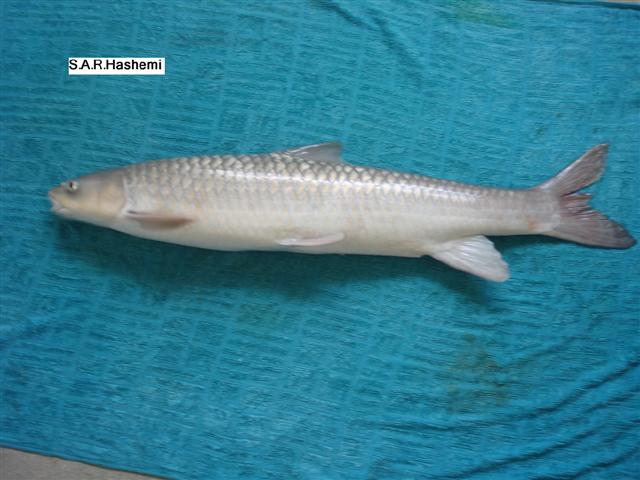 🇮🇷 Iran and 1 moreShabout
A large freshwater carp native to the Tigris-Euphrates basin in Western Asia.Carp · Rivers and lakes
 🇮🇳 India and 4 moreCommon snowtrout
A cold-water cyprinid from Himalayan rivers.Carp · Rivers and lakes