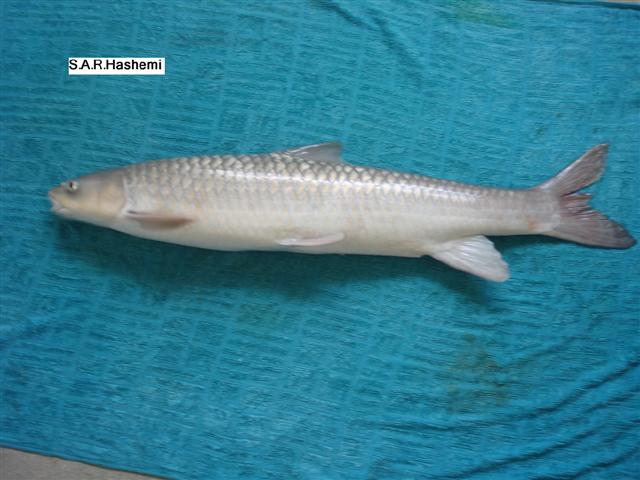
Shabout
A large freshwater carp native to the Tigris-Euphrates basin in Western Asia.
The shabout is a substantial cyprinid fish found in rivers across Iran and Iraq. It faces severe population declines due to dam construction, water extraction, and overfishing within its native range.
- Grows up to 1.5 m and 30 kg normally
- Inhabits Tigris-Euphrates Basin and Iranian rivers
- Herbivorous diet includes algae, plants, and grains
- Breeds in spring/summer on gravel substrates
- Population declined 90% in Iraq since 1960s
What it is
The shabout, scientifically known as Arabibarbus grypus, is a large freshwater member of the carp family. Adults typically reach lengths of 1.5 metres and weigh around 30 kilograms, though unverified accounts suggest larger sizes possibly confused with other species. The fish possesses strong swimming capabilities and adapts well to various riverine environments, from fast-flowing tributaries to slower, stagnant marshes and reservoirs. Its body shape supports efficient movement through water, and it thrives in temperatures ranging from roughly 10 to 33 degrees Celsius, preferring cooler conditions near 22 degrees Celsius during summer months.
Where it lives
This species inhabits the Tigris-Euphrates Basin and Iranian rivers that discharge into the Persian Gulf. It occupies diverse freshwater habitats, including upstream tributaries, river mouths, and brackish estuaries where growth may slow. The fish tolerates slight salinity but favors pure freshwater systems. Its distribution spans Western Asia, particularly within Iran and Iraq. Populations have suffered significant reduction, with some Iraqi stocks dropping by ninety percent between the mid-twentieth century and early twenty-first century due to habitat degradation and excessive harvesting.
How it lives
Shabouts are primarily herbivorous, consuming algae, aquatic plants, fruits, and grains. Larger individuals may exhibit predatory behavior, eating invertebrates and smaller fish. They require high oxygen levels and prefer slow to moderate water currents. During summer, adults migrate upstream to escape warmer lower river sections, while younger fish remain downstream year-round. Their adaptability allows survival in varied thermal conditions, yet they remain vulnerable to environmental changes like pollution and reduced flow.
Breeding and life cycle
Spawning occurs in spring and summer within upstream river sections featuring cool, fast-flowing water, gravel bottoms, and depths under 1.5 metres. Females reach sexual maturity at approximately three years of age and can release up to 235,764 eggs among gravel or vegetation. The breeding process relies on specific substrate conditions for egg attachment and development. Young fish grow rapidly in suitable habitats, but their survival depends on maintaining clear, oxygenated waters free from excessive sedimentation or chemical contamination that could impair reproductive success.
Fish and people
The shabout supports commercial fisheries in its native range, though heavy exploitation has depleted stocks. It holds cultural significance, with historical links proposed to the 'shibuta' mentioned in the Talmud, potentially regarded as a kosher alternative to pork in ancient Jewish Babylonian cuisine. Modern Hebrew uses the name Shibuta for this fish, reflecting local Arabic influences. Aquaculture potential is being explored as a protein source, following trends in farming other carp species. Traditional fishing practices continue, but sustainability remains a concern due to ongoing habitat loss and overharvesting pressures.
Status and threats
Populations are declining sharply due to dam construction blocking migration routes, water extraction, drought, and pollution. Overfishing exacerbates these threats, leading to severe reductions in certain areas. Data deficiency prevents precise global assessment, but regional declines indicate urgent conservation needs. Protection measures are limited, and habitat restoration is critical for recovery. Without intervention, continued degradation of river ecosystems threatens the species' long-term viability in the wild.
Questions people ask about Shabout
What is the scientific name of the shabout?
The scientific name is Arabibarbus grypus. It belongs to the Cyprinidae family, commonly known as carps or minnows. This classification places it among freshwater fish species found across Western Asia.
How large can a shabout get?
Typical adults reach 1.5 metres in length and weigh 30 kilograms. Unconfirmed reports mention sizes up to 2 metres and 100 kilograms, though these may be confused with the mangar species.
Why is the shabout population declining?
Declines result from dam construction blocking migration, water extraction, drought, pollution, and overfishing. These factors degrade habitat quality and reduce reproductive success in key river systems.
Is the shabout eaten in traditional cuisine?
Yes, it supports commercial fisheries and has cultural ties to ancient Jewish Babylonian cuisine, possibly linked to the Talmudic 'shibuta'. It is considered a food fish in its native range.
Good reading and sources
The facts on this page come from the Wikipedia article "Shabout", written by its contributors and used under the CC BY-SA 4.0 licence, and from its Wikidata record (CC0). EveryFish rewrote the text in its own words, with AI assistance, and compares every page with the article to make sure no passage is copied. It may be reused under the same CC BY-SA 4.0 licence with a link back.
It may contain mistakes, and figures change over time. Nothing here is investment or buying advice. If something is wrong, tell us. Last refreshed 2026-11-15.
Like Shabout
All carps and minnows 🇹🇭 Thailand and 4 moreJava barb
A silvery freshwater fish farmed across Southeast Asia.Carp · Rivers and lakes
 🇹🇭 Thailand and 2 moreEmpurau
A large Southeast Asian river fish prized for its high market value.Carp · Rivers and lakes
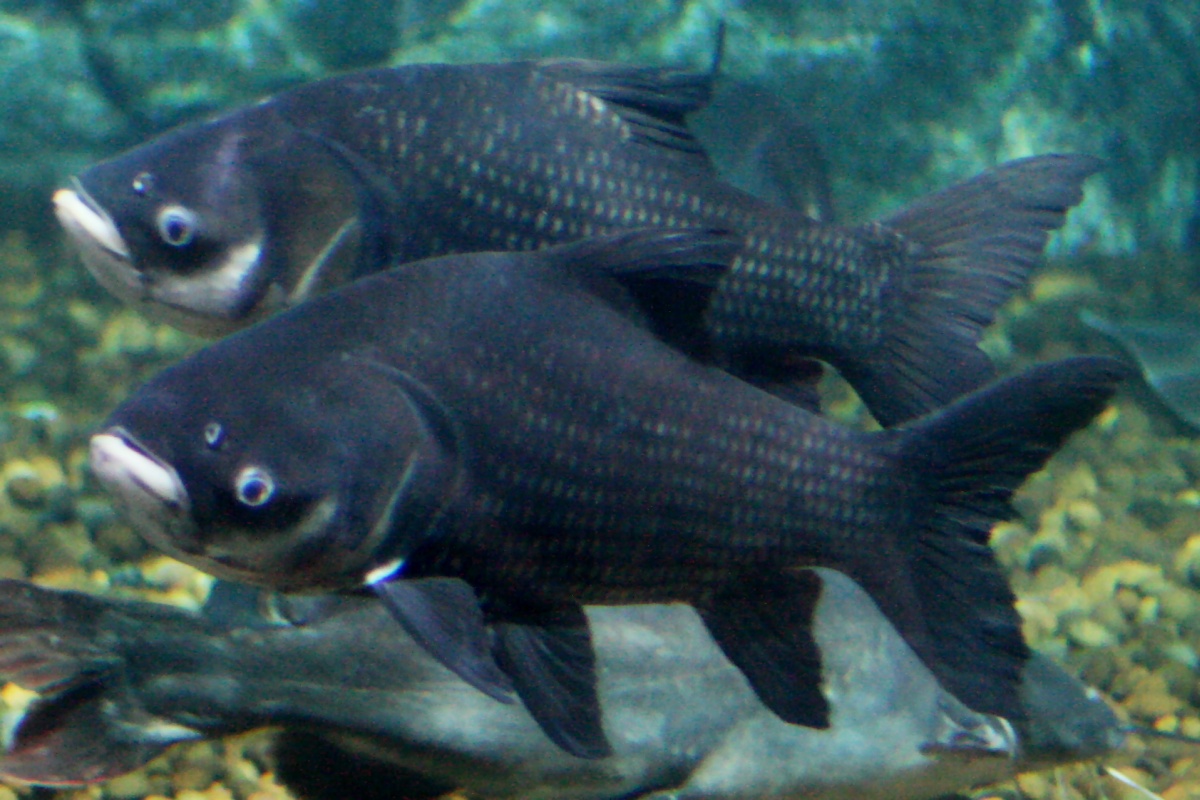 🇰🇭 Cambodia and 2 moreGiant barb
The largest cyprinid fish, native to major river basins in Southeast Asia.Carp · Rivers and lakes
🇮🇷 Iran and 2 moreCaspian kutum
A prized ray-finned fish from the Caspian Sea.Carp · Estuaries and mangroves · 1901
More from Cyprinidae
All of them 🇹🇭 Thailand and 2 moreSiamese mud carp
Freshwater cyprinid native to Mekong and Chao Phraya riversCarp · Rivers and lakes
 🇮🇳 India and 4 moreRohu
A large silver carp from South Asian rivers, farmed for food and prized as a game fish.Carp · Rivers and lakes
 🇲🇾 Malaysia and 1 moreHarlequin rasbora
A small, colourful freshwater fish popular in home aquariums for its distinctive black body marking.Carp · Rivers and lakes
 WorldLabeobarbus
A genus of mid-sized ray-finned fish widely distributed in eastern and southern Africa.Carp · Rivers and lakes